
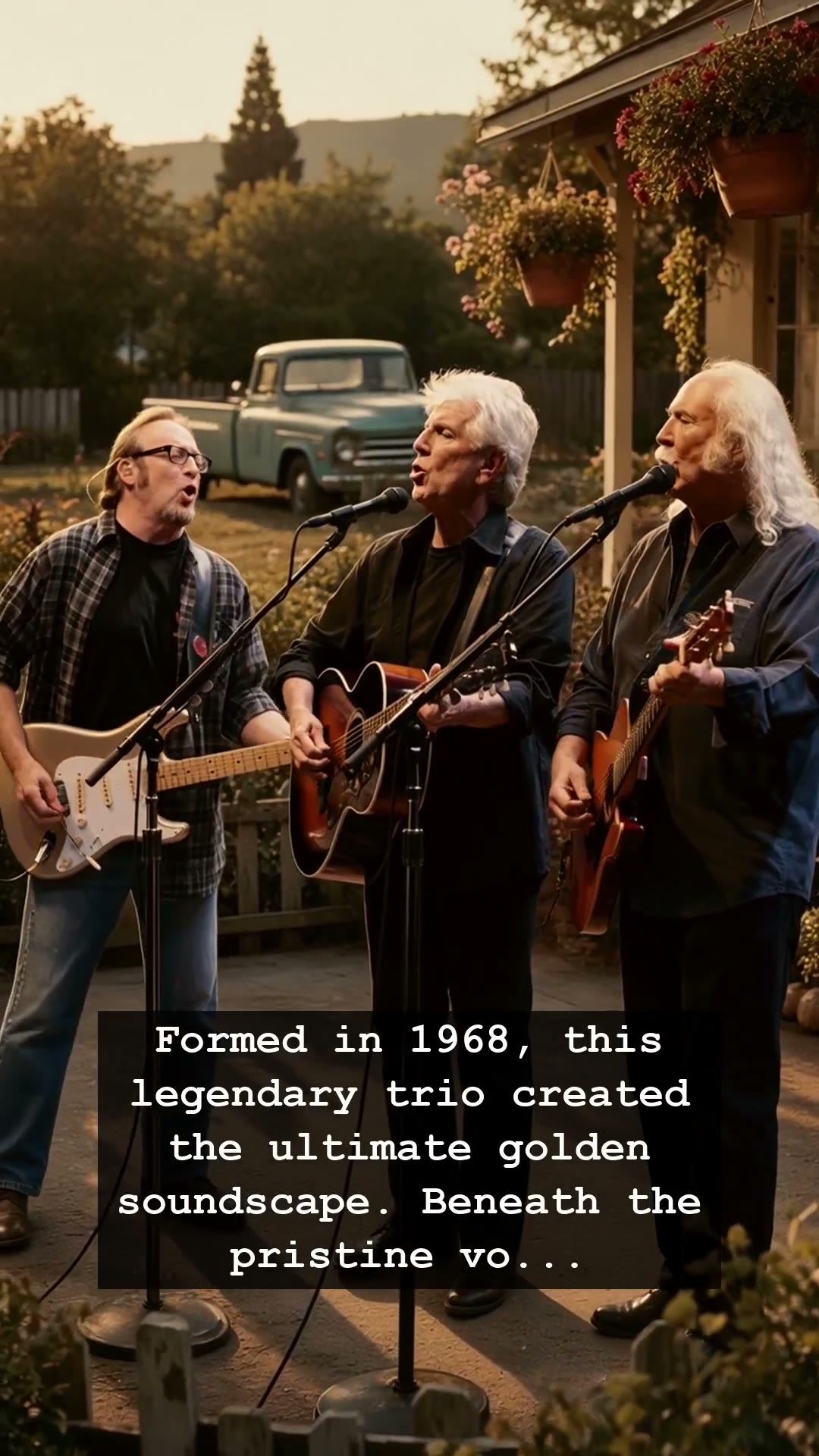
In the late 1960s, the golden hills of Laurel Canyon were alive with a sound that felt like salvation. When Crosby, Stills and Nash first blended their voices, it was as if the fractured spirit of a generation had finally found a single, resonant chord. Their music was the heartbeat of a counterculture searching for meaning, a pristine acoustic soundscape that promised peace in a world increasingly defined by the chaos of Vietnam and political unrest. To the listeners, they were the architects of a flawless vocal legacy, but behind the scenes of those iconic records, the air was thick with a volatile, self-destructive tension that threatened to dismantle the trio before they could even finish their first masterpiece.
Formed in 1968, the group seemed destined for legendary status. David Crosby, Stephen Stills, and Graham Nash were individual titans of the era, each carrying the weight of past bands and personal demons. Their emergence coincided with a pivotal shift in the cultural landscape, right before the dawn of the seventies would see the rise of the Walkman and the shift toward the polished production of the arena rock era. While fans were mesmerized by the intricate layers of ‘Suite: Judy Blue Eyes,’ the band was navigating a minefield of ego, substance abuse, and irreconcilable artistic differences. It was a classic clash of genius, where the very chemistry that made their music angelic made their personal lives a living hell.
Stills, the relentless perfectionist, often found himself at odds with the free-spirited chaos of Crosby. Meanwhile, Nash often played the role of the reluctant diplomat, trying to keep the volatile egos from colliding into total oblivion. The studio, which should have been a sanctuary, became an arena for petty arguments and deep-seated grudges. These fractures were not just creative; they were deeply human. The group was perpetually on the verge of implosion, a pattern that would haunt them throughout their decades-long career. It was a dramatic reality that contrasted sharply with the ethereal, calming nature of their folk-rock anthems, proving that the greatest music is often forged in the fires of misery.
Looking back, the story of Crosby, Stills and Nash feels like a cautionary tale about the price of fame. Their songs still echo through the decades, capturing a specific, romanticized window of American history that feels lightyears away from the digital age. We listen to their harmonies today and hear perfection, unaware—or perhaps fully cognizant—of the jagged edges that lay beneath the surface. It serves as a reminder that the most enduring art often hides the most broken people. Their music transcended the drama, securing their place in the pantheon of rock history while leaving a trail of wreckage that only adds to the mystique of their legendary output.
Do you recall where you were when those harmonies first stopped you in your tracks? Even now, in a world dominated by synth-pop and modern studio polish, there is an undeniable, raw humanity in their recordings that remains untouched. Crosby, Stills and Nash didn’t just record music; they created a living, breathing testament to the tumultuous spirit of their time. Though the internal storms eventually subsided, the echoes of their collaborative genius—and their legendary arguments—continue to resonate, reminding us that even the most beautiful songs are often born from the deepest of scars.