
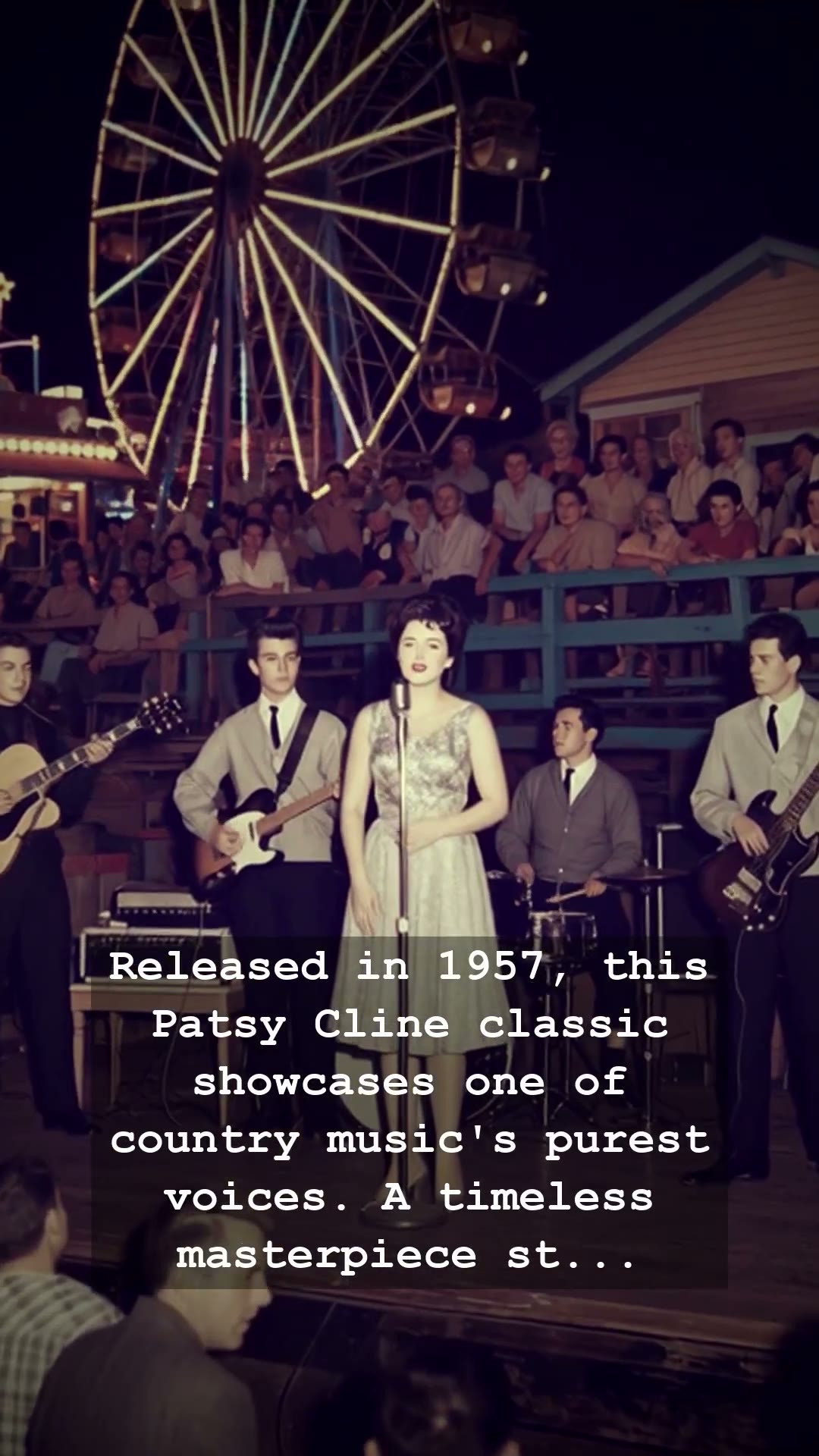
In the dim glow of a 1950s jukebox, a song would often emerge that seemed to stop time itself. It was the voice of Patsy Cline, a haunting, velvet-smooth instrument that sounded like it had been carved out of pure heartbreak. When she released her breakthrough classic in 1957, the world was shifting. Television sets were flickering to life in living rooms across America, and the innocence of the early post-war era was beginning to fray at the edges. Yet, amidst the rising tide of Rock ‘n’ Roll and the neon spectacle of a changing culture, Patsy Cline stood as a monument to raw, unfiltered human emotion. Her delivery wasn’t just singing; it was a confession delivered in the dead of night.
Born Virginia Patterson Hensley, the woman we know as Patsy Cline had to claw her way out of the dust and poverty of Winchester, Virginia. Her journey to the top of the country charts was paved with broken contracts, dismissive producers, and a persistent battle to be heard in a male-dominated industry that viewed women as mere vocal ornaments. She wasn’t a fragile doll; she was a woman of fierce spirit and grit. Every time she stepped into a recording studio, she carried the weight of her struggles with her. That late-night longing listeners hear in her 1957 tracks wasn’t a performance—it was a memory of every struggle she had faced, captured in the crackle of a vinyl record.
The industry back then was a cold machine, yet Patsy Cline cut through the noise with a clarity that still gives listeners chills today. She existed in a time before the digital age, when an artist’s legacy was measured by the depth of their connection to the listener. Her life was defined by both her meteoric rise and the tragedy that shadowed it. Behind the glamorous gowns and the polished stage presence, she was a woman navigating a volatile world, often relying on the same grit that fueled her music to survive the darker side of fame. The industry loved her voice, but they rarely understood the woman behind the microphone.
Her influence stretched far beyond the country circuit, touching the souls of those listening on their bulky home radios and, eventually, the early iterations of portable audio. Even as the culture moved toward the loud, rebellious distortion of the later eras, the purity of Patsy Cline remained a touchstone for authentic storytelling. She proved that you didn’t need a wall of sound to move a generation; you only needed the truth. Her songs feel like a conversation with a ghost—a reminder that some feelings are timeless, no matter how many decades have passed since the needle first dropped.
We often look back at the golden age of American music through the lens of nostalgia, but the brilliance of Patsy Cline is that she demands we stay in the present moment. Her story is a mix of triumph and an abrupt, devastating end that solidified her as a permanent legend in our cultural lexicon. As you listen to her work today, through whatever device you possess, remember that you are hearing the echo of a woman who felt everything deeply. She turned her pain into a masterpiece, leaving us with a legacy that remains as chillingly beautiful as it was the day it was recorded. Do you remember the first time her voice stopped you in your tracks?