
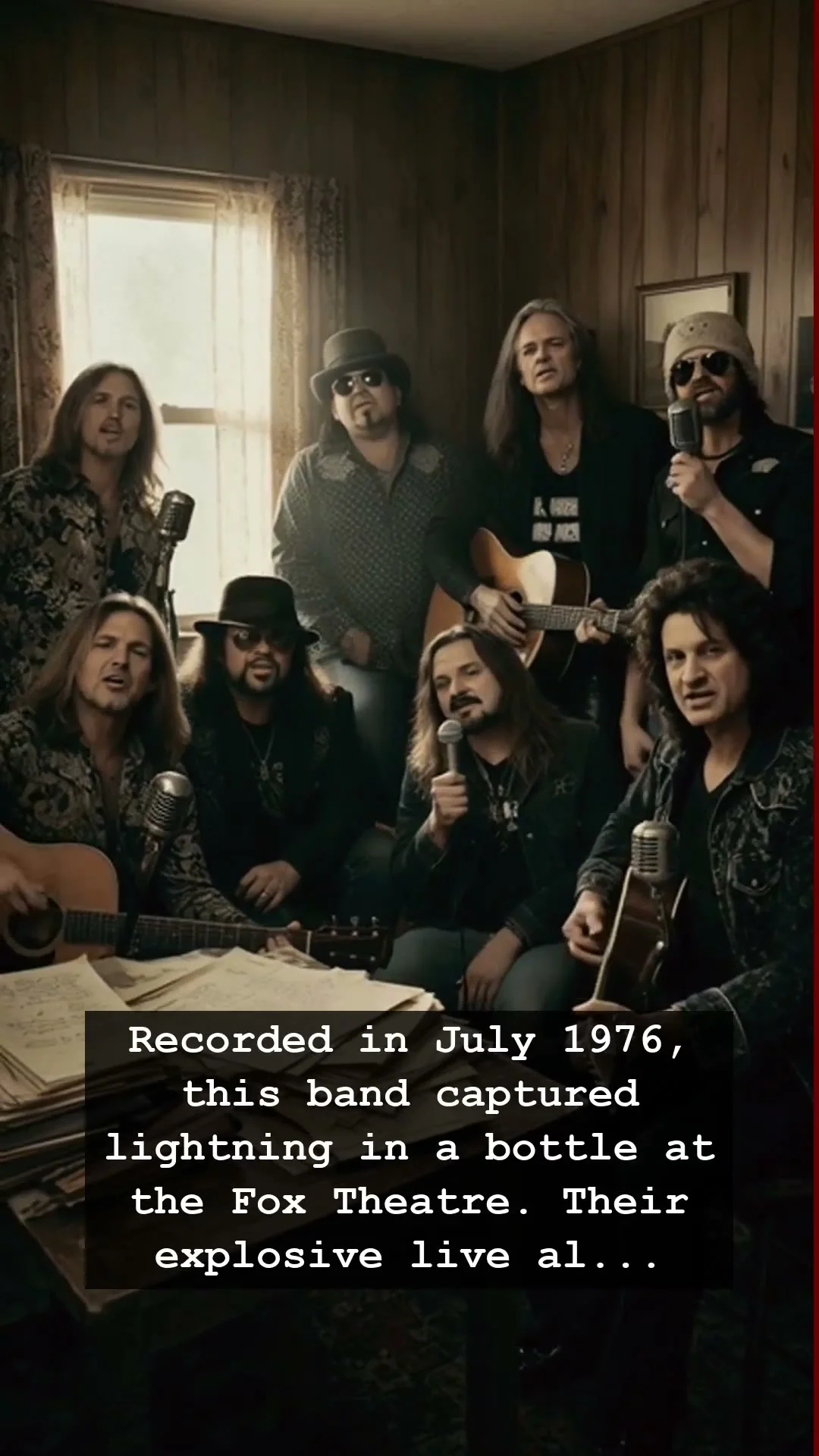
It was July 1976, and the humid Atlanta air outside the Fox Theatre was thick with the scent of cheap beer, denim, and an electricity that only rock and roll could conjure. Inside, the stage was set for a collision of raw talent and Southern defiance. Lynyrd Skynyrd, the rowdy kings of the swampy South, were not just performing; they were documenting a moment in history that would soon become a myth. Over three sweat-drenched nights, they captured lightning in a bottle, recording the live double album that would define Southern rock for generations to come.
To understand the magic of those nights, you have to remember the landscape of the mid-seventies. The polished, over-produced sounds starting to crawl onto the radio were no match for the grit Lynyrd Skynyrd brought to the stage. With three lead guitarists weaving a tapestry of distorted blues and country licks, the band stood as a testament to the working-class spirit. While disco was beginning to tighten its grip on the neon-lit dance floors of Studio 54, Lynyrd Skynyrd remained fiercely committed to the leather-jacketed, long-haired rebellion that defined the era.
Behind the scenes, however, the band was a pressure cooker of internal tension and wild living. The touring life was a relentless cycle of cheap motels, heavy substances, and the crushing weight of sudden, explosive fame. Ronnie Van Zant, the band’s visionary and uncompromising frontman, demanded perfection from his brothers-in-arms. Every note played at the Fox Theatre was fueled by a mixture of exhaustion and a desperate need to prove that they were the best band in the world. They were playing for their lives, unaware that their time as a complete unit was nearing a tragic, premature end.
When the audience listens to those recordings today, they aren’t just hearing a performance; they are hearing a band at the absolute zenith of their power. The interplay between the guitars on tracks like Free Bird is so visceral that you can almost feel the heat of the stage lights and the vibrations of the massive amplifiers. It is a snapshot of an era where rock music was still dangerous, unpredictable, and entirely unfiltered. It was the sound of a band that hadn’t yet been tamed by the industry, captured during their final, triumphant sprint before destiny took a dark turn.
Decades later, those nights at the Fox Theatre remain a sacred pilgrimage for fans of classic American rock. We listen to the records on our worn-out vinyl or digitized streams, trying to recapture that specific, gritty atmosphere of the seventies. Lynyrd Skynyrd left behind a legacy that refuses to fade, serving as a reminder of a time when music was the pulse of a generation. Whenever you drop the needle on that live masterpiece, you are transported back to that July heat, standing in the front row as legends made history.