
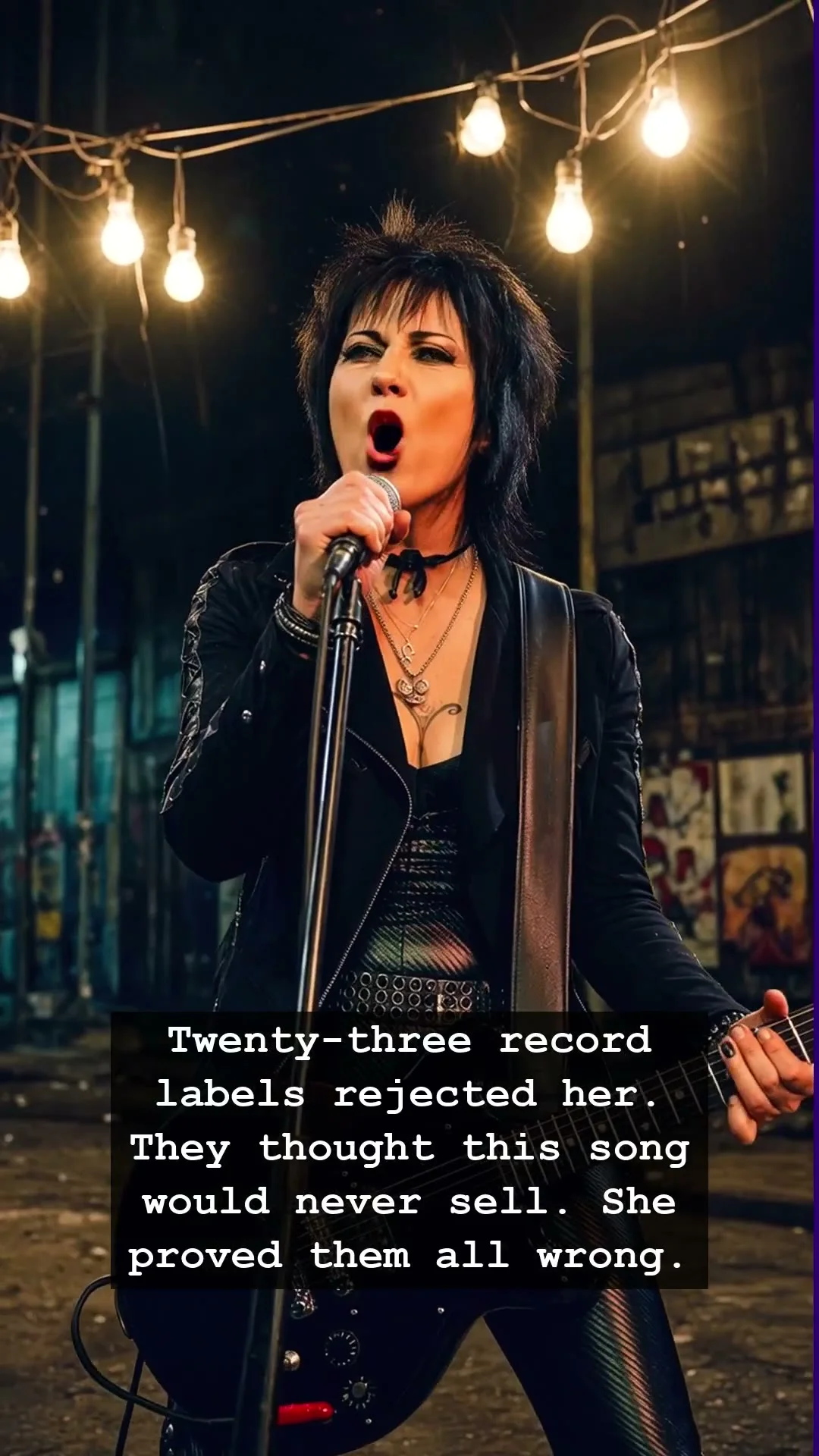
Imagine sitting in a cramped, smoke-filled office in 1980, clutching a demo tape that you know in your gut is a masterpiece. You are Joan Jett, fresh out of the ashes of The Runaways, and you are being told by the most powerful suits in the industry that your sound is dead. Twenty-three record labels looked Joan Jett in the eye and laughed, dismissing her gritty vision as unmarketable. They said the song would never sell, that the world wasn’t ready for a woman fronting a rock band with that level of raw, unadulterated fire. They didn’t just reject her; they underestimated the sheer force of a woman who refused to stay in the corner.
The song in question was I Love Rock ‘n’ Roll, a track originally buried as an obscure British B-side by The Arrows. While those industry executives were busy chasing the polished, synthesized echoes of the emerging disco era and the fading dreams of the seventies, Joan Jett heard something else. She heard a primal anthem waiting to be set free. She took that forgotten piece of vinyl and injected it with a defiant, garage-rock urgency that felt like a punch to the gut of the status quo. She didn’t have the backing of a major label machine, so she created her own reality, distributing her music out of the trunk of a car, piece by piece, fan by fan.
When the track finally hit the airwaves, the sound was seismic. It didn’t just climb the charts; it dominated them, sitting firmly at the number one spot for seven glorious, consecutive weeks. The same executives who had slammed their doors on Joan Jett were left watching from the sidelines as she became the queen of the early MTV era. It was a sweet, poetic justice that echoed through every jukebox in America. She had proven that authenticity doesn’t require a committee of label heads to approve it; it only requires a vision, a leather jacket, and the guts to ignore the word no.
Looking back, the success of Joan Jett wasn’t just about a single hit record. It was the moment the tide turned for women in rock music. In an era where the industry was obsessed with trends, Joan Jett stood like a monolith of consistency. She captured the spirit of the late seventies and early eighties with a snarl that felt both dangerous and deeply familiar. She transformed herself from a rejected outcast into the definitive face of the decade, proving that the corporate suits knew nothing about the pulse of the streets.
Even today, that opening riff remains an unmistakable call to arms. It serves as a reminder that the best art often comes from those who are told they don’t belong. Joan Jett didn’t just survive the industry’s cold rejection; she dismantled it with a simple three-chord progression. So, next time you hear those iconic drums kick in, remember the woman who defied twenty-three labels, conquered the world on her own terms, and ensured that real rock and roll would never truly die.