
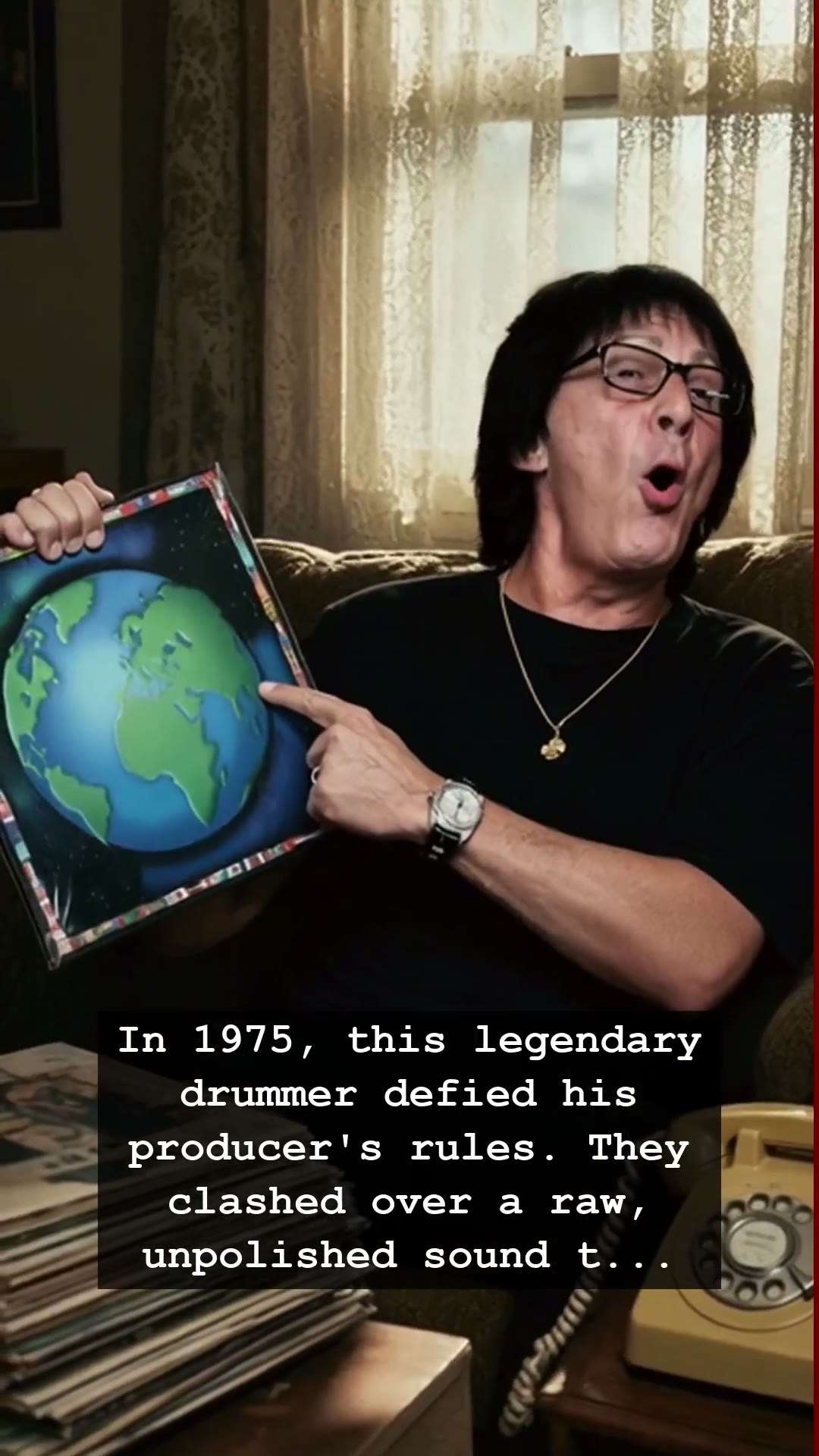
The year was 1975, and the air in the studio was thick with the scent of stale cigarettes and the suffocating pressure of a ticking clock. As the glam rock explosion began to permeate the mainstream, KISS was fighting for its life, desperate to transform from a sweaty bar band into a global phenomenon. At the heart of the storm sat Peter Criss, the Catman, whose drum kit was about to become the epicenter of a massive artistic civil war. While the producers were chasing the sanitized, radio-friendly sheen that defined the era, Peter Criss wanted something else entirely: a raw, unpolished, and gutter-level sound that captured the true spirit of the New York streets.
The conflict was palpable. Every time the producer demanded a cleaner take or a metronome-perfect beat, Peter Criss pushed back with an untamed, bluesy aggression that threatened to derail the sessions. To the suits in the control room, Criss was being difficult, but to anyone listening to the playback, he was injecting blood into the veins of their songs. He refused to be just another cog in the machine that polished away the grit of rock and roll. He believed that the power of a track lay in its imperfections, the slight drag of a cymbal, and the thunderous, human weight of a snare hit that wasn’t digitized or stripped of its soul.
This tension reached a breaking point during the recording of their breakthrough material. While the rest of the world was transitioning toward the slick production values of the late seventies, Peter Criss stood his ground, insisting that the heartbeat of rock needed to be bruised and battered to be believable. It was a clash of philosophies: the polished pop artifice versus the authentic, sweat-drenched honesty of the garage. By refusing to comply, Criss inadvertently helped carve out the definitive sound that would define arena rock for a generation. It wasn’t just about drums; it was about preserving the dignity of the chaos that makes music feel alive.
Looking back, it is easy to hear why this mattered. In an era before the digital perfection of modern software, the struggle in the studio was the only way to prove a band’s mettle. Peter Criss understood that the listeners wanted to hear the struggle, the human effort behind the rhythm. His defiance helped set the stage for an era of excess and theatricality, ensuring that even as KISS moved toward the glitz of massive stage shows, the foundation remained built on the bedrock of genuine, unvarnished rock and roll energy.
Today, as we look back on the legacy of the mid-seventies, the story of Peter Criss reminds us that the best art often comes from the most difficult places. It serves as a testament to the fact that when an artist stands their ground, they do not just record a song; they capture a moment in time that refuses to fade. Do you still remember the first time those drums hit your speakers, carrying the weight of a revolution you couldn’t quite name yet?