
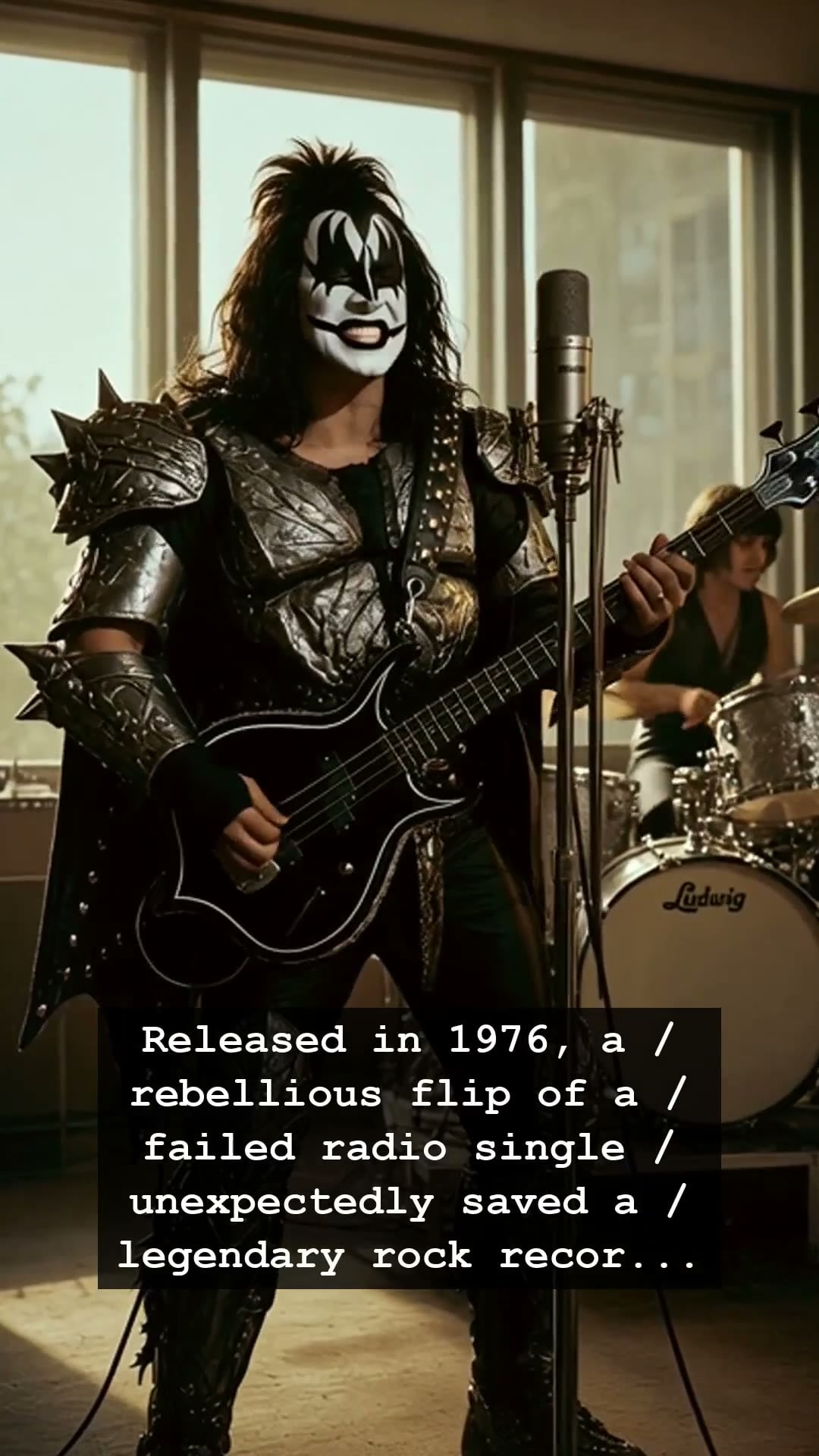
It was 1976, and the world of arena rock was standing on a precipice. For the larger-than-life quartet known as KISS, the pressure was suffocating. Despite their terrifying makeup and pyrotechnic stage presence, their previous studio albums had failed to capture the electricity of their live performances. They were the kings of the concert hall, but their record sales were stalling. The label was losing patience, and the band was dangerously close to being dropped. Then came the release of Destroyer, a high-stakes gamble that almost collapsed before it could even begin. The lead single was stagnant, gathering dust in the back rooms of radio stations, and the band’s future looked as bleak as a rainy night in New York City.
In the era of the Jukebox and the spinning vinyl, radio play was the only currency that mattered. KISS had delivered a track they hoped would catapult them into the mainstream, but it was being ignored by program directors across the nation. The song, Beth, was a ballad, a stylistic departure from their thunderous, leather-clad anthems. It was buried on the B-side of a record, seemingly destined to be a forgotten footnote in rock history. But fate has a strange sense of humor, and sometimes, a single rebellious act is all it takes to shift the trajectory of a legend. A DJ in a small station decided to ignore the A-side entirely, flipping the vinyl to play this haunting, melodic ballad instead.
The response from listeners was instantaneous. The phones at the radio station didn’t just ring; they lit up like a Christmas tree. By flipping the record, that anonymous DJ had stumbled upon the heart of the KISS experience. Beth resonated with an audience that didn’t just want to hear guitars screeching; they wanted to hear the loneliness and the longing behind the monster makeup. The song surged up the charts, defying the critics who dismissed the band as a gimmick, and it single-handedly rescued the Destroyer album from obscurity. It proved that even the most bombastic rockers have a human core that demands to be heard.
This moment became a turning point, transforming KISS from mere stage spectacles into genuine rock icons. The success of the song validated their transition toward a more polished, studio-driven sound, opening doors to massive tours and the global saturation that would define their late seventies run. It was a chaotic, accidental triumph that solidified their place in the pantheon of arena rock greats. They proved that even when you are painted as a villain, you can still touch the soul of the public through a simple, well-crafted melody that captures the spirit of the time.
Today, when we look back at the era of synth-pop beginnings and stadium-filling crescendos, we remember KISS not just for the fire-breathing and the blood-spitting, but for that moment of vulnerability. It remains a classic piece of music lore—a reminder that in the wild, unpredictable world of the seventies, the greatest hits were often the ones nobody saw coming. Do you remember the first time you heard that piano intro on your own turntable? That is the magic of rock and roll, where a flip of the wrist can turn a failure into forever.