
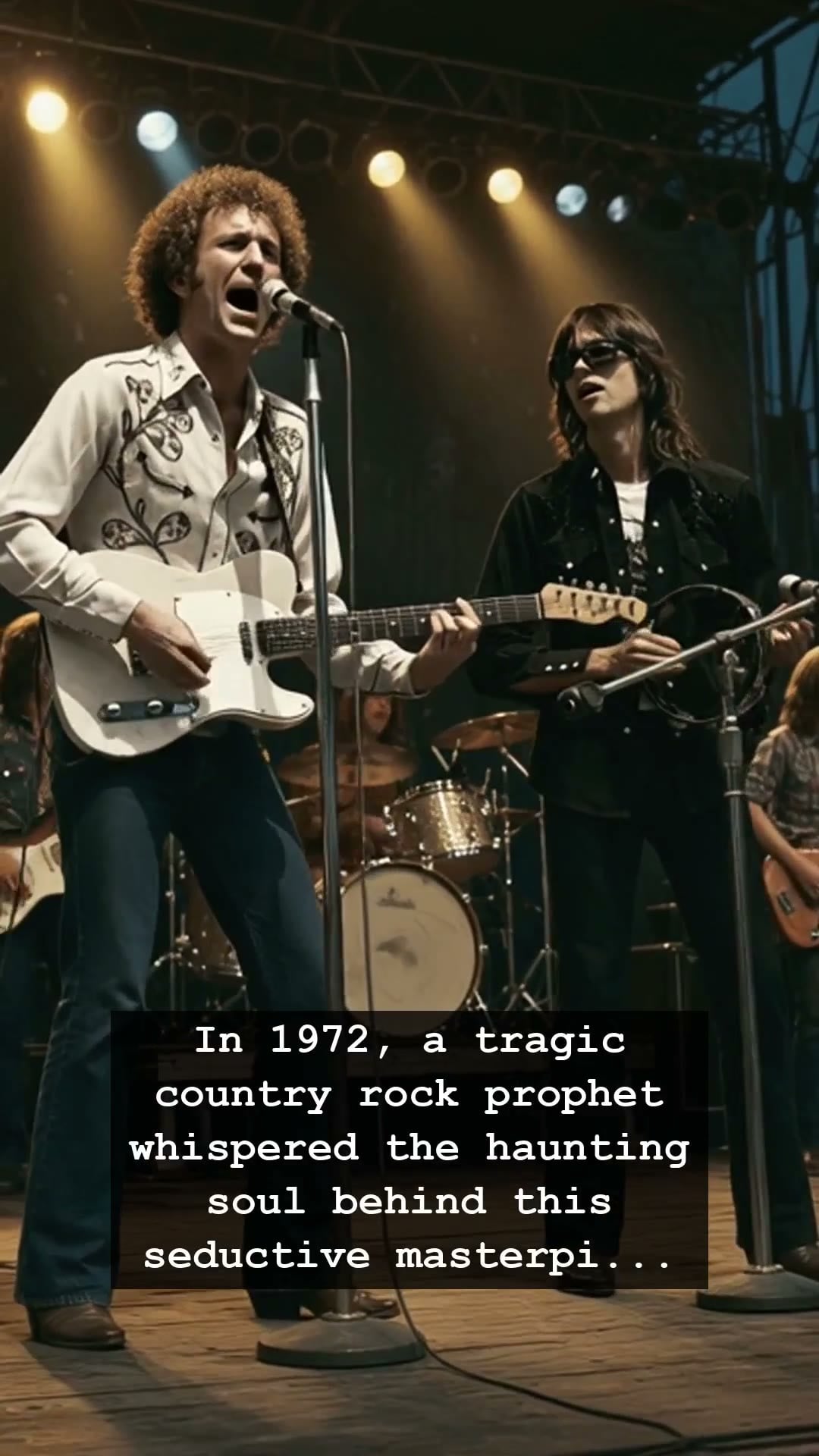
In 1972, beneath the unforgiving shimmer of a desert sun, a haunting melody began to take shape—a sound that would define an era of introspective heartbreak. Before the dark acoustic anthems of the seventies cast their seductive spell over millions of radios, a tragic country rock prophet named Gram Parsons was whispering the soul of a new movement into the dry, shifting desert winds. While many remember the glitz of the era, few realize that the backbone of country rock was forged in the isolation of a California ranch, where pain and melody became one and the same.
Gram Parsons was a man defined by a restless spirit and a vision that refused to be categorized. Alongside talented musicians like Bernie Leadon, who would later help define the polished sound of the Eagles, Parsons sought to bridge the gap between the grit of the Bakersfield honky-tonk and the expansive, experimental nature of rock and roll. Their collaboration was not merely a musical project; it was a desperate attempt to capture the ache of the American experience. They were the architects of a sound that felt like home, yet carried the heavy burden of someone forever looking for the exit sign.
There is a profound, quiet irony in how these songs became the soundtrack to our happiest memories. Listeners often associate these tracks with sunsets, long highway drives, and the warm glow of a flickering fireplace. Yet, behind the scenes, the reality was often a jagged landscape of substance abuse and profound creative friction. Bernie Leadon brought a technical precision and a deep-seated respect for bluegrass tradition, which provided the necessary scaffolding for Gram Parsons to drape his fragile, soulful vocals. It was a volatile partnership that burned bright before inevitably collapsing under the weight of conflicting ambitions and the pressures of the budding music industry.
This era was marked by the transition from the communal idealism of the late sixties to a more cynical, individualistic seventies. As the decade progressed, the music moved from the raw fields of Woodstock to the high-stakes environment of massive arenas. Gram Parsons existed in the margins of this shift, a true pioneer who never quite fit into the mainstream mold. His influence, however, remains undeniable. When you hear the interplay of guitar strings on those legendary records, you are hearing the echo of those desert sessions where friendship and musical brilliance wrestled with personal demons.
Today, we look back at the work of Gram Parsons and Bernie Leadon as a relic of a time when music felt dangerous yet deeply intimate. It was an era before digital polish, where every crack in a voice and every missed beat told a story of genuine human struggle. As the world continues to move at an unrelenting pace, returning to these haunting anthems allows us to reconnect with that raw, unfiltered vulnerability. Their legacy is not just in the records they left behind, but in the enduring truth that the most beautiful songs are often born from the deepest, most lingering wounds of the heart.