
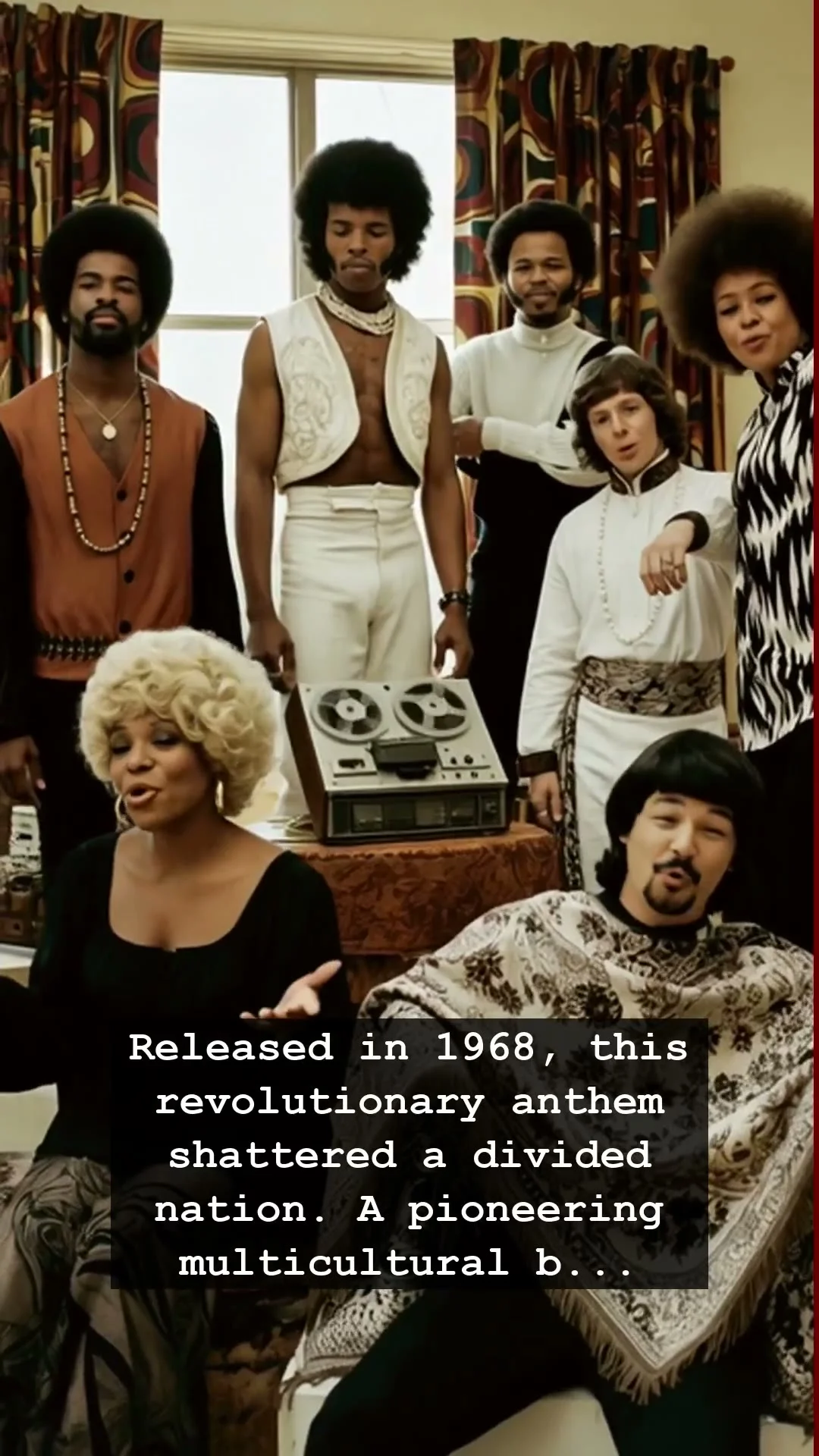
In 1968, America was a powder keg of racial tension, war protests, and social collapse. Amidst this turmoil, a group emerged from the Bay Area that looked like nothing the world had ever seen before. Sly and the Family Stone were not just a band; they were a social experiment in harmony. With men and women of different races sharing the stage, they embodied a utopian vision that felt both miraculous and impossible. When their revolutionary anthem Everyday People hit the airwaves, it served as a sonic bandage for a bleeding nation, yet the man behind the magic, Sly Stone, was already beginning to drift into a shadow of his own making.
Sly Stone was a visionary, a man who fused the grit of soul with the experimental edge of psychedelic rock. During those hazy years at Woodstock, the band commanded a stage that felt like a bridge between eras. Their sound was electric, a tight, funk-driven explosion that made audiences forget the bitter political divide, at least for a few minutes. While the world danced to the beat of a unified future, the backstage reality of Sly and the Family Stone was far more turbulent. The pressure of being the voice of a generation, combined with the darker vices of the era’s hedonistic music scene, began to erode the very foundation of the group.
It is haunting to look back at that time, through the lens of a crackling vinyl record or the grainy footage of the era’s television specials. Sly Stone possessed a magnetic genius that demanded attention, but he was a man perpetually running from his own brilliance. The band faced immense pressure from labels and society alike, struggling to maintain their multicultural integrity while the industry pushed them toward predictable formulas. The tensions within the band became as palpable as the music itself, with internal fractures surfacing under the weight of constant touring and the dangerous lures that claimed so many legends of the 1970s.
Despite the eventual unraveling of their personal lives, the music of Sly and the Family Stone remains an indestructible monument. When we listen to those tracks today, we aren’t just hearing instruments; we are hearing the heartbeat of a movement that dared to demand human decency. The band proved that music could transcend the Jukebox politics of the day and speak to something deeper within the human spirit. They changed the trajectory of soul music forever, influencing everything from the funk giants of the following decade to the modern artists who still sample their iconic riffs.
As we look back at the legacy of Sly and the Family Stone, we are reminded that even the most beautiful art is often born from profound conflict. The story of their rise and subsequent descent is a quintessential tale of the sixties and seventies, capturing both the light of pure talent and the darkness of fame’s heavy toll. They left us with a message of unity that, despite the passage of time and the changing of cultural tides, still rings with a desperate, beautiful necessity. Perhaps it is time to put the needle back on the record and listen to the message once more.