
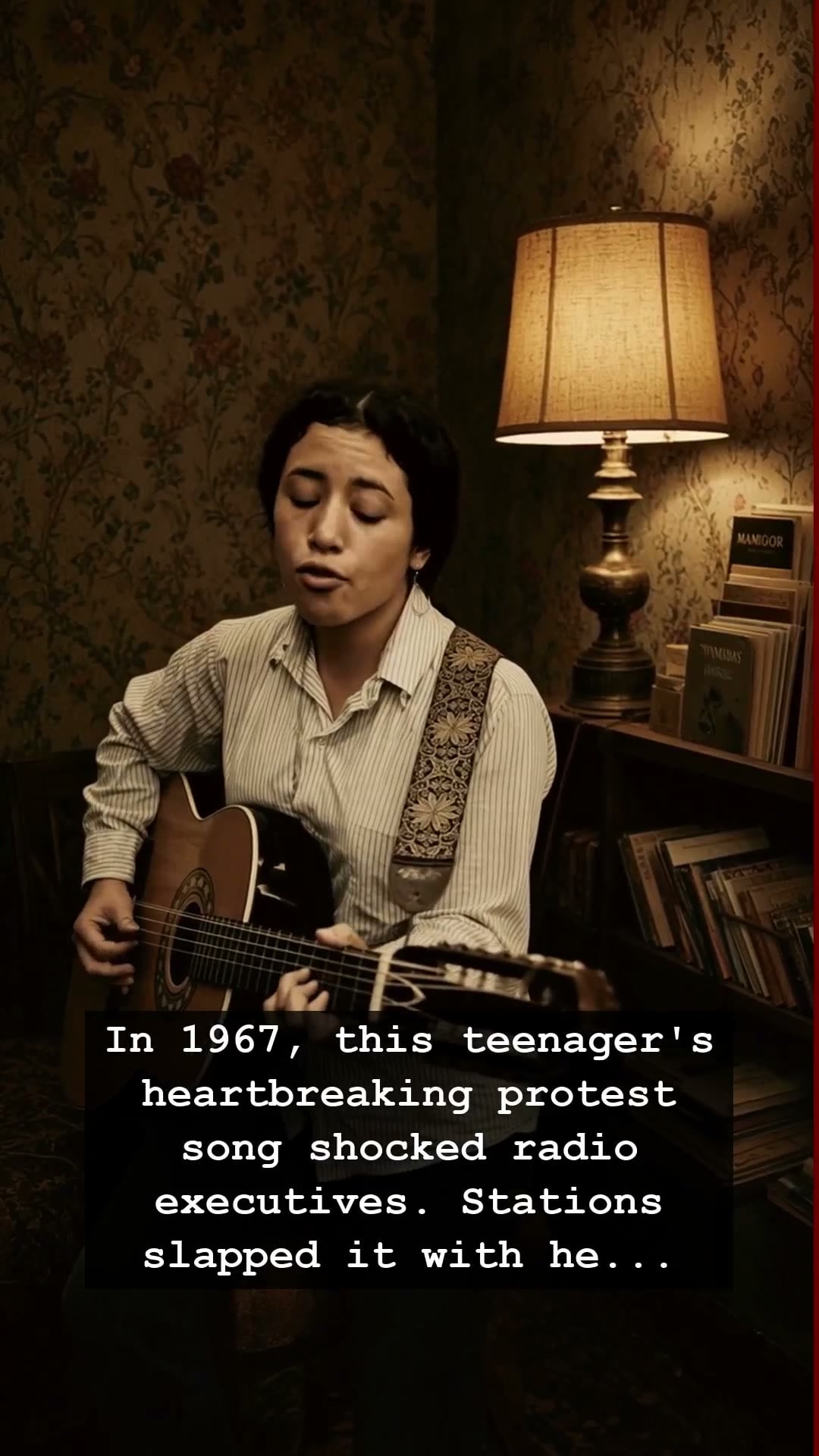
It was 1967, the Summer of Love was approaching, and the airwaves were dominated by the upbeat, polished sunshine pop of the era. Into this carefully curated soundscape stepped Janis Ian, a mere teenager with a guitar and a perspective that cut deeper than anyone was prepared for. Her debut single, Society’s Child, was not just a song; it was a societal grenade. In a time when the Jukebox was the heartbeat of every neighborhood diner, this track brought a cold, uncomfortable silence to the room. It told the story of an interracial relationship and the cruel societal pressures that forced the lovers apart. For radio executives who favored breezy harmonies, this raw, unfiltered look at prejudice was nothing short of a catastrophe.
Janis Ian wrote this masterpiece when she was only fourteen years old, a testament to a wisdom that far outpaced her years. The song was stark, intimate, and unflinchingly honest. When it hit the radio waves, the backlash was immediate and fierce. Many stations across the country effectively banned the record, fearing that the subject matter would incite outrage among their conservative listeners. It was a time when the Vietnam War was tearing at the fabric of America and civil rights movements were colliding with long-standing traditions. Janis Ian found herself caught in the crosshairs, forced to defend a piece of art that simply mirrored the ugly reality of the world she saw outside her window.
Despite the institutional boycotts and the threats aimed at her young life, Janis Ian could not be silenced. The song resonated with a generation that was beginning to wake up to the contradictions of their parents’ world. It was a precursor to the intense social consciousness that would define the late sixties. While the music industry tried to bury the track to keep the peace, the public demand grew. It eventually caught the attention of Leonard Bernstein, who invited the young songwriter to perform on a national television special, effectively forcing the gatekeepers to open the doors. Her performance remains a haunting moment in television history, capturing a girl standing alone against a backdrop of institutional disapproval.
Looking back, the story of Janis Ian and her breakthrough hit serves as a vivid reminder of music’s true power. It was never meant to be just background noise for the Walkman or a filler track at Studio 54. It was a vehicle for truth. The trauma and the triumph she experienced during those months shaped the trajectory of her legendary career. Janis Ian proved that even the most fragile voice, if it speaks the truth, can rattle the pillars of the status quo and demand that we look at ourselves in the mirror.
Today, the legacy of that song continues to echo. It reminds us of a time when music was the primary battlefield for progress and when one teenager’s courage could spark a national conversation. The grit of Janis Ian remains a touchstone for authentic songwriting. As we listen back to the crackling vinyl of 1967, let us remember not just the hit, but the girl who stood her ground when the world told her to be quiet. Does the melody still ring true to your ears, or has the world finally caught up to the story she dared to tell?