
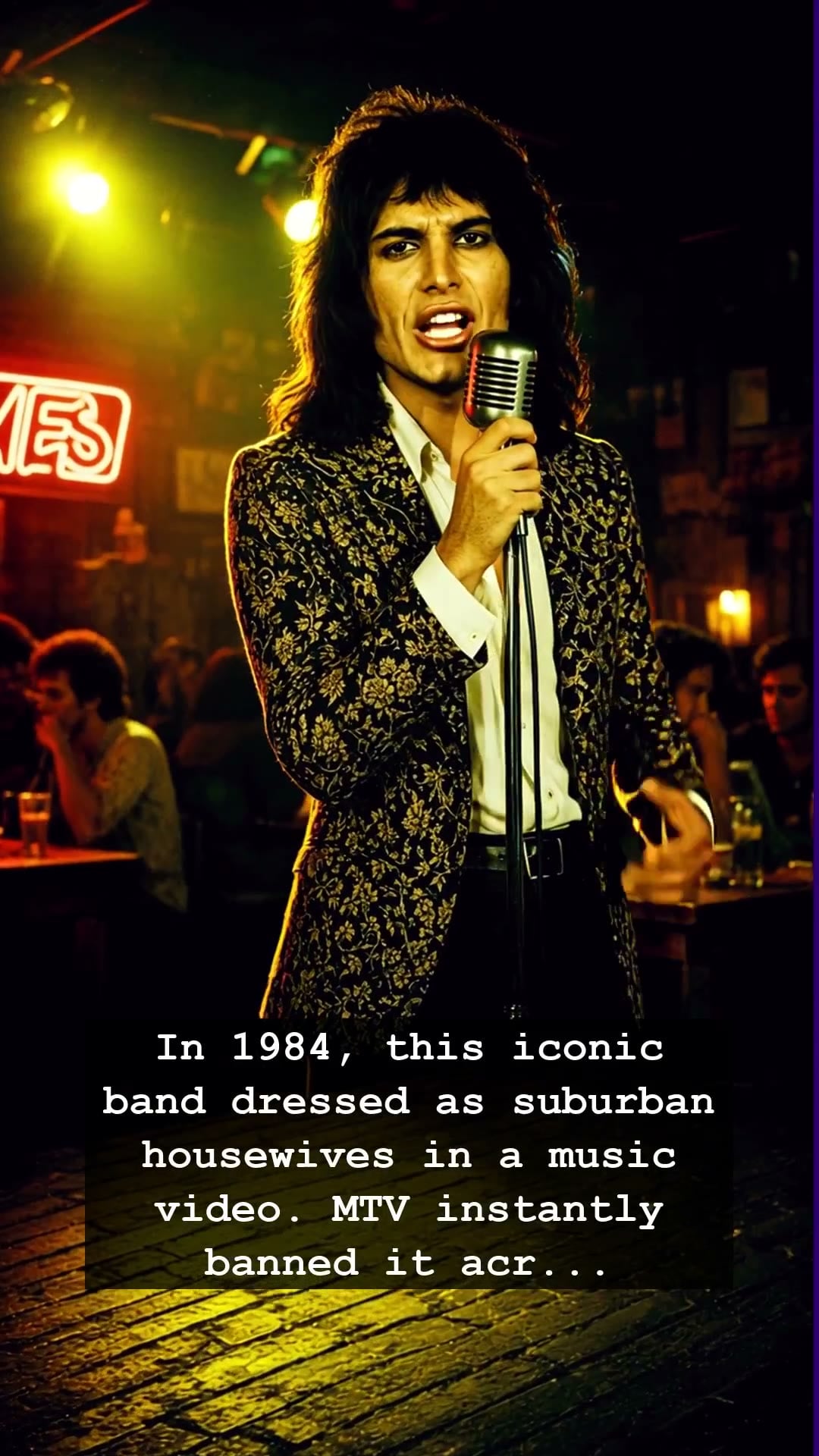
It was 1984, the year George Orwell famously predicted would be a dystopian nightmare, but for Queen, the real rebellion was happening right on the television screen. If you were a teenager huddling around your living room set during the golden age of MTV, you might remember the moment the music world stopped in its tracks. The band members of Queen, legendary icons of rock, appeared in their music video for I Want to Break Free dressed head-to-toe in suburban housewife drag. It was camp, it was hilarious, and to the conservative American executives at MTV, it was an unforgivable affront to public decency. The network did the unthinkable: they instantly banned the clip across the entire United States, effectively stripping one of the world’s biggest bands of their biggest promotional tool.
The song itself was a masterful piece of synth-pop rock fusion, pulsating with a longing for liberation that resonated deeply with fans of the era. However, the visual narrative created by director David Mallet turned the performance into a lightning rod for controversy. Freddie Mercury, sporting a beehive wig, leather skirt, and vacuum cleaner in hand, was not just playing a character; he was mocking the rigid gender norms of the time with his signature theatrical flair. While British audiences embraced the humor and the cheeky nod to the popular soap opera Coronation Street, the American cultural climate was vastly different. To the conservative media gatekeepers of the early eighties, four iconic rock gods parading in women’s clothing was a step too far.
This act of defiance is remembered today as a defining moment in the band’s history, showcasing the tension between artistic expression and institutional control. Queen had long been masters of pushing boundaries, from the operatic excess of Bohemian Rhapsody to the stadium-shaking intensity of their arena rock anthems. By 1984, they were already global legends, but I Want to Break Free represented a shift toward a cleaner, more electronic sound that divided their fanbase. The ban only added to the song’s mystique, cementing it as an underground anthem for those who felt like outsiders in their own neighborhoods.
The drama of that period went deeper than just a costume choice. The members of Queen were growing, changing, and wrestling with their individual identities under the crushing spotlight of worldwide fame. The friction caused by the ban mirrored the broader cultural anxiety of the decade, a time when the Walkman was making music personal and MTV was shaping the collective consciousness. Looking back, the video is a vibrant, neon-soaked time capsule of a band that refused to be put in a box. It wasn’t just a gimmick; it was a bold statement from Freddie Mercury that authenticity was more important than industry approval.
Today, the legacy of Queen remains untarnished, and the video for I Want to Break Free is viewed not as a scandal, but as a bold piece of performance art. It reminds us of a time when a single music video could spark national debate, a reality that seems almost quaint in our modern digital age. The next time you hear that iconic synthesizer intro, don’t just hear the melody; listen for the echo of a band that dared to be themselves, even when the world told them to dress the part.