
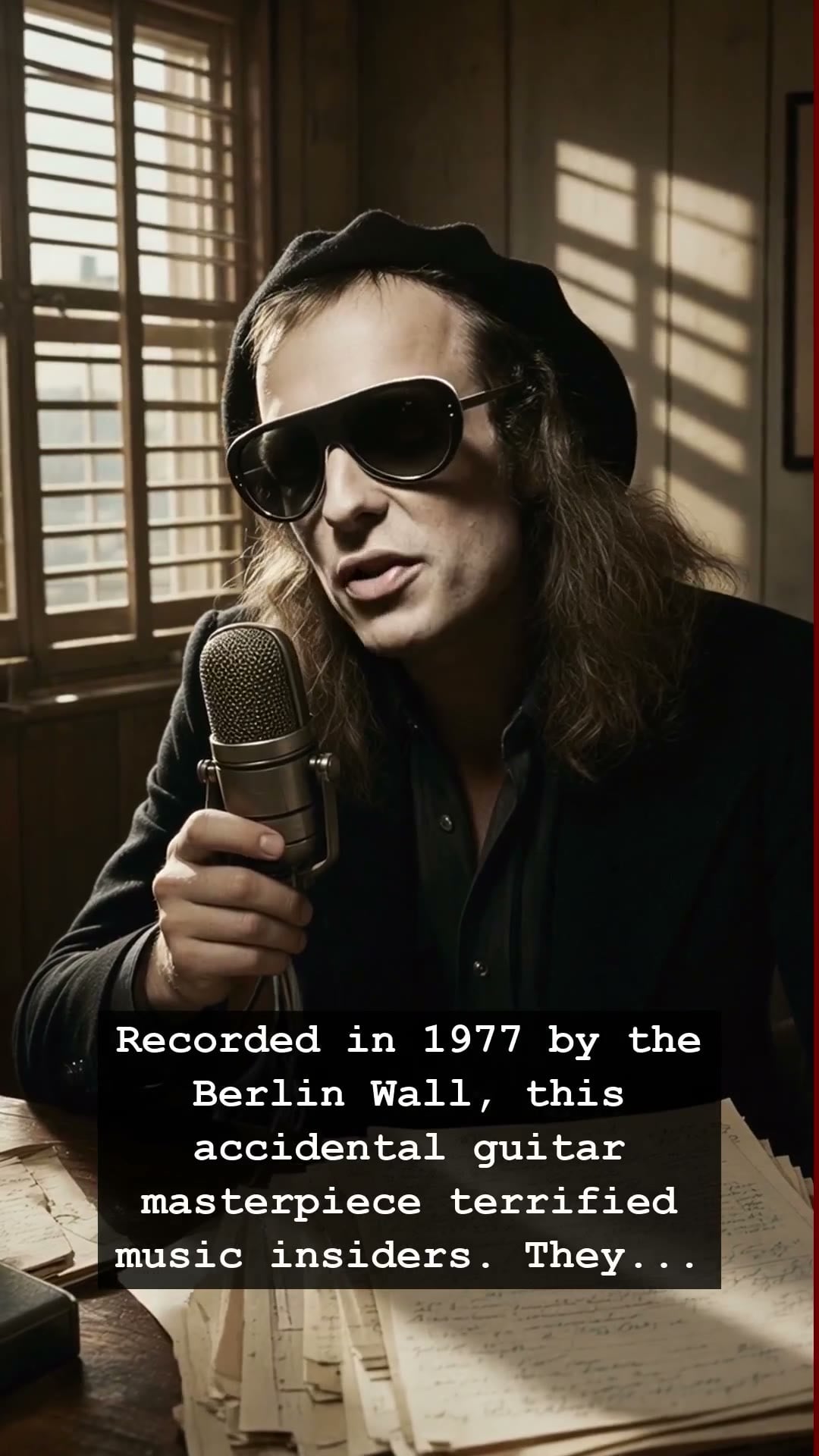
In 1977, the world felt like it was teetering on the edge of a jagged, concrete divide. Beneath the shadow of the Berlin Wall, a place where Cold War paranoia hung heavy in the air, a sonic revolution was brewing inside a drafty studio. Brian Eno, the visionary architect of sound, was not just recording music; he was conducting an experiment that would terrify the industry insiders of the time. While the pop charts were saturated with the glitter of disco, Brian Eno was busy layering ghosts into magnetic tape. They thought it was merely an acoustic curiosity, a strange detour for a rock star, but they had no idea they were witnessing the birth of a sound that would eventually redefine the very architecture of rock history.
It is difficult to capture the feeling of that specific moment in 1977 without sensing the cold, biting wind of divided Berlin. Music critics and label executives, accustomed to the predictable rhythms of the radio, were baffled by what Brian Eno was constructing. The resulting wall of sound was haunting, ambient, and deeply claustrophobic. It felt like the musical equivalent of a gray, rain-slicked street in East Germany. For Brian Eno, the studio became a laboratory of isolation. He stripped away the conventional tropes of the era, discarding the flashy production styles that defined the late seventies, and instead, he reached for something eternal and profoundly uneasy.
This period marked a turning point in music production. Brian Eno was obsessed with the idea of ‘scenius’—the intelligence of a whole scene—but here, he acted as a singular, polarizing force. His work was a departure from the stadium-filling arena rock that dominated the airwaves. By focusing on textures rather than riffs, Brian Eno forced listeners to confront their own subconscious. Those who heard the early tapes were rattled; it sounded like the soundtrack to a civilization collapsing. The industry insiders who dismissed it as a pretentious experiment failed to grasp that the world was changing, and the music needed to reflect that chilling uncertainty.
Decades later, the resonance of this specific era still holds a grip on our collective memory. We look back at the late seventies, a time of analog tape, bulky synthesizers, and the rise of the Walkman, and we realize that Brian Eno was effectively the pioneer who paved the way for modern soundscapes. He didn’t just record a song; he bottled the atmosphere of a city divided by ideology. Every note he coaxed out of the studio equipment felt like a transmission from behind the Iron Curtain, blending beauty with a lingering sense of dread that remains unparalleled even in our digital age.
To revisit the work of Brian Eno from that pivotal year is to step into a time machine. It reminds us of a time when the boundaries of what was considered ‘music’ were pushed to the brink of catastrophe. His legacy is not just in the records he produced, but in the courage he had to let the silence and the shadows speak louder than a guitar solo ever could. Do you remember the first time those haunting, ethereal waves of sound washed over you, or are you just now discovering the man who turned the Berlin Wall into a symphony of haunting truth?