
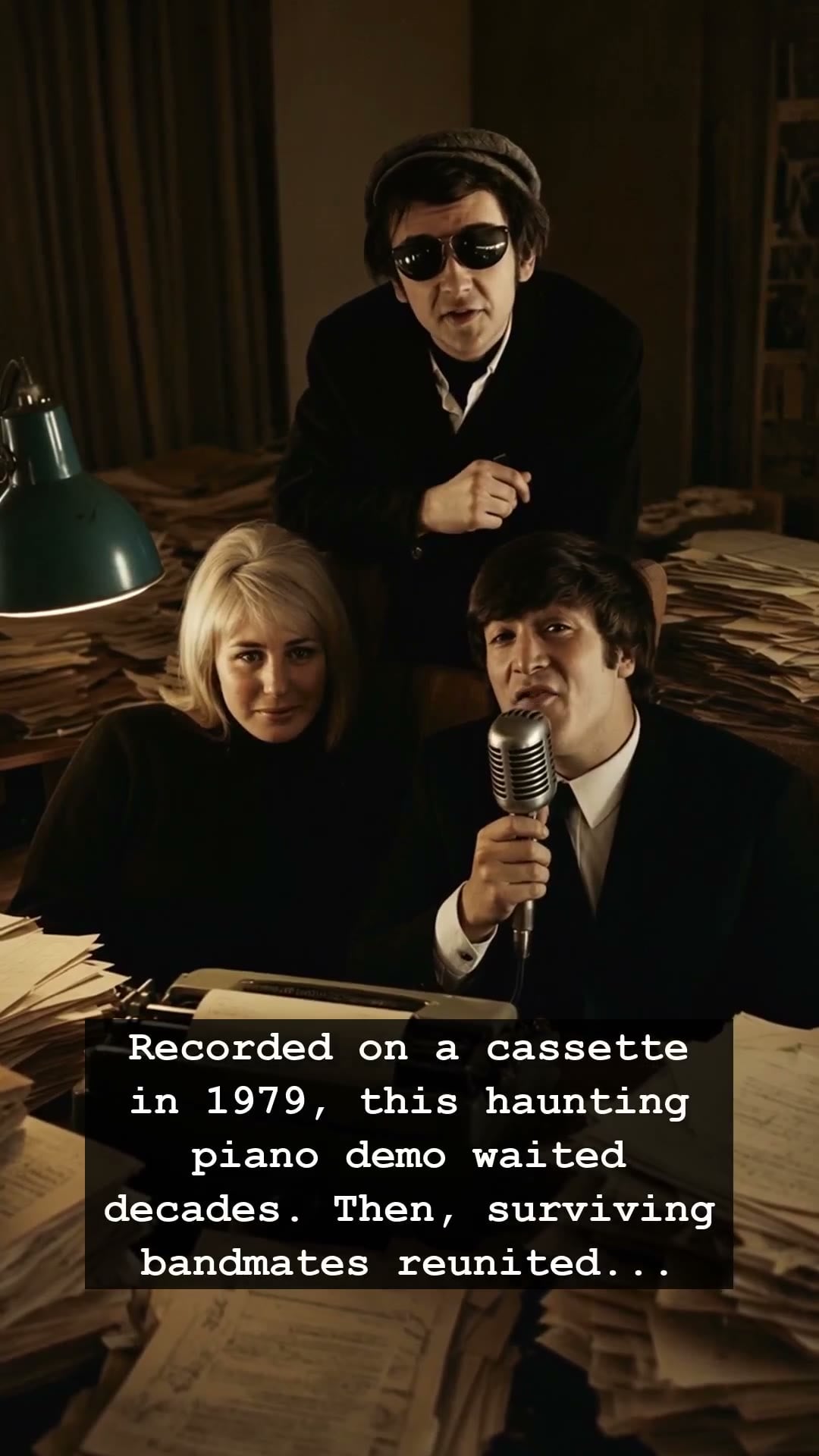
It was 1979 in the sprawling, lonely expanse of New York City. John Lennon, isolated in the Dakota building, sat before a simple piano, his fingers tracing a melancholic melody onto a low-fidelity cassette tape. He could never have known that this intimate, fragile recording would become the catalyst for a haunting musical resurrection decades later. For years, the tape sat in silence, a dusty relic of a voice silenced too soon, until the march of technology and the ache of nostalgia finally converged to turn a ghost into a final, soaring goodbye.
When the surviving members of The Beatles decided to revisit this demo, the weight of history was suffocating. The era of the Walkman and the initial, fiery explosion of the 1960s had long since faded, replaced by the digital age. Yet, the emotional core remained raw. Paul, George, and Ringo faced a unique artistic dilemma: how to harmonize with a lost brother whose vocal presence was trapped behind the hiss of an aging magnetic tape. It was not just an engineering feat; it was a séance performed through the medium of modern production, a desperate reach across the veil of time to capture one last moment of unity.
The process felt like a bridge back to the days of Woodstock and the revolutionary studio experiments of the late sixties. As they worked, the barrier between the past and the present dissolved. When the final track was completed, the world was invited to listen to a conversation between the living and the dead. The Beatles had always been masters of evolution, constantly reinventing their sound from the upbeat rhythm of early Rock ‘n’ Roll to the psychedelic complexities of their later years. This final song, however, transcended genre; it was an act of profound closure that resonated with millions who grew up alongside the band.
Listening to the finished track today feels like stepping into a dimly lit Studio 54 or finding an old jukebox in a quiet corner of a forgotten diner. The clarity of John Lennon’s voice, once muffled and distant, now rings out with a startling, heartbreaking proximity. It serves as a stark reminder of the fragile nature of fame and the heavy price of genius. The story of The Beatles has always been filled with drama, creative tension, and the inevitable passage of time, but this coda proved that their collective spirit was far more enduring than any single scandal or internal disagreement.
Ultimately, this final chapter is a testament to the power of memory. In an age of synthetic perfection, there is something deeply human about these three men reconnecting with a voice that had been silenced for forty years. It serves as a gentle reminder to every Boomer and Gen X listener that while the eras change, the emotions bound to a melody remain eternal. Even when the music stops, the echoes of The Beatles continue to vibrate in the hearts of those who still believe in the magic of a perfect chord.