
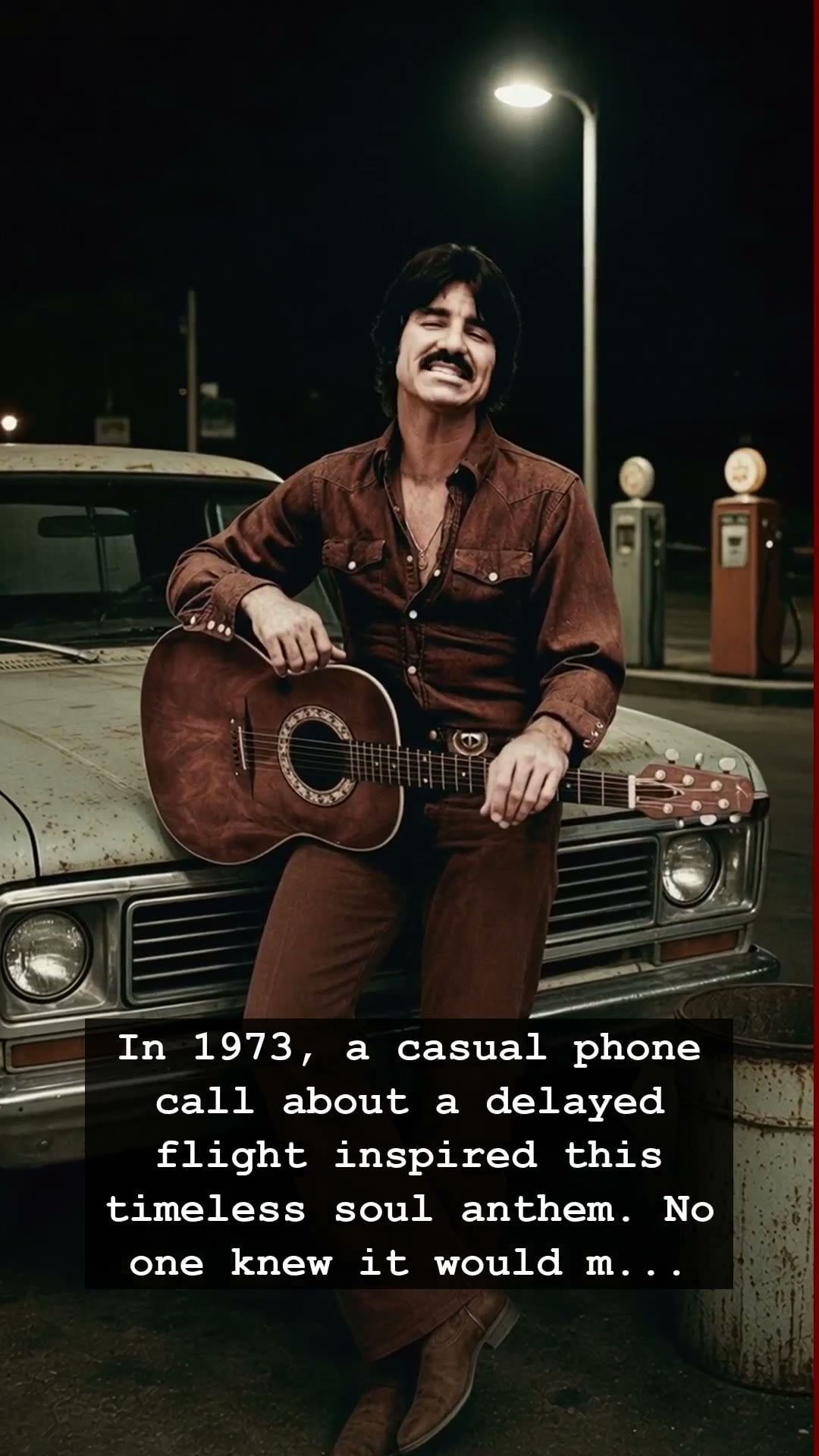
The year was 1973, and the airwaves were humming with the sounds of a changing America. Amidst the rise of soul and the shimmering echoes of the Motown era, a simple, unintended conversation was about to change music history forever. Jim Weatherly, a talented songwriter carving his path in the industry, picked up his telephone for a routine chat, little knowing that the words spoken in those few minutes would eventually bloom into one of the most iconic soul anthems of the twentieth century. It was a moment of pure, raw serendipity that bypassed the grand studio lights of the era.
At the time, Jim Weatherly was connected to Farrah Fawcett, who was living with Lee Majors. During their casual phone call, she mentioned that she was heading out to catch a midnight plane to Houston. The phrase stuck in Weatherly’s mind, hauntingly poetic in its simplicity. He sat down and transformed that fleeting flight delay into the melancholic, soul-stirring narrative of Midnight Train to Georgia. It was not just a song about travel; it was a testament to the heavy weight of sacrifice, love, and the longing for a simpler life, capturing a uniquely American yearning that resonated deep within the heart of the disco and soul-loving generation.
While Jim Weatherly initially wrote the song with a country flair, it wasn’t until the legendary Gladys Knight and the Pips got their hands on it that the track transcended genre boundaries. The transition from a quiet, acoustic thought into a powerhouse soul masterpiece highlights the magic of the 1970s recording industry. During that decade, artists were not just chasing hits; they were crafting cultural touchstones that defined the atmosphere of dimly lit lounges and neighborhood record stores. The song became a definitive piece of the era, standing alongside the smooth melodies that played endlessly on every jukebox from New York to California.
Beyond the glitz of the charts, Jim Weatherly’s life was deeply rooted in the craft of authentic storytelling. He understood that the best songs were often born from the most mundane human experiences. His ability to distill a simple phone call into a universal story of devotion remains a masterclass in songwriting. For many who lived through the transition from the psychedelic late sixties to the sophisticated soul of the mid-seventies, his music acts as a sonic time machine, instantly transporting us back to an age of analog warmth and genuine emotional vulnerability.
Today, the legacy of Jim Weatherly reminds us that legends are often built on quiet, human moments rather than manufactured hype. Whether you were hearing the song on a crackling car radio or dancing to it in the velvet-clad corners of a local club, it carries the weight of a thousand memories. It serves as a beautiful reminder of a time when music held the power to stop the world in its tracks. As we look back on the golden age of American music, we find that the most enduring tracks are those that, like Jim Weatherly’s, continue to tell our stories perfectly.