
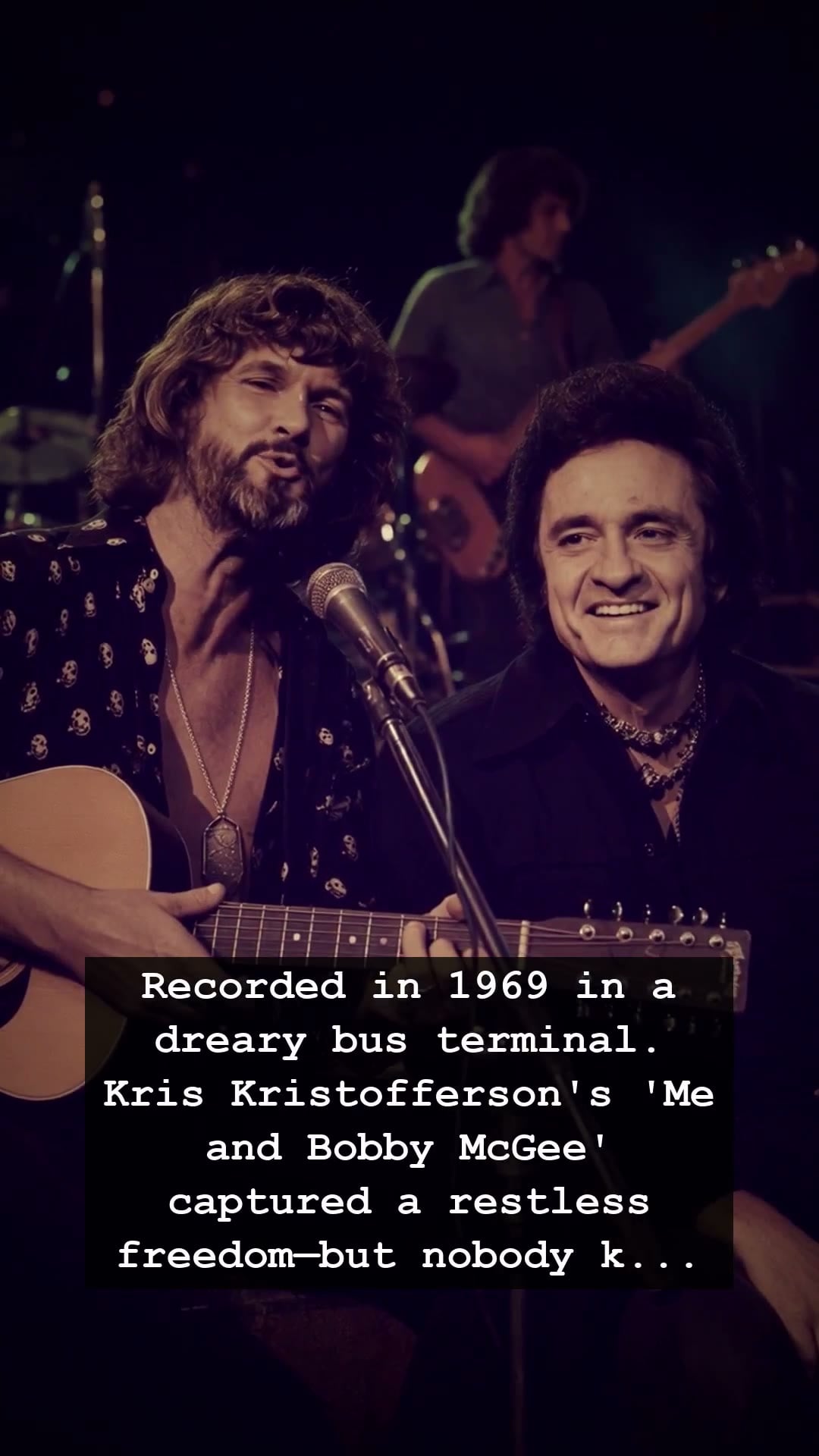
It was 1969, and the air inside a dreary Louisiana bus terminal was thick with the scent of stale coffee and diesel exhaust. For a young, struggling songwriter named Kris Kristofferson, it was a purgatory of transition. He was a man caught between the military life he had abandoned and the Nashville dream that felt perpetually out of reach. Sitting there, waiting for a ride to nowhere, he began to jot down lines on a notepad that would eventually redefine the sound of American wanderlust. He had no way of knowing then that he was scribbling the blueprint for a song that would become an immortal anthem of the human condition.
Me and Bobby McGee was born from this restless spirit of the late sixties, a time when the Jukebox in every roadside diner played the soundtrack of a country in flux. Kris Kristofferson did not write a pop song; he crafted a confession. The narrative of two hitchhikers seeking freedom in the shadow of the open road struck a nerve with a generation grappling with the Vietnam War, the counterculture movement, and a deep-seated desire to break away from societal chains. It was raw, it was unpolished, and it carried the weight of authentic heartache that standard radio hits often lacked.
While Kris Kristofferson struggled to gain traction as a solo artist, the song soon found its way into the hands of a young Janis Joplin. Her electrifying performance turned the track into a desperate, soul-baring cry that defined her legacy. The juxtaposition of Kristofferson’s weary storytelling and Joplin’s jagged, volcanic delivery created a cultural lightning bolt. It was a moment of artistic alchemy that transcended the era of smoky bars and transistor radios. The song proved that a simple story about traveling from the coal mines of Kentucky to the shores of California could bridge the gap between absolute loneliness and total liberation.
Behind the melody lies the darker side of the fame that followed for Kris Kristofferson. He was a man who walked the thin line between brilliance and self-destruction, often found in the company of legends who burned too brightly. The success of the song thrust him from the anonymity of a bus terminal into the blinding glare of the spotlight. Yet, even as he climbed the charts, the grit of his early days remained embedded in his lyrics. He remained an outsider at heart, a poet who viewed the music industry through the lens of a weary traveler who had seen too much and felt everything.
Today, decades after its release, the song remains a haunting reminder of a different time. It serves as a bridge to a generation that remembers the tangible world of vinyl records and the slow, romantic exhaustion of long-distance travel. As we listen back, we are transported to that lonely bus stop in Louisiana where it all began. Kris Kristofferson gave us more than just a hit; he gave us a map of the heart, reminding us that freedom is rarely about where you are going, but rather what you are willing to leave behind.