
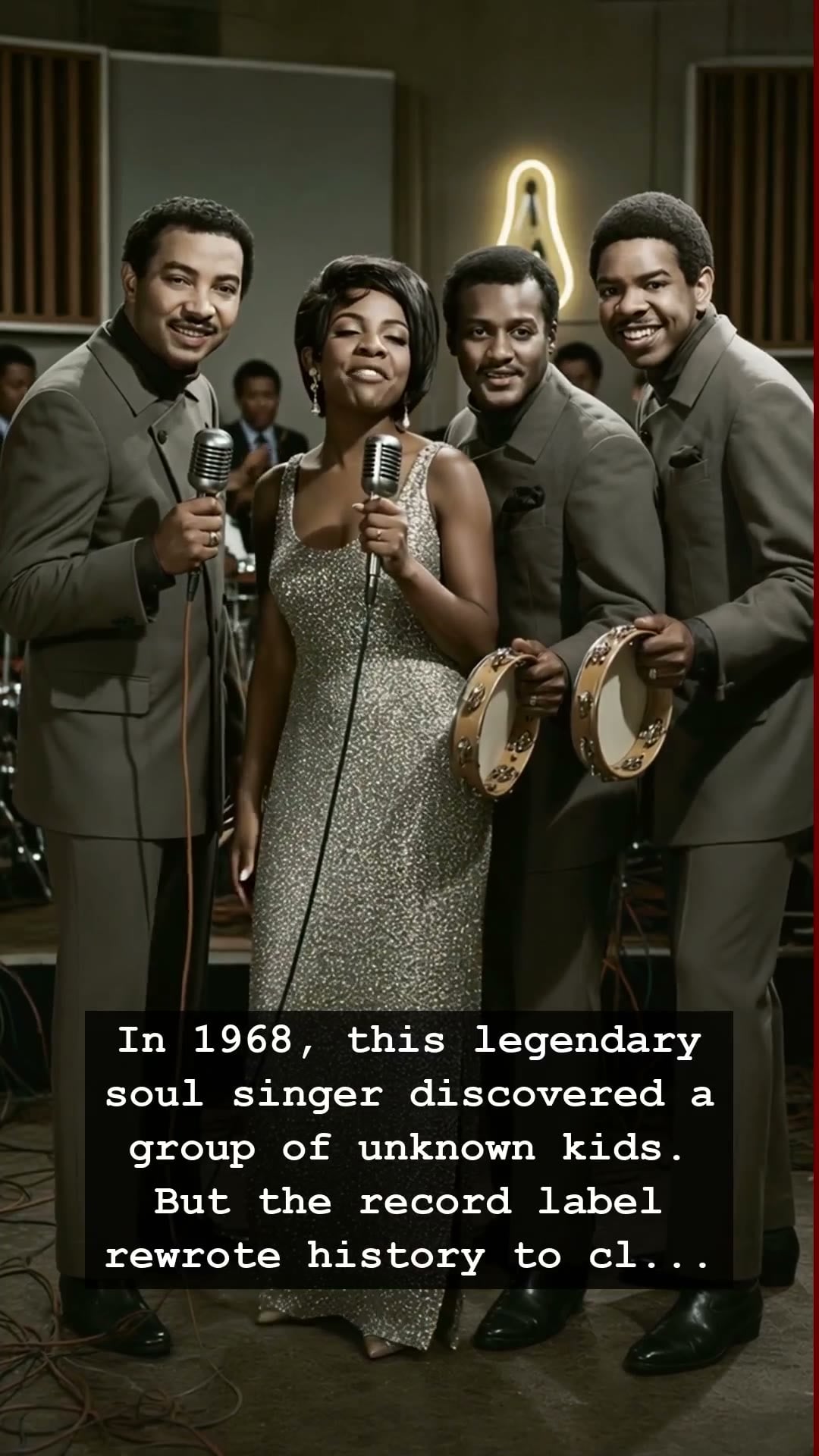
In the golden era of Motown, history was often written by the suits behind the glass rather than the artists on the stage. We all know the polished, cinematic legend: Berry Gordy, the visionary boss, supposedly plucked a group of talented brothers from Gary, Indiana, and turned them into global superstars. But beneath the sparkle of the Motown machine, a very different, more human story was unfolding in 1968. Long before the world was moonwalking to the sound of young Michael Jackson, the legendary soul queen Gladys Knight was the one who actually heard the magic in those young voices first.
Gladys Knight and The Pips were already established soul royalty when they crossed paths with the Jackson family. Gladys Knight saw raw, untapped potential in the young brothers that the industry had largely ignored. She wasn’t just a peer; she was a champion who saw the fire in little Michael’s eyes. As the story goes, she was so moved by their performance that she actively pushed for them to be signed to Motown. She brought them to the attention of the label executives, acting as the true bridge between their humble beginnings and the studio lights. Yet, when the ink dried on the contracts and the press releases started flying, Gladys Knight was mysteriously scrubbed from the narrative.
It is a classic case of corporate myth-making. To the record label, a narrative of a corporate titan discovering a diamond in the rough was far more marketable than a story of one artist discovering another. The music industry in the late sixties was a cutthroat environment, fueled by competition and the desperate need to create myths that would sell millions of records. While the world was glued to their radios and dancing to the beat of the Jukebox, the truth about the discovery of The Jackson 5 was buried under a shiny, manufactured fairy tale designed to keep the power firmly in the hands of the executive office.
This discrepancy remains one of the most intriguing footnotes in soul music history. It reminds us that for every hit song that defined the era, there was a complex, sometimes bitter drama happening behind the scenes. The music we hold dear today, the tracks that transport us back to the days of vinyl records and transistor radios, often carried the weight of these quiet, overlooked conflicts. The Jackson 5 would go on to change pop culture forever, but the debt they owed to the genuine advocacy of Gladys Knight is a part of their legacy that history almost successfully erased.
We love these legends for their voices and their hits, but the human cost and the overlooked gestures of kindness behind their rise make the music feel even more authentic today. It serves as a poignant reminder that behind the glitz of fame, the history we were told was rarely the whole truth. Next time you spin a classic Motown record, remember that behind every legendary performance lies a hidden story of loyalty and competition, waiting to be heard again.