
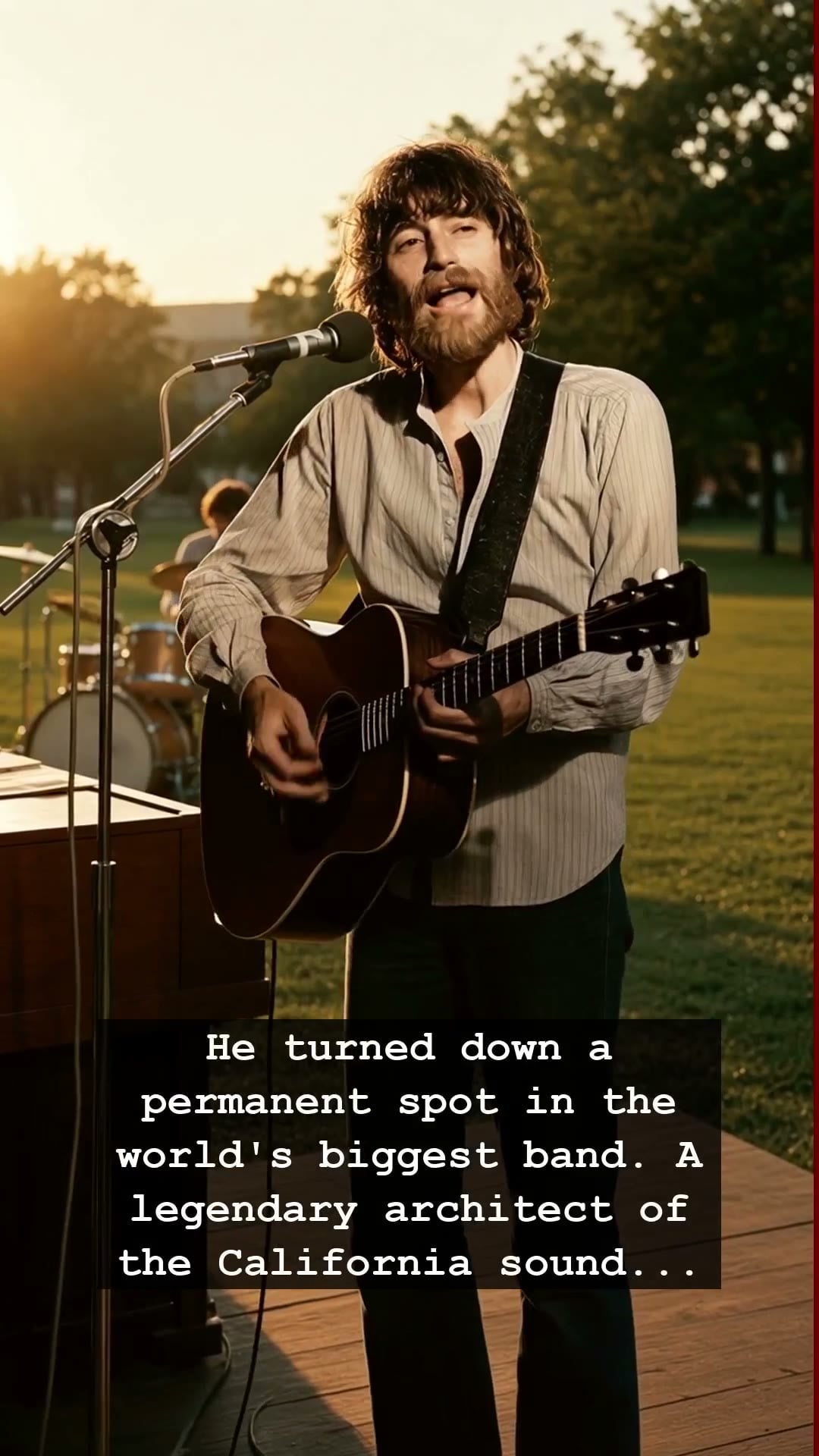
In 1970, the sound of Southern California was being redefined inside a cramped, smoke-filled room. While the world was preparing to worship the harmonies of the biggest band in American history, one man stood at the crossroads of immortality and decided to walk away. JD Souther was not just a songwriter; he was the secret architect behind the California country-rock sound that defined an entire generation. When he turned down a permanent spot in the Eagles, he didn’t just walk away from fame—he chose the elusive, haunting path of a true artist who preferred the pen to the spotlight. Most people remember the hits, but few realize the golden age of the seventies would have sounded entirely different without his invisible hand guiding the pen.
JD Souther was the ultimate collaborator, a man whose musical DNA is woven into the fabric of the Laurel Canyon scene. Before the neon excess of the eighties, when the sound was raw and the dreams were high, he was the guy Glenn Frey and Don Henley turned to when they needed a bridge to bridge the gap between soul and country. He co-wrote anthems like Heartache Tonight and Victim of Love, yet he always seemed to operate in the shadows of the very giants he helped create. He was the ghost in the machine, the lyrical genius who knew exactly how to capture the loneliness of a highway sunset and the sting of a failed romance.
Imagine the scene: the Walkman hadn’t even become a cultural phenomenon yet, and the radio was dominated by the hum of Jukeboxes in dusty roadside diners. JD Souther was navigating the complex interpersonal friction of a group destined to break records, yet he prioritized his own voice over the machinery of a hit-making conglomerate. It was a bold, almost reckless artistic decision in an era where fame was the only currency that mattered. He saw the impending explosion of the stadium rock era, the grueling tours, and the inevitable ego clashes, and he chose to maintain his sanity, even if it meant sacrificing a permanent seat on the private jet.
His voice, soft and weathered like an old leather jacket, carried a weight that perfectly encapsulated the late seventies zeitgeist. When he finally stepped out from the background, his solo work offered a glimpse into the internal monologue of a man who had seen the industry from the inside and walked away unscathed. He was the quintessential craftsman, favoring quality over the hollow spectacle of the evolving music business. The transition from the organic, earthy roots of country-rock to the polished, synthesized sounds of the mid-eighties was a shift he observed with a weary, knowing eye.
Decades later, the legacy of JD Souther remains a testament to the power of artistic integrity. While the bands he helped build filled arenas and sold out tours, he cultivated a cult following of listeners who crave the intimacy of his storytelling. He reminds us that true legendary status isn’t always measured in sold-out shows or platinum records. Sometimes, the most powerful choice an artist can make is knowing when to step off the stage and let the music speak for itself. As we look back on that golden, hazy era, we hear JD Souther not just in the songs he wrote, but in the echoes of the silence he chose to embrace.