
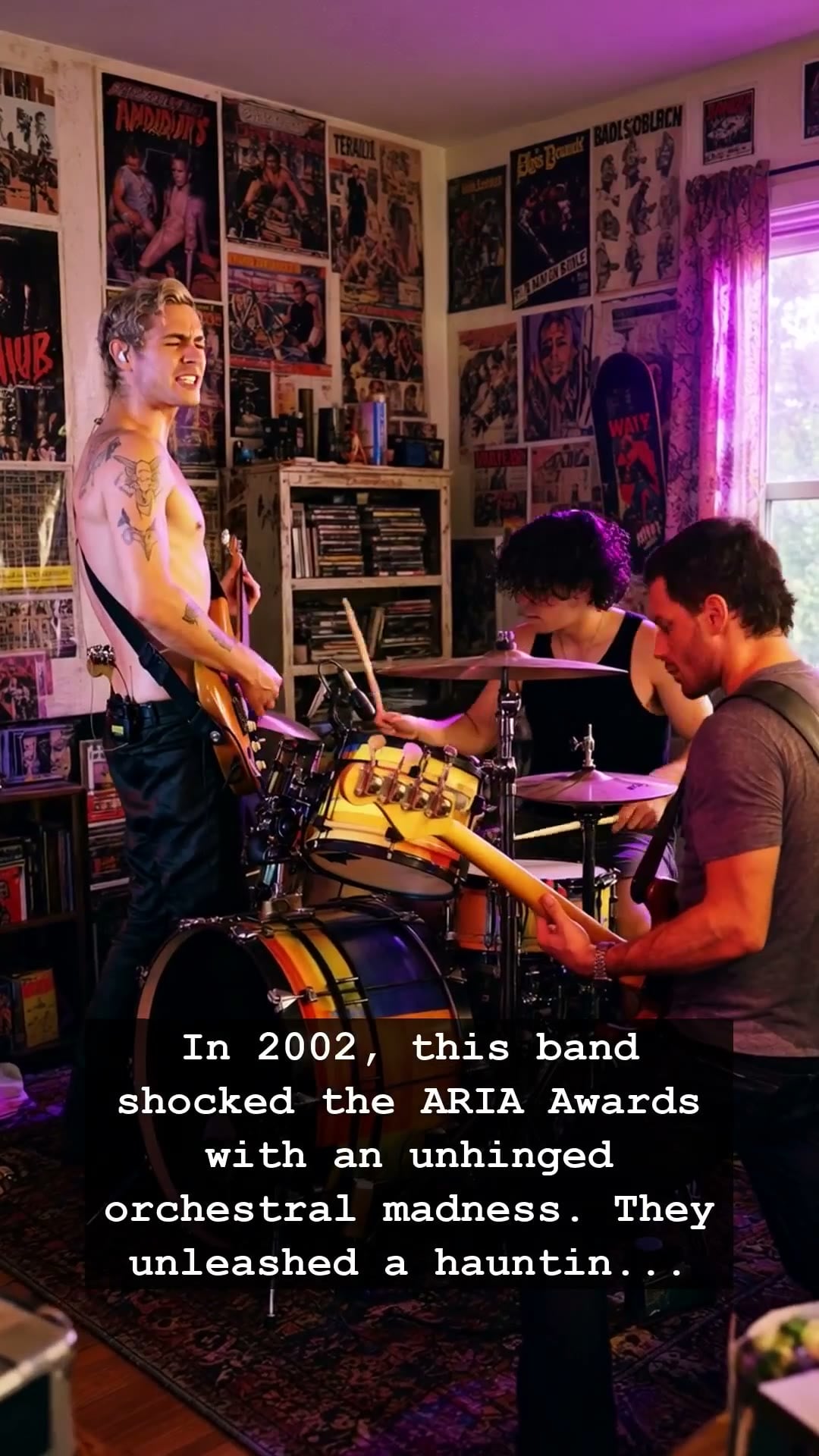
In the golden age of alternative rock, there was a specific breed of wunderkind that defied every industry expectation. By 2002, the Australian trio Silverchair had already transitioned from their teenage grunge roots into something far more dangerous and enigmatic. While the rest of the world was buried in the post-grunge malaise of the early 2000s, Silverchair chose a path of unhinged artistic defiance. The ARIA Awards stage became their battlefield, and the resulting performance was not merely a song; it was a haunting, theatrical exorcism that redefined what a rock band could achieve under the blinding glare of the spotlight.
Most fans knew Silverchair for the raw, distorted angst of Frogstomp, but by the time they unleashed their Diorama era, the band had evolved into an orchestral powerhouse. As the velvet curtains parted at the ARIAs, the audience expected a standard rock set. Instead, they were met with a wall of sound that felt pulled from a dark, cinematic fever dream. With strings swelling and piano chords crashing like waves, Daniel Johns stood at the center of the madness, conducting his own musical wreckage. It was a spectacle that signaled the end of their innocence and the beginning of a complex, sophisticated sonic legacy that left critics and fans absolutely breathless.
This moment of orchestral madness wasn’t just about technical skill; it was a desperate, beautiful reaction to the intense pressure of fame that Silverchair had endured since they were literal children. Navigating the treacherous landscape of the music industry—where labels demand predictable hits—the band opted for musical liberation. They traded the grit of the garage for the elegance of a symphony, proving that true artists do not fear the fallout of reinvention. The performance remains a cultural touchstone, a vivid reminder of a time when MTV and music television were the final arbiters of legend, and when a single live moment could pivot the trajectory of an entire career.
Looking back at that night, the sheer audacity of Silverchair serves as a stark contrast to the sterilized, algorithm-driven music landscape of today. Their performance at the 2002 ARIA Awards was raw, unhinged, and deeply personal. It captured the tension of a band trying to outrun their own ghosts while forcing the world to listen to their new, avant-garde vocabulary. The drama, the nerves, and the artistic collision on that stage provided a rare glimpse into the psyche of a group that refused to be put in a box, choosing instead to burn the box to the ground with a string section and a sheer force of will.
Even decades later, the echo of that performance resonates within the hearts of those who miss the era of high-stakes, authentic artistry. Silverchair proved that even in the heart of mainstream success, a band could prioritize their evolution over their image. As we look back on the history of rock, it is moments like these—where the lines between melody and chaos blurred—that remind us why we fell in love with music in the first place. Tell us, do you remember the moment the music world finally realized Silverchair were true musical visionaries?