
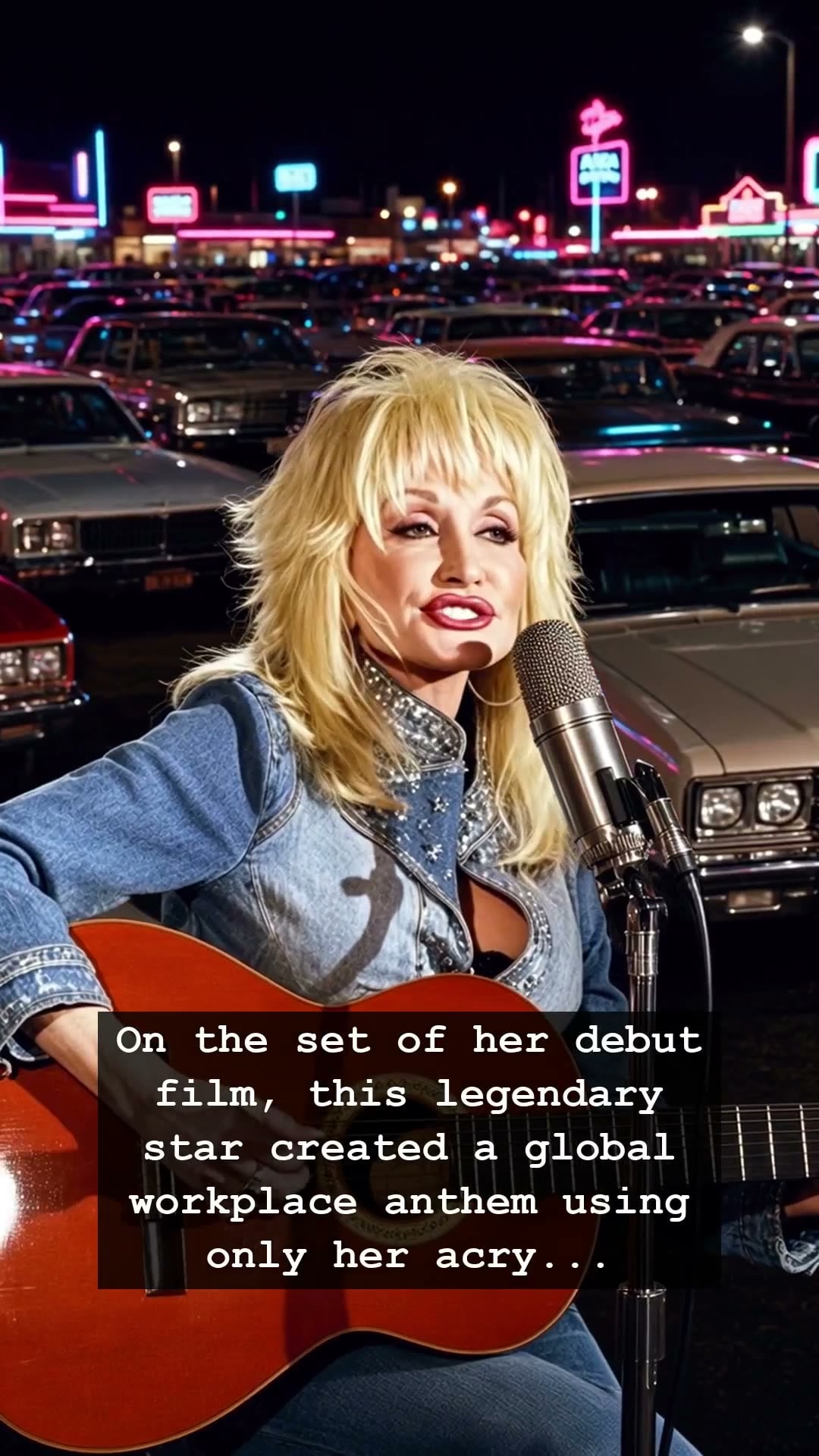
It was 1980, and the air on the movie set felt electric. While most songwriters were busy laboring over pianos or acoustic guitars, the legendary Dolly Parton found her rhythm in the most unlikely of places: the clacking of her own acrylic fingernails. As she sat between takes, mimicking the rapid-fire beat of a typewriter, she birthed a global anthem that would forever define the American workplace. The result was 9 to 5, a song that turned the mundane agony of office life into a defiant, high-energy masterpiece of the late twentieth century.
At the height of the disco era, the professional world was changing, and Dolly Parton became the unlikely voice of a generation of women hitting the corporate glass ceiling. Behind the glitz of her signature blonde wig and rhinestones lay a sharp, observational mind. During the filming of the movie of the same name, Dolly realized that the story needed a heartbeat. She took those long, clicking nails and tapped out the rhythm of a staccato electric typewriter, creating a percussive hook so infectious it practically demanded attention. It was raw, organic, and entirely characteristic of her brilliant, unpretentious songwriting style.
This wasn’t just a catchy tune; it was a cultural mirror. The late 70s and early 80s were characterized by the rise of the personal Walkman, the neon glow of MTV, and a changing social landscape where the commute to the office had become the new American ritual. Dolly Parton managed to capture the collective frustration of a changing labor force, packaging it with a melody that felt like a release of tension. When the song hit the airwaves, it didn’t just top the country charts; it crossed over, dominating the pop scene and becoming a symbol of grit for everyone stuck in the grind.
Beyond the catchy chorus, the story of 9 to 5 represents the multifaceted nature of Dolly Parton herself. She was a woman who navigated the shark-infested waters of the music industry—often dominated by men—with grace, sharp wit, and an iron will. The studio sessions for the track were fueled by the same creative chaos that defined Hollywood in the transition period from the gritty 70s into the synth-pop era. She didn’t have a professional percussionist in that moment; she had her own hands and an instinct for what would make the world hum along.
Decades later, the clatter of those acrylic nails still echoes in every office cubicle across the country. 9 to 5 remains more than just a nostalgic blast from the past; it is a testament to the idea that true creative genius can strike anywhere, whether you are in a high-tech studio or sitting in a trailer on a film set. Dolly Parton reminded us that even the most repetitive, soul-crushing workday deserves a theme song that celebrates the spirit of those who keep the world turning. Do you still tap your fingers to the rhythm when you hear it start to play?