
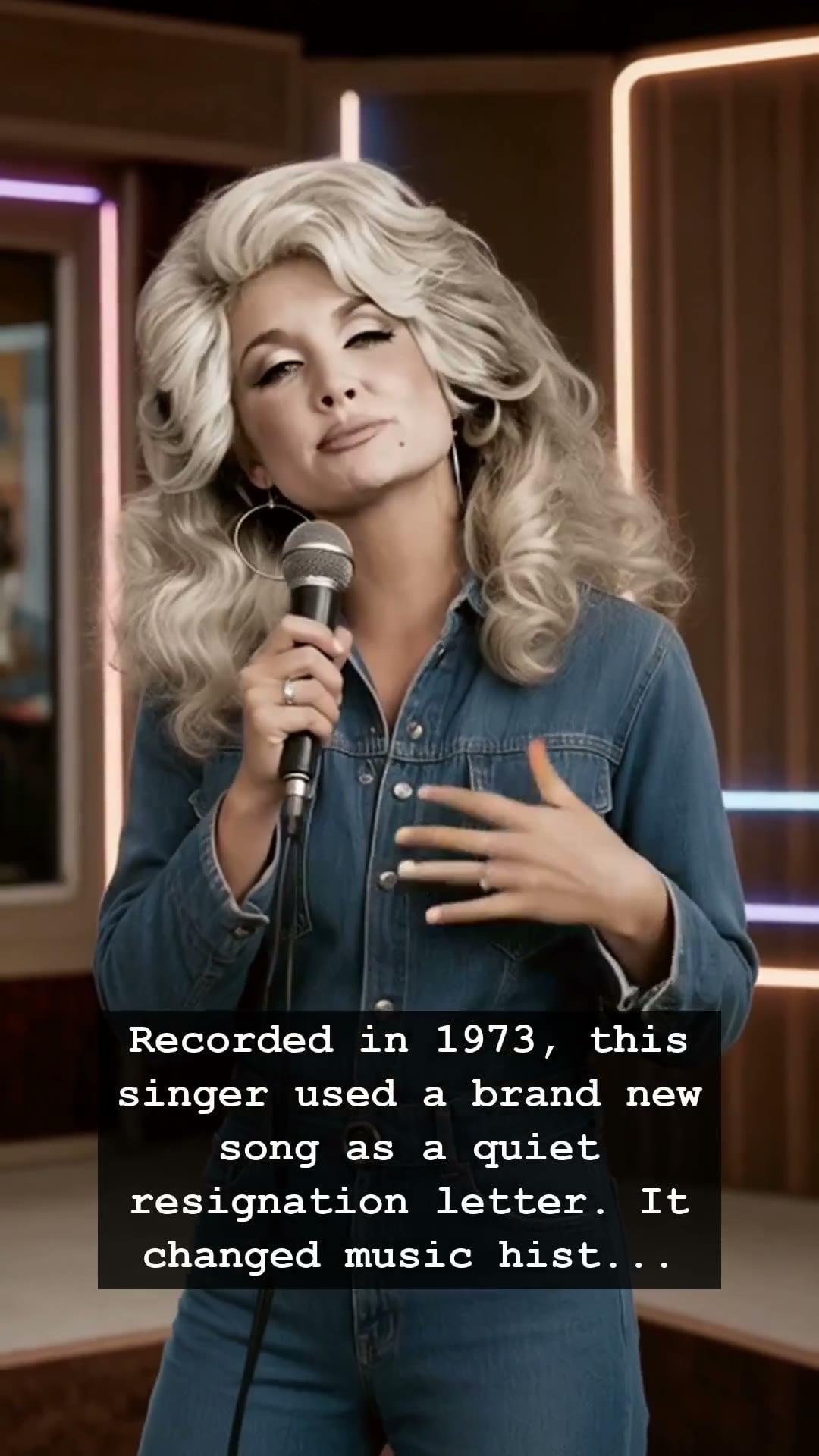
The year was 1973. The air in Nashville was thick with the scent of cheap cigarette smoke and the restless energy of country music history being forged in real-time. In a small, dimly lit office, a young Dolly Parton sat across from Porter Wagoner, the man who had been her mentor, her partner, and her ticket to stardom for seven long years. The atmosphere was brittle, heavy with the unspoken tension of a career crossroads that would soon become a defining moment in American music. Dolly Parton had made a decision that would break a legendary partnership, and she chose to deliver the news not through a cold legal document, but through the haunting, crystalline lyrics of a song that would eventually conquer the world.
She picked up her guitar, the wood worn smooth by years of stage performances, and began to sing the opening lines of I Will Always Love You. This was not just another heartbreak ballad destined for the jukeboxes of local diners; it was a quiet, melodic resignation letter. Dolly Parton knew that if she tried to speak the words, her voice would shatter under the weight of her ambition and guilt. By pouring her soul into those verses, she ensured that the professional divorce between her and Wagoner was handled with a grace that transcended their internal turmoil. It was an act of profound emotional bravery that turned a business necessity into a masterpiece of vulnerability.
At the time, the world of music was shifting. While the psychedelic rock movement had already left its mark and the glam of the late seventies was creeping over the horizon, this specific track remained anchored in the raw, authentic storytelling that defined the classic country era. Porter Wagoner, a man known for his flamboyant Nudie suits and his iron-fisted control over the business, was reportedly moved to tears. He realized instantly that he could not hold her back. The partnership that had dominated television screens and country charts was dissolving, replaced by the birth of Dolly Parton as a global icon who would dictate her own narrative.
What makes this story so enduring is the stark contrast between the glitz of the music industry and the fragile reality of human connection. We often view these legends as untouchable, forever frozen in the amber of vintage records and concert footage. Yet, the tale of Dolly Parton in that 1973 office reminds us that behind every radio hit lies a moment of genuine, lived experience. She did not just write a song; she navigated the painful exit from a mentor relationship with the kind of integrity that is rarely found in the ruthless machinery of pop fame.
Decades later, the song stands as a monument to that afternoon. It evolved far beyond its humble origins, finding new life in movies and global stages, but for those of us who cherish the era, it remains a testament to a woman who chose her own path. Dolly Parton proved that sometimes, the loudest way to say goodbye is to sing your truth. Her ability to turn private conflict into public catharsis is exactly why we still listen today, seeking the same honesty that filled that Nashville room all those years ago.