
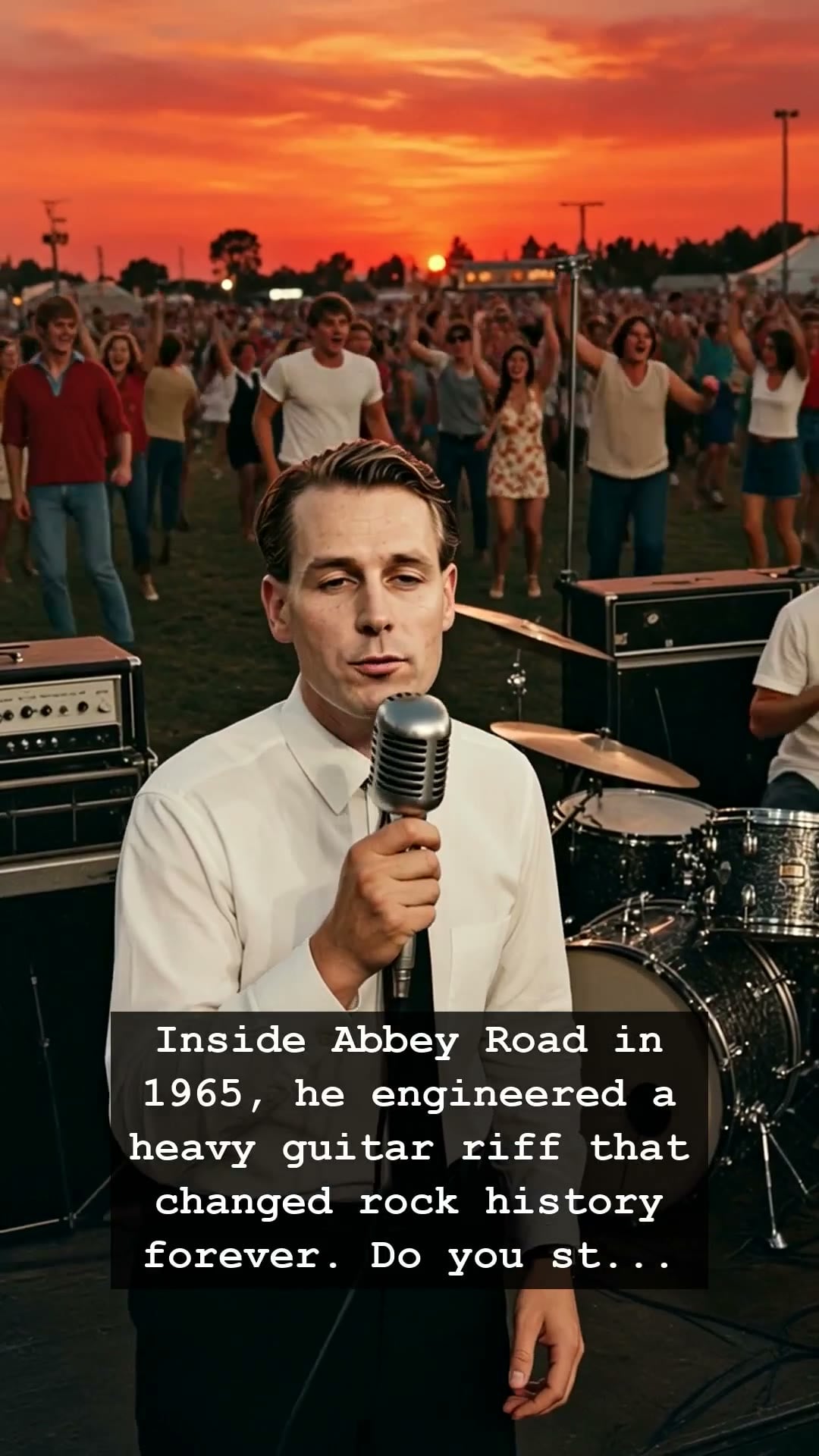
The year was 1965, and the walls of Abbey Road Studios were about to vibrate with a frequency the world had never truly experienced before. While the air was thick with the scent of tape reels and cigarette smoke, a quiet man in a crisp suit was orchestrating a revolution. George Martin, the legendary producer often hailed as the fifth Beatle, was not just hitting record; he was crafting a sonic architecture that would define the next three decades of rock and roll. This was the era where the gentle pop sensibilities of the early sixties were violently colliding with the raw, aggressive energy of heavy blues-rock.
As the band members huddled around their amplifiers, George Martin pushed the boundaries of technical limitations, experimenting with heavy distortion and the art of the guitar riff. In those hallowed, wood-paneled halls, they were hunting for a grit, a crunch that felt dangerous to the ears of the establishment. When the riff for Day Tripper first ripped through the studio speakers, it wasn’t just a catchy hook; it was a manifesto. George Martin understood that to keep the heartbeat of rock music alive, it needed to evolve into something more visceral, something that could cut through the static of a transistor radio and grip the listener by the soul.
This specific moment of creative tension captures the genius of George Martin. He was the bridge between the structured traditions of orchestral arrangement and the chaotic, electric future of the late sixties. While audiences were just beginning to trade their records for the convenience of portable players, Martin was obsessed with the fidelity of the experience. He knew that the magic lay in the nuance of a guitar string vibration or the slight delay in a drum hit, elements that transformed simple songs into cultural monoliths. His ability to translate the band’s abstract, psychedelic visions into tangible, radio-ready masterpieces remains the gold standard of music production.
Yet, the story of this breakthrough is not merely about gear or technical mastery. It is a story of human chemistry under pressure. The studio was a pressure cooker where exhaustion often turned into brilliance. George Martin was the steady hand on the rudder, navigating the turbulent egos and the insatiable creative appetites of the world’s most famous musicians. He knew when to push, when to pull back, and when to capture a mistake that sounded like a stroke of genius. It was this rare combination of classical discipline and an adventurous spirit that defined the legendary Abbey Road sessions.
Today, as we look back through the lens of history, the legacy of George Martin remains omnipresent. Whether you are listening to a scratched vinyl record on a vintage turntable or exploring the archives through digital remastering, that 1965 sound still resonates with a terrifyingly beautiful clarity. It serves as a reminder that the evolution of rock music was never a straight line; it was a series of daring leaps taken in dark rooms by people obsessed with the perfect sound. Does the opening riff still give you chills? If it does, you are hearing the ghost of a revolution, carefully engineered by the greatest producer who ever lived.