
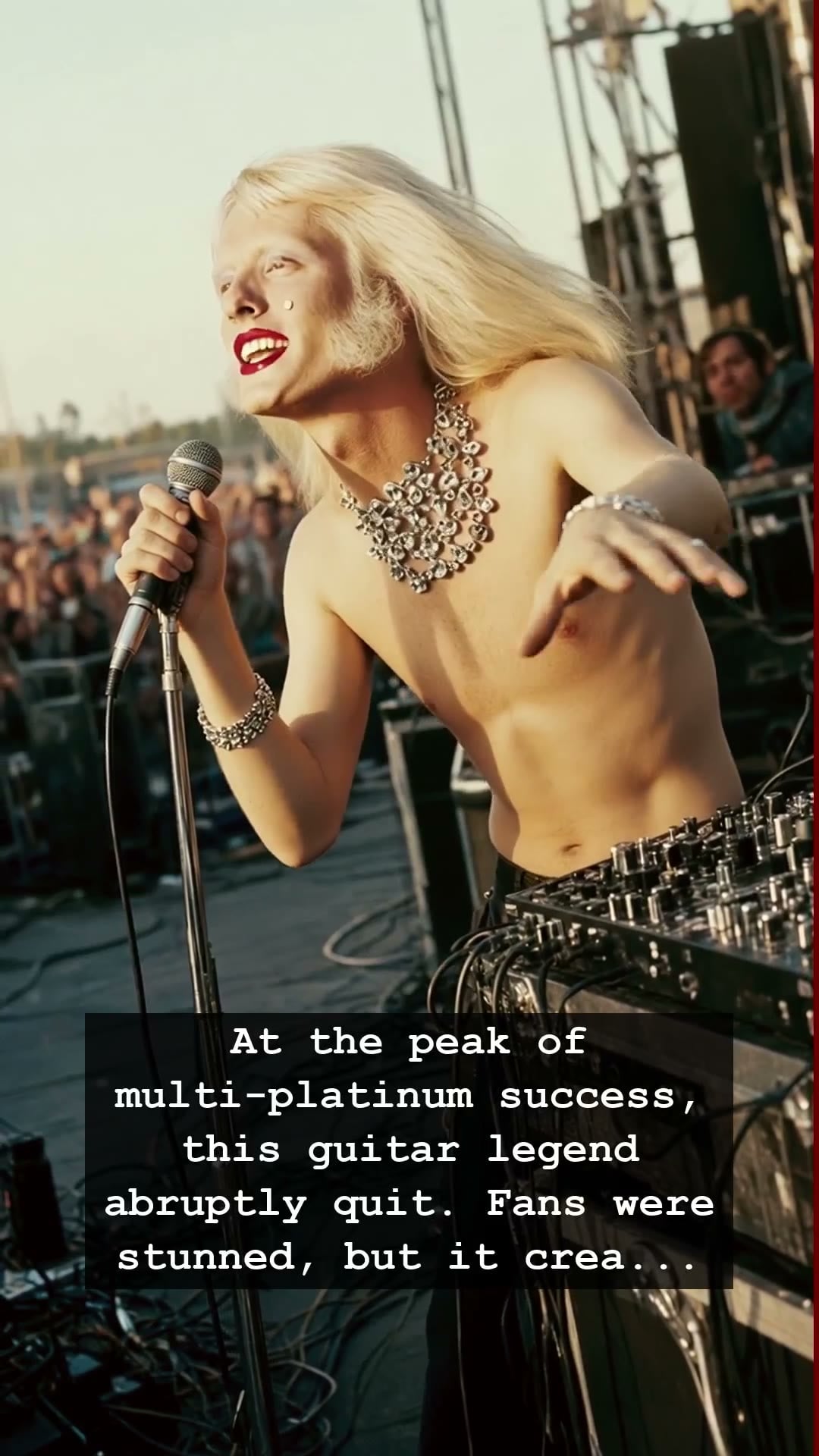
In 1973, the airwaves were humming with the slick, genre-bending sounds of The Edgar Winter Group. With a multi-platinum smash in ‘Frankenstein’ topping the charts, they were the undisputed kings of the progressive rock scene. Then, at the very height of their cultural dominance, the band’s lead guitarist, Ronnie Montrose, abruptly walked away. It was a move that left fans stunned and music critics scrambling for answers. In an era where the Jukebox was the heartbeat of every roadside diner and the burgeoning FM radio landscape demanded constant evolution, walking out on a gold-record act felt like career suicide. Yet, for Ronnie Montrose, it was the only way to satisfy a primal musical itch that the sophisticated textures of The Edgar Winter Group simply could not scratch.
The friction behind the scenes was not born of petty drama, but of a fundamental artistic divide. While Edgar Winter was pushing the boundaries of synths and experimental studio wizardry, Ronnie Montrose craved the raw, unadulterated power of the electric guitar. He wanted an engine, not a laboratory. When he finally stepped out of the shadow of The Edgar Winter Group, he didn’t just drift into obscurity; he ignited a heavy metal revolution. By forming his own eponymous band, Montrose, he delivered a self-titled debut that serves as one of the definitive blueprints for the American heavy metal sound. The grit he brought to the studio became the foundation for legends like Sammy Hagar and paved the way for the hard-driving arena rock that would define the rest of the decade.
Looking back, this transition feels like a pivotal moment in the history of 1970s rock. It represents the eternal tug-of-war between the artist who seeks to perfect a commercial sound and the artist who needs to burn the house down to find their own authentic voice. The Edgar Winter Group continued their path toward experimentation, leaving an indelible mark on the soul and funk-rock fusion of the era, but the departure of Montrose remains a fascinating ‘what if’ in music history. It reminds us that behind every classic hit that played on our Walkman or filled the air at a hazy stadium concert, there were human decisions being made that changed the trajectory of rock and roll forever.
For those who were there, the early seventies felt like a landscape of limitless possibility. We witnessed the shift from the psychedelic haze of the late sixties into the muscular, high-octane riffs that would eventually fill arenas worldwide. Ronnie Montrose captured that transition perfectly. By leaving the comfort of The Edgar Winter Group, he chose the uncertainty of a new genre over the safety of established success, proving that real legends aren’t defined by their peak, but by their willingness to start all over again. It is a story of rebellion that still resonates with anyone who has ever felt the need to turn up the volume and start their own revolution.
As the golden era of vinyl gives way to the digital age, we find ourselves returning to these stories to capture a piece of that raw energy. The split between Ronnie Montrose and The Edgar Winter Group remains a captivating chapter in the American rock narrative, a testament to the fact that sometimes, the most profound music is born from the most uncomfortable goodbyes. Next time you drop the needle on ‘Frankenstein,’ take a moment to listen for the tension, and you might just hear the sound of a rock legend preparing to change the world on his own terms.