
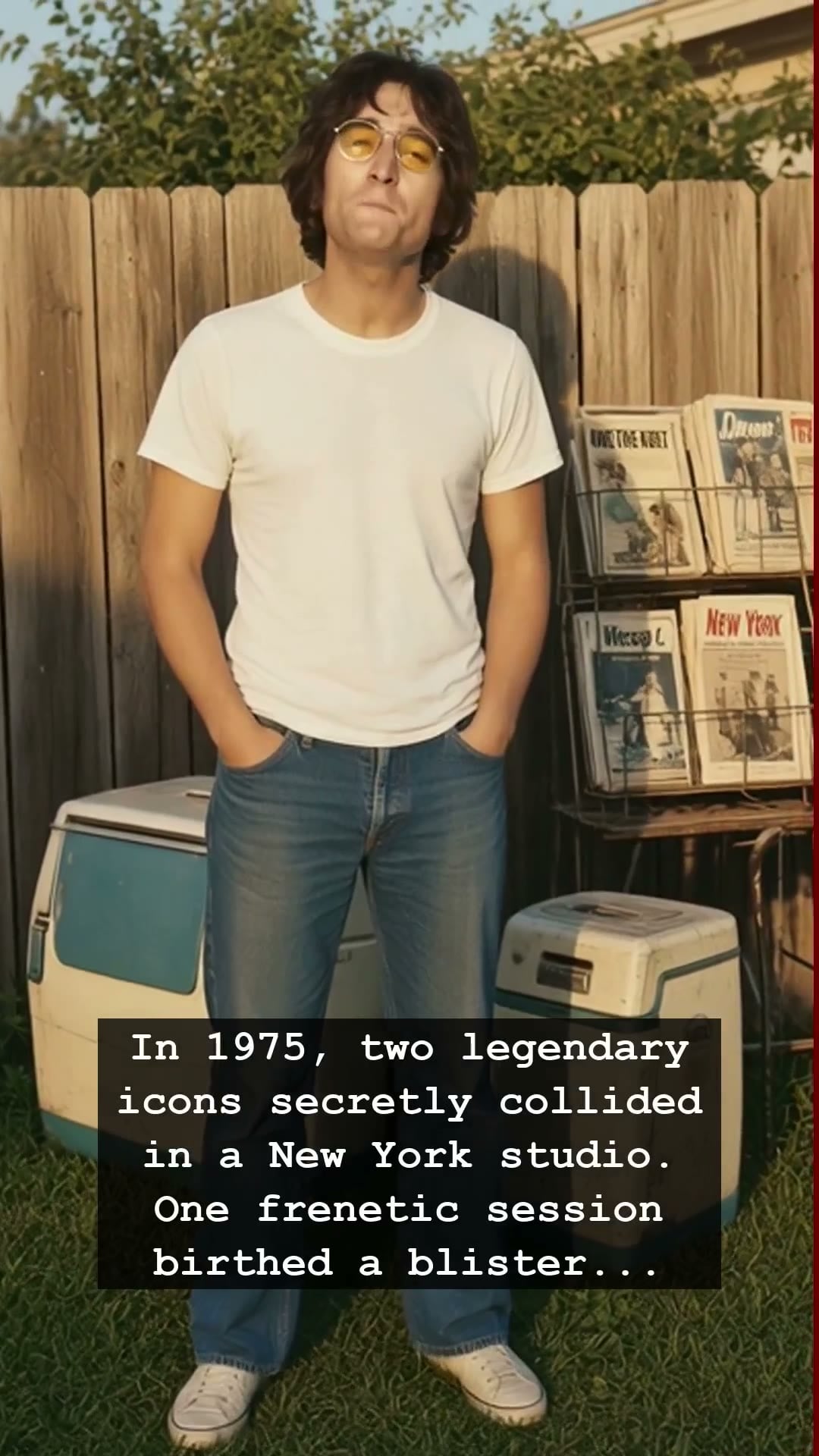
It was 1975, the year that glitter began to fade into the gritty, neon-soaked reality of New York City. While the disco craze was simmering at Studio 54 and the echoes of the Woodstock era were becoming distant memories, two titans of rock were hiding away in a Manhattan studio. John Lennon, the enigmatic ex-Beatle still reeling from his own monumental fame, stood face-to-face with David Bowie, the chameleon of glam rock who was rapidly reinventing himself as the Thin White Duke. This wasn’t just a meeting of minds; it was a collision of two musical universes attempting to process the hollow, crushing weight of global stardom.
The air in that studio was thick with smoke and artistic desperation. David Bowie had long idolized the man who changed the world with a guitar, and John Lennon found in Bowie a kindred spirit who understood the isolating, suffocating nature of life under a microscope. They weren’t there to produce a commercial pop hit; they were there to exorcise their demons. Through a frenetic, late-night session, they birthed the blistering anthem Fame. It was a song that dripped with cynical honesty, dissecting the parasitic relationship between a performer and the public, capturing the exact moment when the thrill of recognition turns into a gilded cage.
Listen closely to the track today, and you can still hear the jagged, razor-sharp guitar riffs that cut through the silence. It feels like the musical equivalent of a Walkman playing a secret transmission in a dark room. The song became a massive success, catapulting to the top of the charts, but for those who know the history, it remains a bitter pill. It was the sound of two legends staring into the abyss of their own celebrity and deciding to write a soundtrack for the fall. The irony was palpable: by singing about the emptiness of fame, they became even more immortal.
Beyond the chart success, this moment remains one of the most intriguing intersections in the history of rock ‘n’ roll. John Lennon provided the vocal texture and the grit, while David Bowie brought his avant-garde sensibilities and his uncanny ability to shift the cultural needle. They were two men who had everything the world could offer, yet were searching for something real in the strobe-lit haze of mid-seventies America. It was a fleeting partnership, a snapshot of brilliance captured before they drifted back into their separate, iconic orbits.
Even decades later, Fame continues to resonate because it doesn’t try to hide the scars of the industry. It stands as a reminder of a time when icons were flesh and blood, prone to existential crises and desperate for genuine connection amidst the mania. When you spin the record tonight, remember that you aren’t just hearing a song; you are listening to a secret conversation between two giants who finally dared to say that being a star is not always what it seems. It is a haunting piece of history that remains as sharp and relevant as the day it was born.