
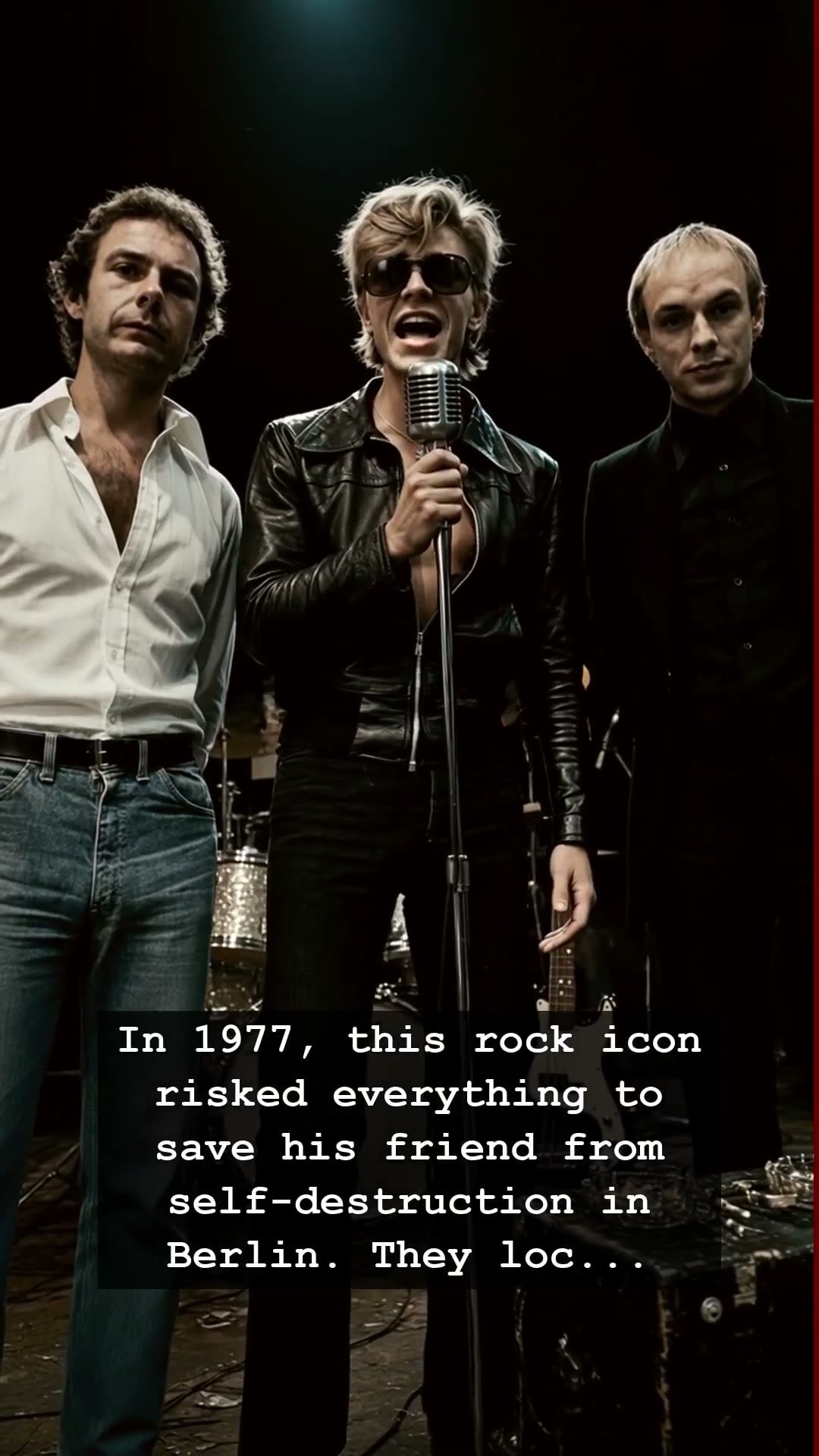
The year was 1977, and the world of music was shifting beneath our feet. While the disco era was heating up the dance floors of Studio 54, two titans of rock were hiding in the shadows of a divided Berlin. David Bowie, the chameleon of sound, had made a radical decision: he was pulling his dear friend, Iggy Pop, away from the abyss of Los Angeles. Iggy was drowning in the darkness of addiction, his career fracturing under the weight of his own self-destruction. This was not just a vacation; it was a desperate, high-stakes mission to save a legend from losing his life to the siren song of fame.
They retreated into the stark, concrete atmosphere of West Berlin, a city that felt as fragmented as their own psyches. For these men, the Cold War backdrop served as the perfect incubator for reinvention. In the cramped, sterile confines of the studio, David Bowie took on the role of mentor and producer, crafting the sound that would define Iggy Pop’s resurrection. They traded the glitz of American rock for something colder, more mechanical, and profoundly experimental. It was a time when the hum of a synthesizer began to challenge the traditional guitar riff, marking a pivotal turn in the trajectory of modern sound.
Working on what would become The Idiot, David Bowie poured his creative energy into Iggy Pop, stripping away the excesses of the seventies to reveal a raw, industrial pulse. It was a symbiotic bond, a friendship forged in the fires of survival. The music they created was unlike anything on the radio at the time. It was haunting, atmospheric, and deeply internal. While the rest of the world was catching the fever of stadium rock and arena anthems, these two were documenting the isolation of the human soul. They weren’t just making records; they were carving out a sanctuary within the sonic landscape of Berlin.
Look back at that era, and you can still hear the influence of that German winter in the DNA of every post-punk and industrial band that followed. David Bowie was the architect, but Iggy Pop was the blood and bone of the experiment. Their collaboration proved that even when the lights of fame dim and the industry threatens to swallow you whole, a true creative partnership can pull a soul back from the edge. It was a secret history written in layers of tape and desperate ambition, hidden behind the Iron Curtain.
Today, when we spin these albums, we aren’t just hearing songs; we are hearing the echo of two men finding their way home through the dark. The story of David Bowie and Iggy Pop remains a testament to the power of loyalty and the resilience of the artistic spirit. It reminds us why we still turn to the classic vinyl records of our youth—because behind every track lies a human struggle, a moment of profound transformation, and a sound that refused to die. Do you still remember how those first chords made you feel?