
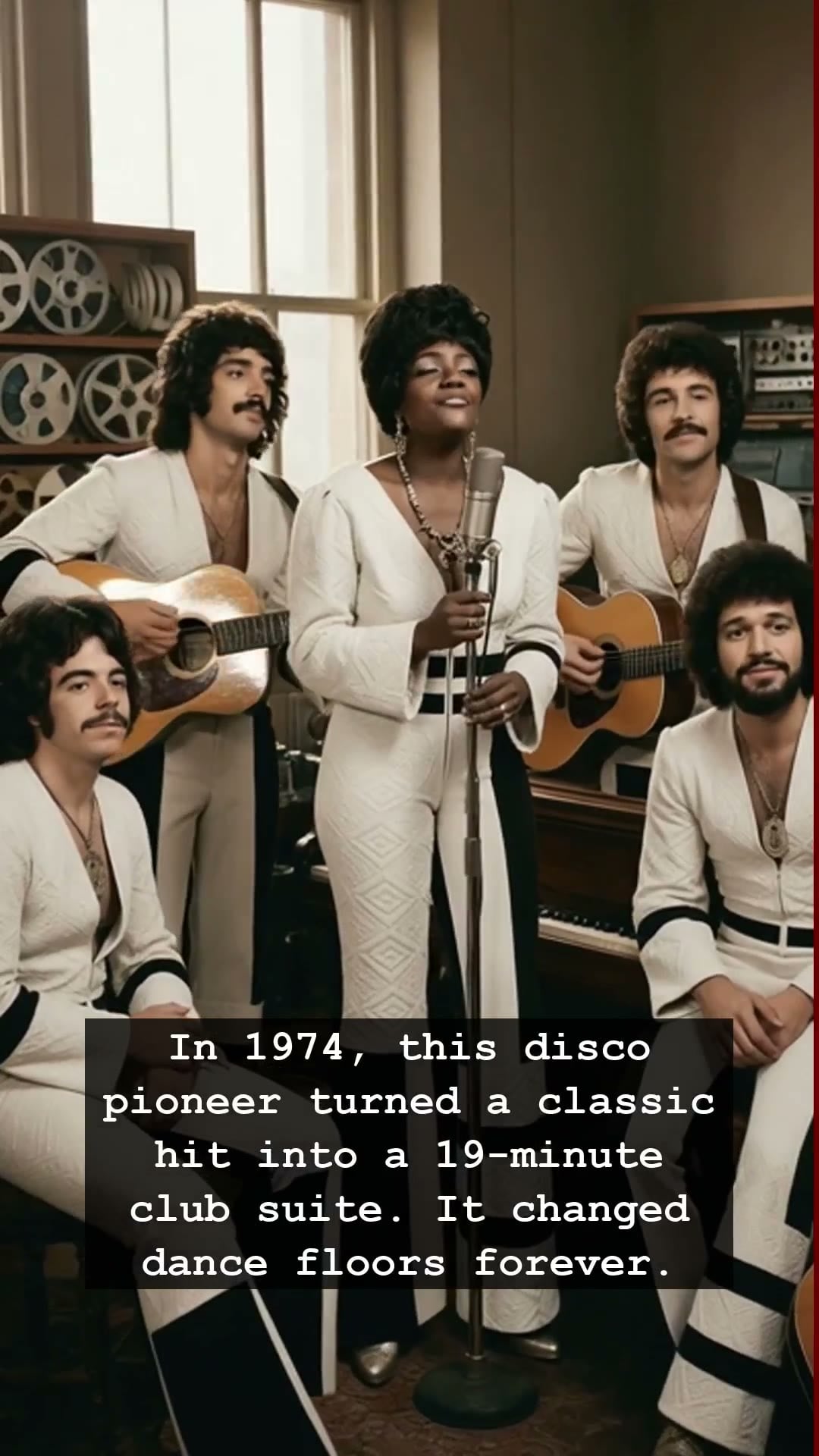
In the mid-1970s, before the neon excess of Studio 54 fully consumed the American consciousness, a quiet but seismic shift was happening in the dark, sweaty corners of underground clubs. It was 1974, and Gloria Gaynor was about to do the unthinkable. While the radio played tight, three-minute pop songs designed for quick consumption, Gaynor and her collaborators were stitching together a monumental, nineteen-minute suite that would defy every rule of the music industry. By taking a classic Motown sound and stretching it into an endless, pulsating odyssey, she didn’t just record a track; she invented the blueprint for the modern dance floor.
The song in question, her hypnotic rendition of Never Can Say Goodbye, transformed the way we experienced rhythm. At a time when the Jukebox was the king of the tavern, this extended mix pushed the boundaries of what a pop record could be. It was the birth of the extended dance mix, a format that would eventually become the heartbeat of the disco era. Gloria Gaynor, with her powerhouse vocals and relentless stamina, was positioning herself not just as a singer, but as the architect of a new sonic environment where the beat never truly had to die.
Behind the scenes, the atmosphere was thick with creative tension and the sheer, raw ambition of the disco movement. Producers and engineers were experimenting with tape loops and seamless transitions, trying to capture the energy of a live DJ set on a fragile piece of black vinyl. This was long before the days of digital looping or laptop production; this was tactile, analog artistry. Gloria Gaynor stood at the center of this experimentation, her voice providing the emotional anchor as the music ebbed and flowed, keeping dancers locked in a trance-like state for nearly twenty minutes at a stretch. It was a revolutionary moment that signaled the end of the radio-only era.
The cultural impact of this 19-minute masterpiece rippled far beyond the dance clubs. It forced listeners to engage with music as an immersive experience rather than a fleeting distraction. As the disco pulse grew louder, it created a sanctuary for those who found freedom under the spinning mirror balls of the seventies. Gloria Gaynor proved that a song could be a journey, a long-form conversation between the performer and the crowd. She tapped into a primal need for connection, turning strangers into a single, moving organism under the influence of her rhythmic power.
Even today, in our world of instant hits and skip buttons, the legend of that 1974 recording feels heavy with nostalgia. It reminds us of a time when music was physical, tactile, and uncompromising. When we look back at the trajectory of Gloria Gaynor’s career, it is clear that this experimental marathon was the true spark that ignited her future anthems. Whether you were there under the flickering lights of the disco heyday or are discovering these vinyl textures for the first time, take a moment to appreciate the woman who taught the world how to dance until dawn.