
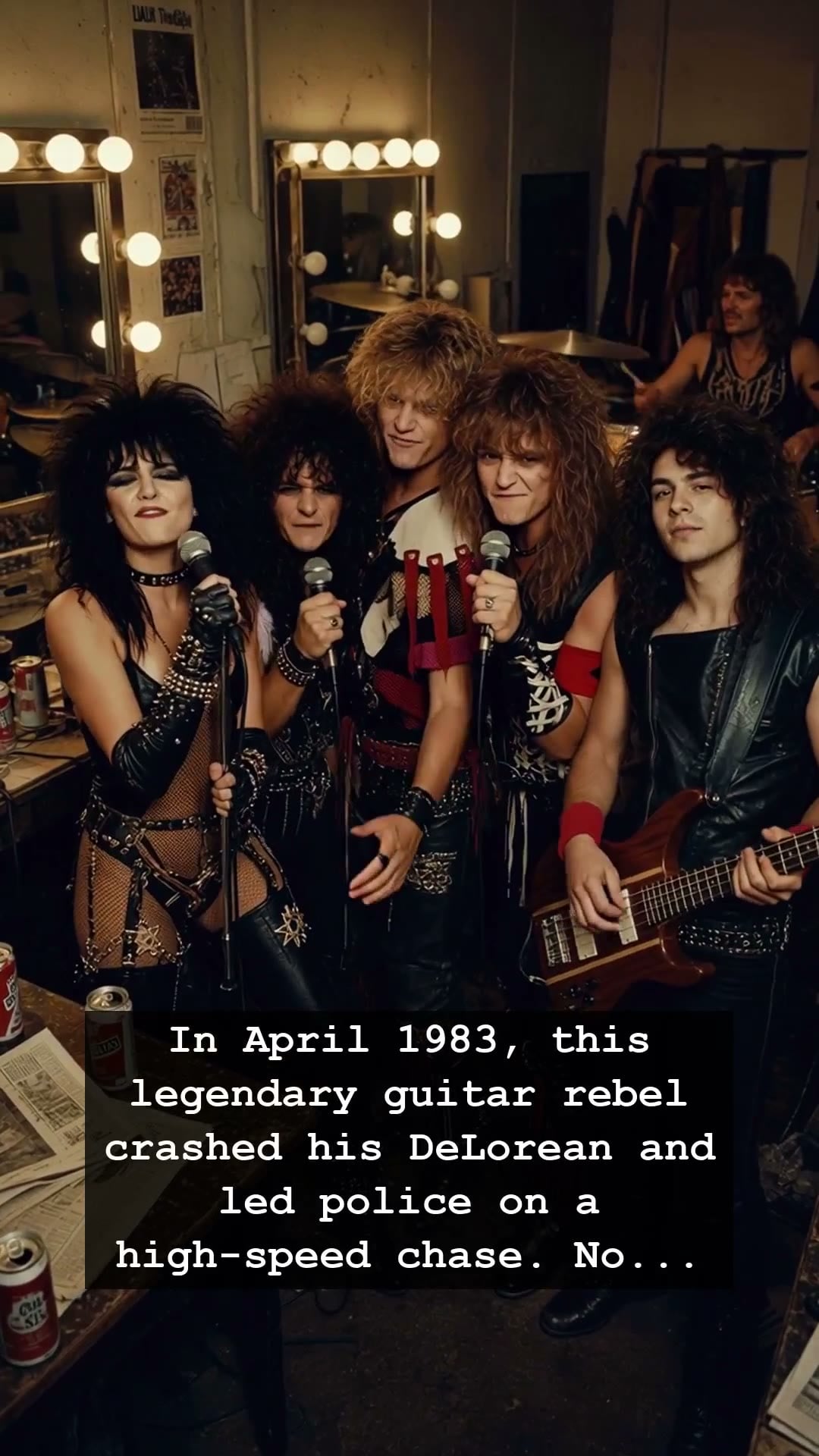
The year was 1983, a time when the cold neon glow of the burgeoning MTV era was beginning to suffocate the raw, dangerous soul of 70s stadium rock. In the Bronx, the air was thick with the scent of burning rubber and desperation. Ace Frehley, the iconic ‘Space Ace’ of KISS and a man whose guitar riffs defined the dreams of a generation, was behind the wheel of his DeLorean. He wasn’t just driving; he was fleeing. As he careened along the Bronx River Parkway, the vehicle became a crumpled heap of metal, yet Ace Frehley somehow emerged from the wreckage, sparking a chaotic, high-speed chase with local authorities that felt like a scene pulled directly from a gritty action film. It was the kind of moment that reminded the world that the larger-than-life rock gods we idolized were just as fragile, and perhaps just as volatile, as the rest of us.
To understand the madness of that night, one must look at the pressure cooker that was Ace Frehley’s life in the early eighties. The glam metal scene was shifting beneath his feet, and the internal friction within the KISS camp had reached a breaking point. Behind the greasepaint and the pyrotechnics, Ace was grappling with the suffocating weight of fame, the relentless cycle of touring, and the siren song of self-destruction. The DeLorean crash wasn’t just an accident; it was a symptom of a man caught between his legendary persona and the crushing reality of his own existence. When he outran the police that night, he wasn’t just escaping a crime scene; he was fleeing the ghosts that had been haunting his career for years.
Yet, there is a strange, enduring beauty to this dark chapter of rock history. Instead of becoming another tragic statistic of the era, Ace Frehley used that chaos as fuel. The adrenaline of the chase and the proximity to the void provided a dark clarity that eventually bled into his creative process. While the rest of the world was distracted by the rising tide of synth-pop, Ace was busy channeling his survival instinct into his music, proving that a true guitar rebel could never be kept down for long. It was the catalyst for a comeback that, while fraught with its own challenges, solidified his status as a survivor in an industry that loves to consume its own.
Looking back, the image of that wreckage serves as a grim monument to the excesses of the seventies and early eighties. It represents the transition from the analog, unfiltered danger of the Woodstock generation to the polished, image-conscious spectacle of the late twentieth century. Ace Frehley remains a testament to that bridge—a man who lived through the wildest excesses of rock ‘n’ roll and lived to tell the tale. Every time we hear those searing lead guitar notes today, we aren’t just listening to music; we are listening to a man who literally crashed into his own legend and walked away to keep the dream alive.
Even decades later, the story of Ace Frehley’s Bronx escape remains a staple of rock lore, whispered in darkened basements and celebrated by those who remember when rock music truly felt like it could jump off the rails. It captures a fleeting moment where the barriers between celebrity myth and human fragility vanished entirely. In an age where every star is curated and sanitized, the raw, unscripted messiness of Ace’s life offers a nostalgic reminder of when our heroes were still allowed to be dangerously, brilliantly human. The music keeps playing, but the memory of that high-speed night in 1983 ensures that the legend of the Space Ace will never truly fade.