
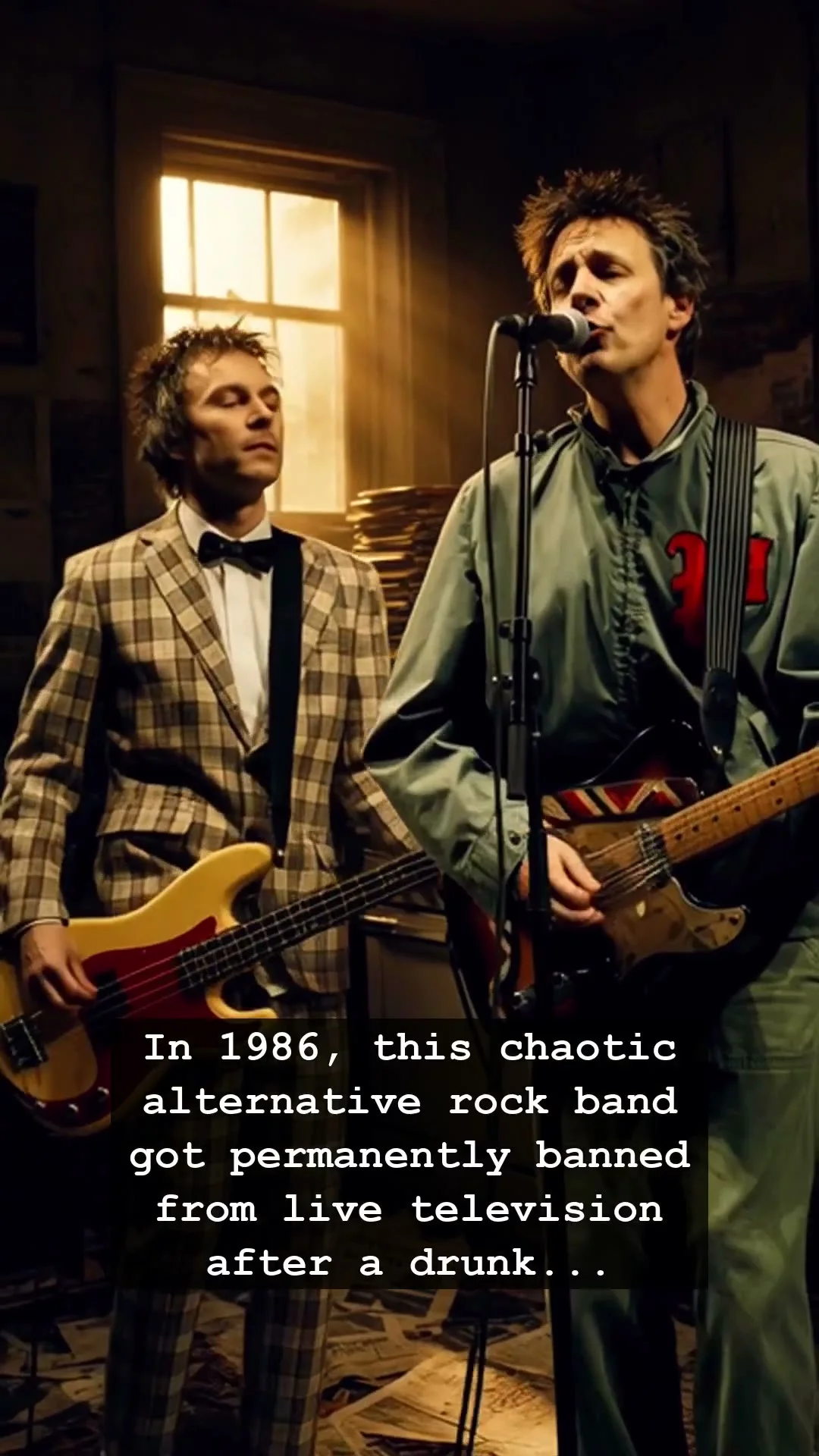
It was 1986, the era of neon spandex, massive hairspray, and the corporate polish of MTV. Yet, tucked away in the grittier corners of the American underground, a band from Minneapolis was brewing a storm that would eventually shatter the glass ceiling of live television. The Replacements were never supposed to be polished, and on one fateful night, they made sure the entire world knew it. They were the ultimate embodiment of rock and roll tragedy, a group whose genius was matched only by their own self-destruction.
When The Replacements stepped onto the stage of Saturday Night Live, the air in the studio was thick with nervous tension. This was the big leagues, the platform that could launch a career into the stratosphere. But for Paul Westerberg and his bandmates, the corporate pressure felt like a noose. Instead of delivering the rehearsed, radio-friendly set the producers expected, the band arrived in a blur of alcohol and pure, unadulterated angst. They didn’t just play a set; they staged a slow-motion car crash that audiences still whisper about nearly forty years later.
As the cameras rolled, the performance descended into chaos. The Replacements were visibly intoxicated, stumbling through their songs with a reckless disregard for rhythm or decorum. By the time they reached their second number, the profanity-laced lyrics and the sight of them smashing their own equipment on live national television left the producers frozen in horror. It was raw, it was ugly, and it was undeniably authentic. By the time the screen faded to black, the network had seen enough. The Replacements were slapped with a permanent lifetime ban, forever cementing their place in the annals of legendary rock disasters.
Looking back, that night wasn’t just a failure of professional conduct; it was a defiant middle finger to the industry that was trying to commodify their soul. The Replacements represented the bridge between the grit of seventies punk and the looming explosion of alternative rock in the nineties. They thrived in the dives and the sweaty basement clubs, far removed from the pristine lighting of Studio 54 or the massive stadium tours of their peers. Their story is a reminder of a time when rock and roll was allowed to be dangerous, messy, and fundamentally human.
Decades later, the legend of that SNL performance remains a cornerstone of music history. It reminds us why we fell in love with bands like The Replacements in the first place. They were never about perfection; they were about the messy, cathartic honesty of existence. As the walkman era faded and the digital age took hold, the memory of that banned set became a badge of honor for those who value spirit over spectacle. If you could witness the beautiful wreckage of their career from afar, you understand that they didn’t lose that night—they just refused to play the game on anyone’s terms but their own.