
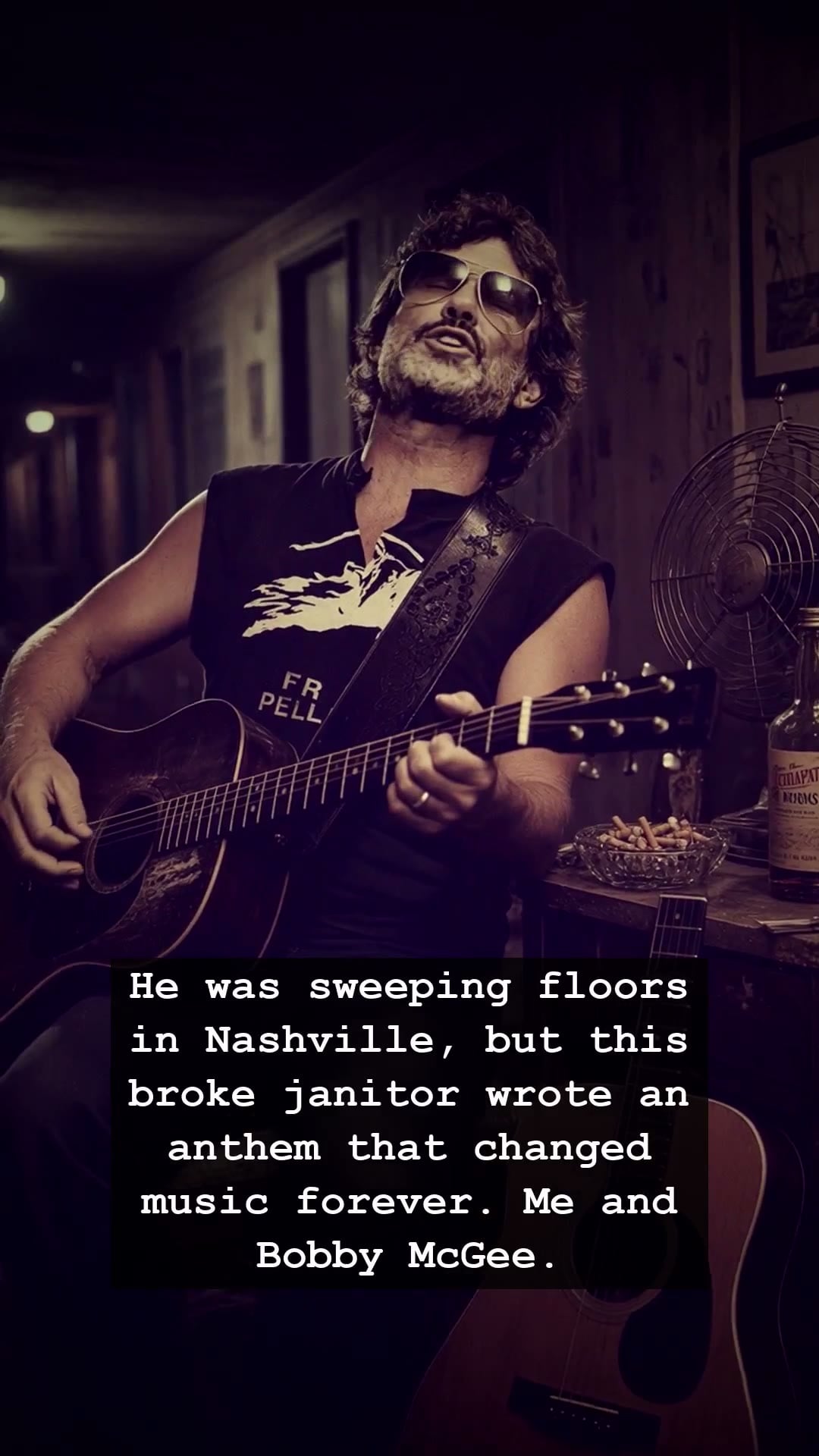
In the smoke-filled, neon-lit corridors of Nashville during the late 1960s, a janitor stood alone in a recording studio. While the world outside was transitioning from the polished pop of the early sixties to the raw, countercultural revolution of the Woodstock era, Kris Kristofferson was simply sweeping floors to pay his rent. He was a Rhodes Scholar and a former helicopter pilot who had traded the promise of a military career for the uncertainty of a songwriter’s life. Little did he know that the man holding the broom was on the verge of crafting one of the most enduring anthems in American music history: Me and Bobby McGee.
The music industry of that time was a brutal machine, a place where talent was often sidelined by the sheer demand for commercial hits. Kris Kristofferson spent his nights scribbling verses on napkins, haunted by the feeling that his best years were slipping away. He wasn’t just another struggling artist; he was a poet of the fringes, capturing the soul of drifters and the broken-hearted. His struggle was symptomatic of the era—a time when the American Dream felt increasingly elusive, mirrored by the gritty, authentic storytelling that defined the singer-songwriter movement of the 1970s.
When he finally penned the lines for Me and Bobby McGee, he wasn’t trying to change the world; he was trying to exorcise his own demons. The song became a road-weary prayer that resonated with a generation feeling lost in the wake of the Vietnam War and the shifting cultural landscape of the United States. When Janis Joplin, the queen of psychedelic soul, took the song and transformed it into a wailing, heartbreaking masterpiece, it wasn’t just a hit—it was a cultural moment. The raw, guttural power of her voice combined with the narrative depth provided by Kris Kristofferson turned a janitor’s daydream into the soundtrack for every wanderer in America.
The irony of his rise is what remains most compelling. Kris Kristofferson had once landed a helicopter on Johnny Cash’s lawn just to get him to listen to his demos, an act of sheer desperation that perfectly captures the restless energy of that decade. He lived through the transition from the golden age of country to the introspective folk-rock explosion, remaining an anchor of sincerity in an industry becoming obsessed with polish and artificiality. He understood that the best songs didn’t come from the pristine comfort of a board room, but from the lonely hours spent reflecting in a quiet studio at three in the morning.
Today, when we hear those opening chords, we aren’t just listening to a melody; we are listening to the echoes of a man who refused to give up on his craft. The legacy of Kris Kristofferson stands as a testament to the fact that greatness is rarely found on a direct path. It is forged in the struggle, amidst the dust of a janitor’s floor and the quiet solitude of a writer’s workspace. The next time you find yourself listening to this timeless classic, remember the man with the broom who taught us that sometimes, freedom is just another word for everything we have left to lose.