
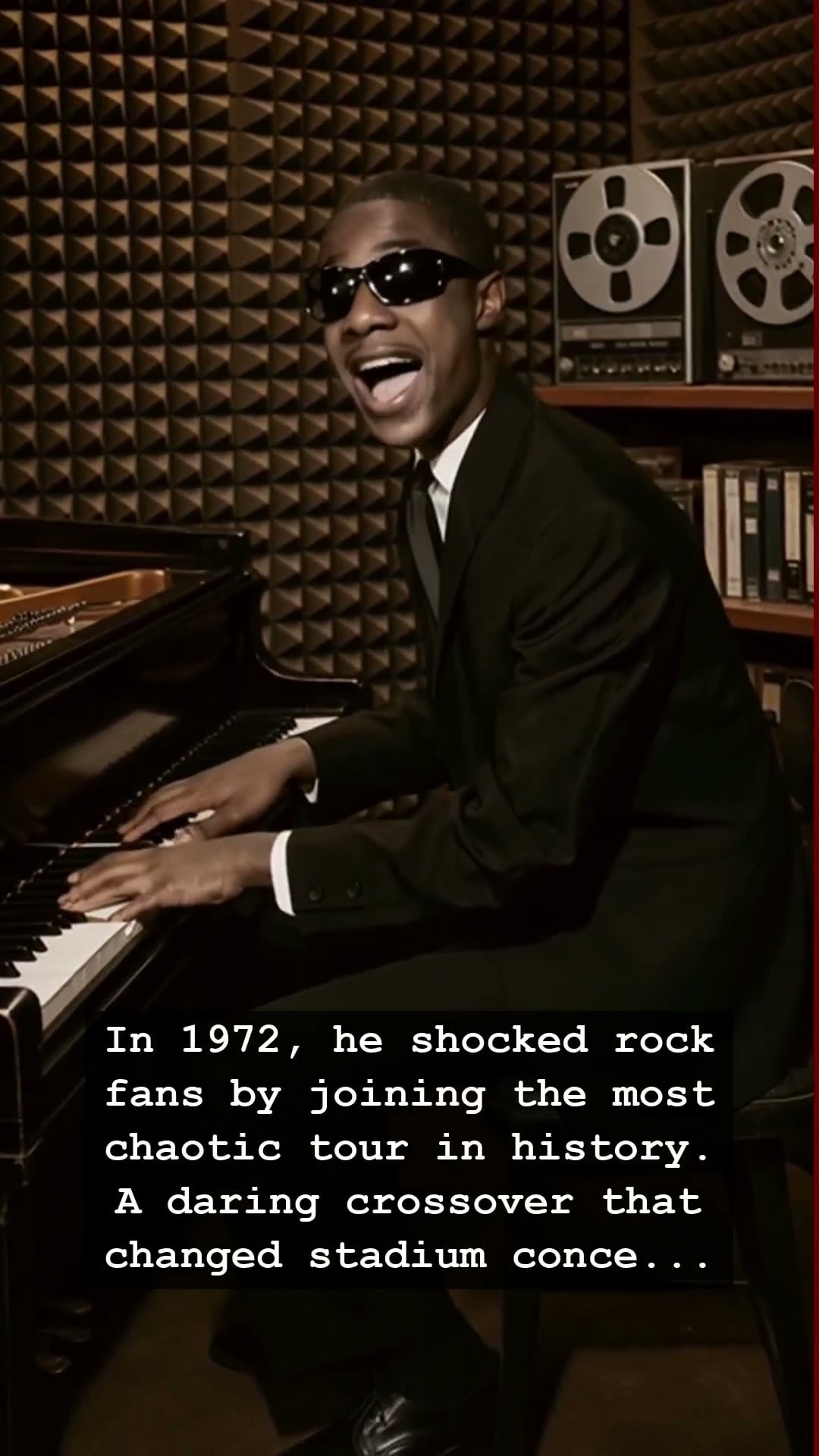
The year was 1972, and the air in American stadiums was thick with a cocktail of cigarette smoke, sweat, and the electric tension of a shifting musical landscape. The Rolling Stones were embarking on their notorious ‘Stones Touring Party,’ a hedonistic, chaotic whirlwind that would forever be cemented in rock lore as one of the most volatile tours in history. Yet, amidst the backstage debauchery and the hard-rock swagger of Mick Jagger and Keith Richards, one unexpected name appeared on the bill: Stevie Wonder. It was a move that left the denim-clad, rock-obsessed audience reeling, wondering how the velvet voice of Motown would survive the roaring lions of British rock.
Stevie Wonder was already a musical prodigy, but he was transitioning from his youthful soul roots into the complex, synth-drenched experimental genius that would define his classic period. By joining the Stones, he wasn’t just performing; he was breaking down the invisible walls that segregated radio formats and concert crowds. In an era when you were either a fan of gritty rock or smooth R&B, Stevie Wonder acted as the bridge, forcing a stadium of thousands to confront a soul sound that was both intimate and gargantuan. It was a brave crossover that challenged the elitism of the rock world and proved that music, at its core, transcends labels.
The atmosphere behind the scenes was pure, unadulterated drama. The tour itself was plagued by scuffles, arrests, and the heavy shadow of substance abuse that defined the early seventies. Yet, when Stevie Wonder stepped into the spotlight, the chaos seemed to hush for a brief, magical moment. He brought a sense of humanity and spiritual depth that the Stones’ high-octane rock show desperately needed. He played his clavinet with a ferocity that matched any guitar solo, showing the rock purists that soul music could possess just as much raw power and edge as any blues-rock riff emanating from a Marshall stack.
This daring tour transformed the way stadium concerts were curated. It paved the way for the multi-genre festival experiences we recognize today, proving that a diverse lineup could captivate a massive, restless crowd. By placing himself in the belly of the beast, Stevie Wonder showcased a fearless artistic ambition. He forced the mainstream to accept his vision on his own terms, setting a standard for authenticity that few artists of that generation dared to touch.
Decades later, the legend of that 1972 tour remains a testament to the power of artistic curiosity. Stevie Wonder did not just survive the Stones; he elevated the entire experience into a legendary cultural collision. When we look back at the golden era of vinyl records and the analog warmth of the seventies, we remember this moment as a pivotal turning point. It was a time when the boundaries of sound were tested and broken, and one soul icon showed the world that rock and soul were two sides of the same beautiful, messy coin.