
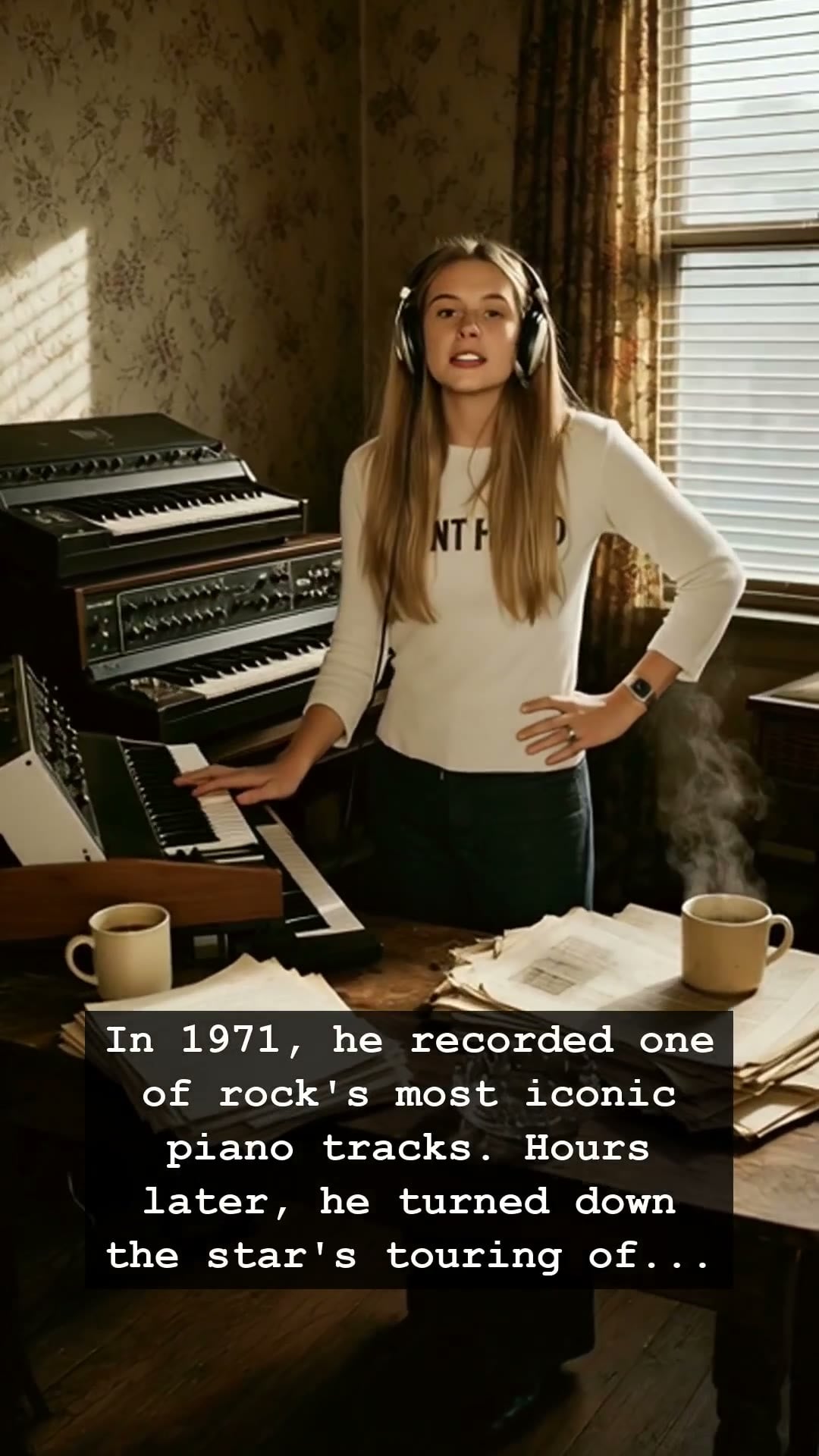
The year was 1971, and the air in the London studio was thick with the scent of cigarettes and the hum of vacuum tubes. A young, classically trained pianist named Rick Wakeman sat behind the keys, his fingers dancing across the ivory to create the haunting, melancholic melody for what would become David Bowie’s legendary anthem, Changes. It was a moment of pure musical alchemy. Bowie, ever the visionary, could sense that he had struck gold. He needed a keyboardist who could match his theatrical ambition and help define the sound of his evolving persona. Without hesitation, David Bowie offered Rick Wakeman a permanent spot in his touring band, promising a ride to the summit of the rock world. Most musicians would have signed the contract on the spot, but history had a different, more complex script in mind.
That same evening, Rick Wakeman faced a crossroads that would forever shape the trajectory of 1970s British rock. While the offer to join Bowie’s glittering orbit was seductive, the allure of the progressive rock movement was calling. A burgeoning giant of the genre, Yes, had also approached him with a vision of sprawling, symphonic epics that pushed the very limits of human instrumentation. To join Yes was to embrace the chaos of complex time signatures and the grandeur of the Hammond organ; to join David Bowie was to step into the neon-lit, seductive future of glam rock. In a move that shocked the industry, Wakeman turned down Bowie, choosing the technical intensity of Yes over the meteoric rise of the Starman.
This decision is a fascinating piece of music history that highlights the conflicting artistic currents of the early seventies. While David Bowie would go on to reshape culture with his chameleonic shifts—eventually dominating the airwaves when the Walkman made his music a private, nomadic experience—Rick Wakeman became the wizard behind the prog-rock throne. He brought a sense of orchestral discipline to Yes, helping them record masterpieces like Fragile and Close to the Edge. It remains a classic tale of the artist’s dilemma: does one pursue the spotlight of a singular star or the collaborative, expansive madness of a progressive collective?
Looking back, we see two titans of sound forging paths that eventually intersected the cultural fabric of a generation. Rick Wakeman’s touch on the piano tracks for Hunky Dory still echoes with a ghostly intimacy that feels timeless, proving that his brief collaboration with David Bowie left an indelible mark despite his departure. For fans of that golden era of vinyl and analog warmth, the story reminds us that even the most iconic songs were born from moments of intense personal conflict and professional risk.
Whether you remember hearing those piano chords for the first time on a crackling turntable or discovered the track later, the narrative of Rick Wakeman and David Bowie continues to resonate. It captures the tension between the structured elegance of classical training and the wild, untamed spirit of rock and roll. Behind every great hit lies a choice, a rejection, and a destiny redirected, proving that sometimes, saying no to a legend is the first step toward becoming one yourself.