
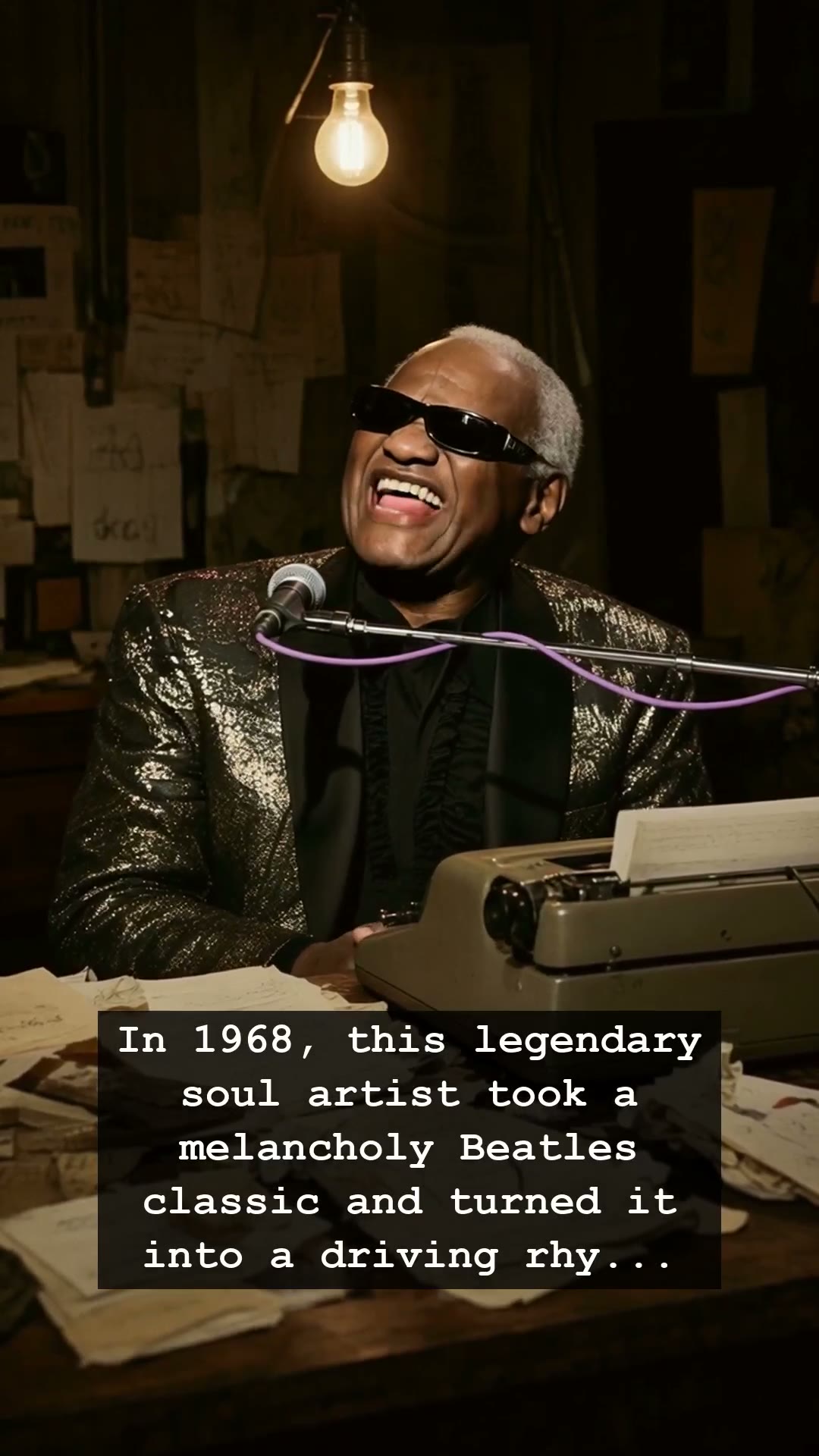
It was 1968, a year defined by societal upheaval, the haunting glow of television news reports, and the constant crackle of a vinyl record spinning on a turntable. The world was still reeling from the cultural shockwaves of the mid-sixties, and the air felt thick with change. In the middle of this chaos, a musical titan walked into the studio to dismantle one of the most beloved pop songs in history. Ray Charles, the blind genius of soul, decided that The Beatles’ mournful ballad Yesterday needed a new heartbeat. While the original track was steeped in the pristine, melancholic string arrangements that defined the Fab Four’s later era, Ray Charles saw something else buried within the melody.
Most artists would have been intimidated by the sheer gravity of a Lennon-McCartney composition, but Ray Charles was never a man to be tethered by convention. He famously stripped away the orchestral safety net that had made the original version a pop staple. In its place, he injected the raw, unadulterated fire of gospel and the driving pulse of rhythm and blues. When Ray Charles leaned into those piano keys, the song stopped being a quiet lament about lost love and morphed into a soaring, spiritual revelation. It was as if he had taken a piece of black-and-white film and splashed it with the vibrant, burning colors of a Sunday morning church service in Georgia.
Fans who were accustomed to the pop sensibilities of the late sixties were left completely spellbound by this transformation. Ray Charles didn’t just cover a hit song; he reclaimed it for the soul tradition, proving that true artistry lies in the ability to find a new emotional landscape within a familiar map. The recording sessions were intense, marked by that signature perfectionism that defined his career, yet the result felt spontaneous and deeply human. It was a masterclass in musical alchemy, where the darkness of the lyrics was finally balanced by the light of pure, soulful improvisation.
This era was the golden age of the jukebox and the transistor radio, and when Ray Charles released his take on Yesterday, it cut through the noise of the nightly news. It offered a moment of catharsis for a generation exhausted by the Vietnam War and the political assassinations that had scarred the decade. By breathing gospel energy into a pop standard, he bridge the gap between the polarized musical tribes of the late sixties. It wasn’t just about the music; it was about the resilience of the human spirit, an theme that permeated everything Ray Charles touched during his legendary career.
Even today, listening to the track feels like opening a dusty velvet box filled with forgotten memories. You can almost hear the hum of the amplifiers and the smell of cigarette smoke lingering in the studio. Ray Charles reminds us that the greatest songs are never truly finished; they are simply waiting for the right artist to pour enough life into them to start them over. As we look back at the giants who shaped our musical consciousness, it is impossible to overlook this singular moment where the genius of soul met the brilliance of the British Invasion. It serves as a timeless reminder that when music is stripped down to its core, all that remains is the truth of the artist’s voice.