
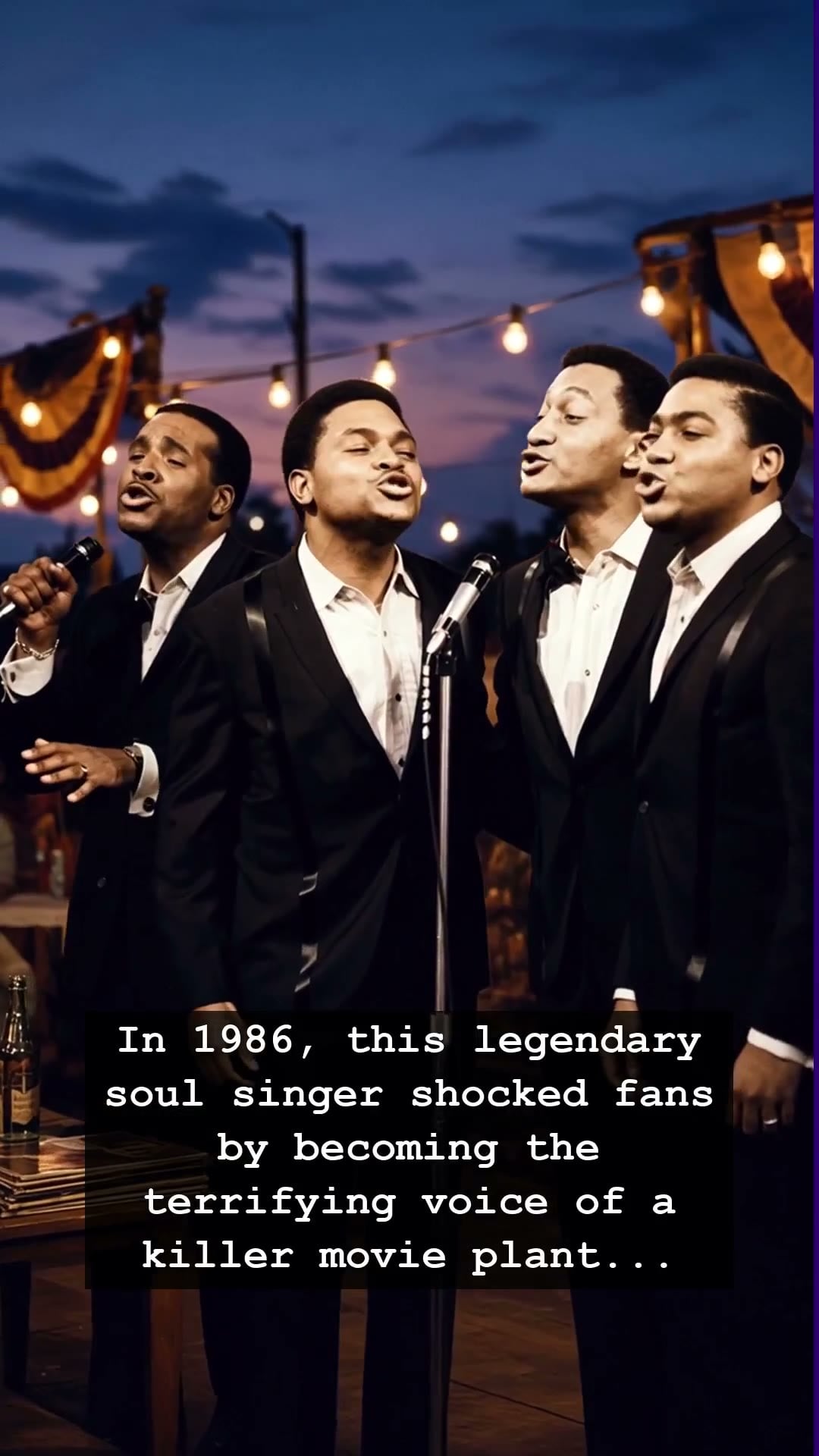
In the mid-eighties, the neon glow of MTV was busy reinventing pop stars, but deep inside a soundproof recording booth, one of the greatest voices in soul history was preparing to do something that defied every convention of his career. Levi Stubbs, the powerhouse lead singer of the Four Tops and a titan of the Motown sound, was known for his gravelly, heart-wrenching delivery on classics like Reach Out I’ll Be There. Fans expected him to croon about heartbreak or love, but in 1986, Levi Stubbs chose to unleash a terrifying, carnivorous alter ego that would leave cinema audiences shaking in their seats.
Most listeners recognize Levi Stubbs as the soul-stirring engine behind the Detroit sound, a man whose voice carried the weight of a thousand mid-century ballads. Yet, when he was tapped to provide the voice for Audrey II—the malevolent, man-eating plant in the musical adaptation of Little Shop of Horrors—he pivoted from the romantic to the macabre. It was a bizarre, brilliant masterstroke. Stubbs didn’t just provide a voice; he channeled a demonic, jazz-infused hunger that turned a botanical prop into one of the most iconic horror villains of the decade.
The industry was caught completely off guard. By 1986, the landscape of music was shifting toward synthesized pop and the theatricality of glam metal. Seeing an icon like Levi Stubbs lend his legendary pipes to a creature demanding to be fed was a jarring, yet mesmerizing contrast. It proved that his vocal range wasn’t confined to the golden era of jukebox soul. He possessed a raw, intimidating grit that allowed him to transition seamlessly from the stage of a Motown revue to the dark, comedic depths of a B-movie horror set. It was a career twist that no one saw coming, yet in hindsight, it felt like the perfect maturation of his bluesy roots.
Behind the scenes, the recording sessions were reportedly electric. Stubbs approached the role with the same level of professional rigor he applied to his Motown recordings. He breathed life into the plant, giving it a soulful arrogance that made Audrey II more than just a rubber puppet. The contrast between the gentle soul man of the sixties and the predatory, wisecracking villain of the eighties created a surreal moment in pop culture history. It was a testament to his versatility and his willingness to embrace the absurdity of the evolving entertainment world.
Today, this moment serves as a fascinating bridge between the classic soul era and the theatrical excess of the late eighties. Whether you remember Levi Stubbs for the hit-making machines of Motown or the chilling laugh of a hungry houseplant, his legacy remains untouched by the passage of time. He was a man of immense talent who proved that a legendary voice can haunt your dreams just as easily as it can soothe your soul. Next time you hear those opening notes of a Four Tops record, remember that the man behind the music was capable of much more than just a love song; he was a true artist in every sense.