
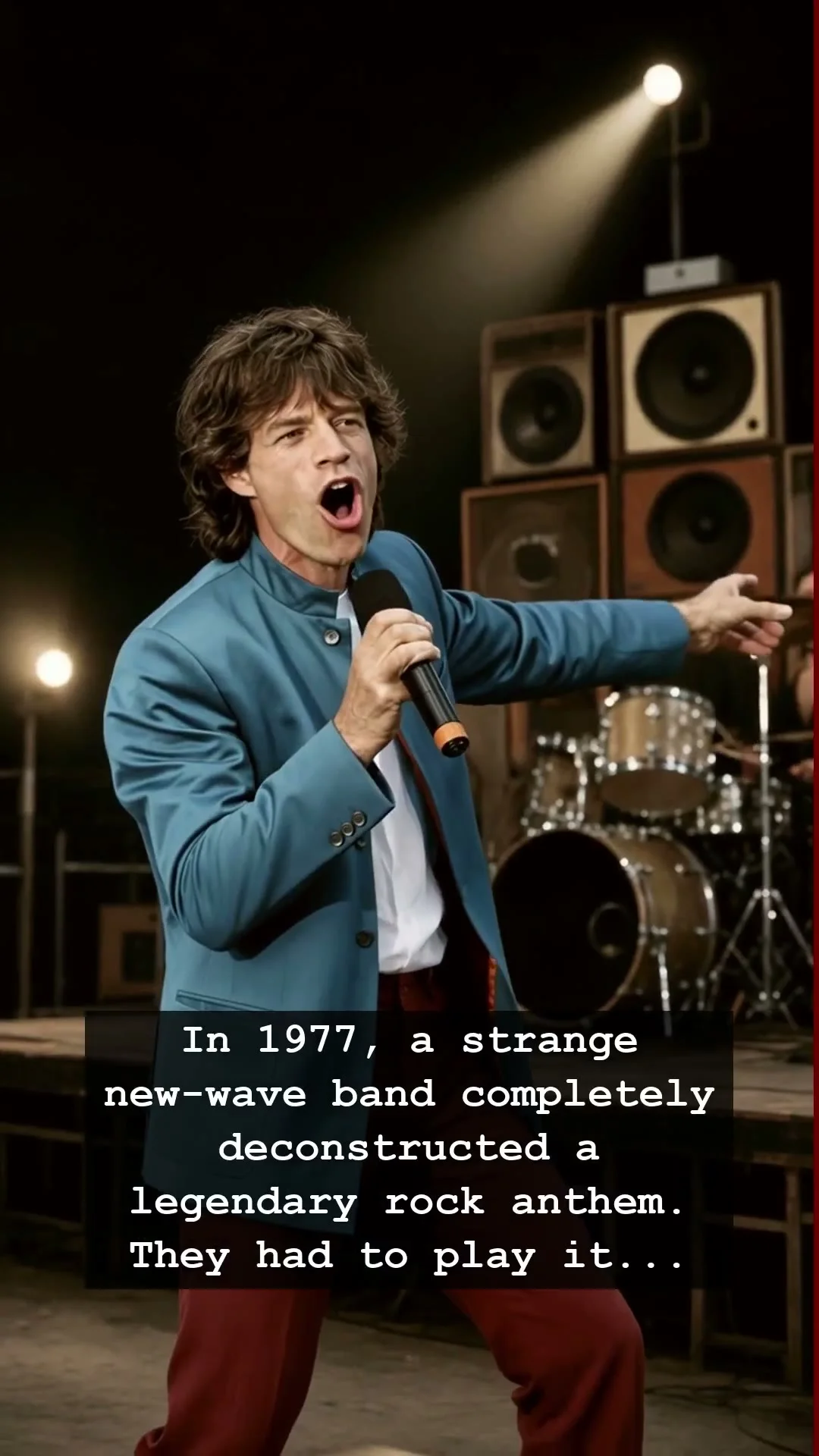
The year was 1977. The air in New York City was thick with the sweat of Studio 54 and the raw, electric energy of a changing musical tide. While the Rolling Stones were busy defining the era of massive arena rock tours, a scrappy, offbeat new-wave band called Devo was lurking in the shadows of the underground scene. They were an oddity—a group of quirky intellectuals who looked like they had wandered off a futuristic assembly line. They dared to take the quintessential, swagger-filled rock anthem Satisfaction and systematically tear it to pieces. It was a rhythmic assault, a jerky, mechanical deconstruction that stripped away the legendary blues-rock cool of the original track and replaced it with a nervous, staccato obsession.
For any other rock icon, hearing their signature masterpiece mangled by a bunch of experimental upstarts would have been an invitation for a legendary meltdown. The industry whispered about the ego of Mick Jagger, the man whose strut had defined the very essence of rock and roll cool for over a decade. Expecting a scathing dismissal or a public denunciation of this jarring interpretation, the tension in the room was palpable. The members of Devo stood frozen, bracing for the inevitable fury of the frontman who owned the song’s soul.
But the moment the needle dropped and the erratic, synthesized pulse of their version filled the air, the room shifted. Instead of throwing a tantrum or storming out, Mick Jagger did something that shocked everyone present: he started to dance. It was not his usual smooth, feline prowl; it was a twitchy, rhythmic reaction that acknowledged the strange genius of what these young artists had done. He wasn’t insulted by the deconstruction; he was amused and perhaps even invigorated by how this iconic anthem could survive such a brutal transformation. That reaction cemented the legend of the Rolling Stones, proving they weren’t just relics of the past but artists who understood the shifting landscape of culture.
This incident remains one of those delicious, overlooked footnotes of the late seventies. It was a bridge between the classic era and the burgeoning wave of electronic and punk innovation. The interaction between Mick Jagger and Devo serves as a masterclass in artistic maturity. At a time when the music industry was being reshaped by the birth of MTV and the dominance of the Walkman, the willingness to embrace the new while honoring the old was rare. Mick Jagger proved that his relevance wasn’t tied to a specific sound, but to an instinct for what felt dangerous and authentic.
Decades later, the encounter reminds us why we remain obsessed with these rock giants. It wasn’t just about the records they sold or the stadiums they filled; it was about the stories that happened behind the velvet curtain. When we look back at the era of Woodstock echoes and the rise of the machine age, we find the humanity of our heroes in these small, unscripted moments. Whether you are a lifelong fan or a new listener diving into the vault, there is always a new layer of drama to uncover. As the needles drop on our vintage vinyl today, the ghost of that 1977 dance still pulses through the speakers, reminding us that even the most untouchable anthems are meant to be challenged, evolved, and ultimately, celebrated.