
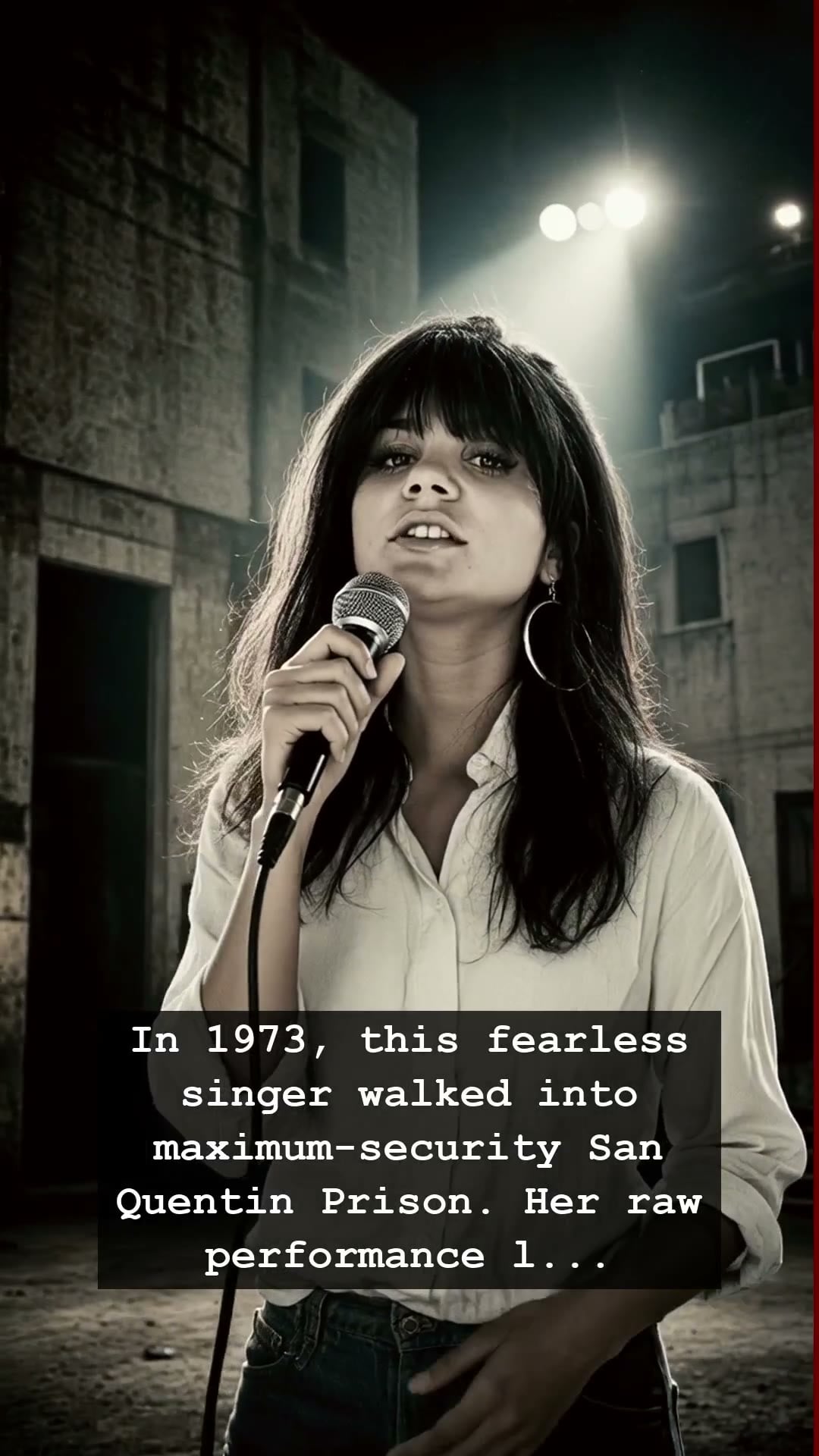
In the sweltering summer of 1973, a year defined by the flickering neon of the Vietnam War’s end and the burgeoning influence of the FM radio revolution, one woman made a decision that would defy the conventions of stardom. While her contemporaries were busy headlining sold-out arenas or navigating the excesses of the burgeoning Southern Rock scene, Linda Ronstadt walked through the cold, imposing iron gates of San Quentin State Prison. It was a place where hope often went to die, populated by men hardened by life and crime, yet when she stepped onto that makeshift stage, the atmosphere shifted instantly from predatory tension to something approaching sacred stillness.
Linda Ronstadt, then a rising siren of the country-rock sound, possessed a voice that could pierce through the thickest emotional armor. As she began to sing, the echoes of her raw, crystal-clear soprano bounced off the stark concrete walls. She did not bring the glitz of a television studio or the artificial polish of the hit-making machines that were beginning to dominate the charts. She brought nothing but her vulnerability and the sheer power of her storytelling. For the thousands of inmates gathered there, it was a moment of profound, jarring beauty that felt entirely out of place, yet undeniably necessary.
This was not merely a performance; it was a testament to the power of music to bridge the divide between the free world and the forgotten. In an era where the Jukebox served as the primary confessional for the American public, Linda Ronstadt reached deep into the repertoire of heartbreak and longing, singing songs that mirrored the isolation of the men in the crowd. She did not perform for them as a superstar untouchable; she performed as a human being sharing the weight of the human condition. The prison yard fell silent, a rare occurrence in such a volatile environment, as the hardened prisoners were rendered spellbound by the haunting resonance of her voice.
Looking back from the vantage point of today, the legacy of Linda Ronstadt remains cemented in these daring, authentic choices. Her ability to transcend genres—from the rootsy textures of Country Rock to the sophisticated arrangements of her later years—was matched only by her refusal to hide from the realities of the world. While the culture of the 1970s often prioritized the spectacle of the stage, she prioritized the connection. That day at San Quentin was a turning point, proving that the true impact of an artist is measured not by record sales, but by the lives they touch in the most unlikely of spaces.
Decades later, the memory of her performance continues to resonate with those who remember the analog warmth of the era. Whether played on a worn-out cassette tape or through modern streaming, the voice of Linda Ronstadt carries the weight of that historical afternoon. It serves as a haunting reminder of a time when music felt dangerous, deeply personal, and capable of stopping time itself. Do you still remember the way her voice felt, or is it time you discovered the magic all over again?