
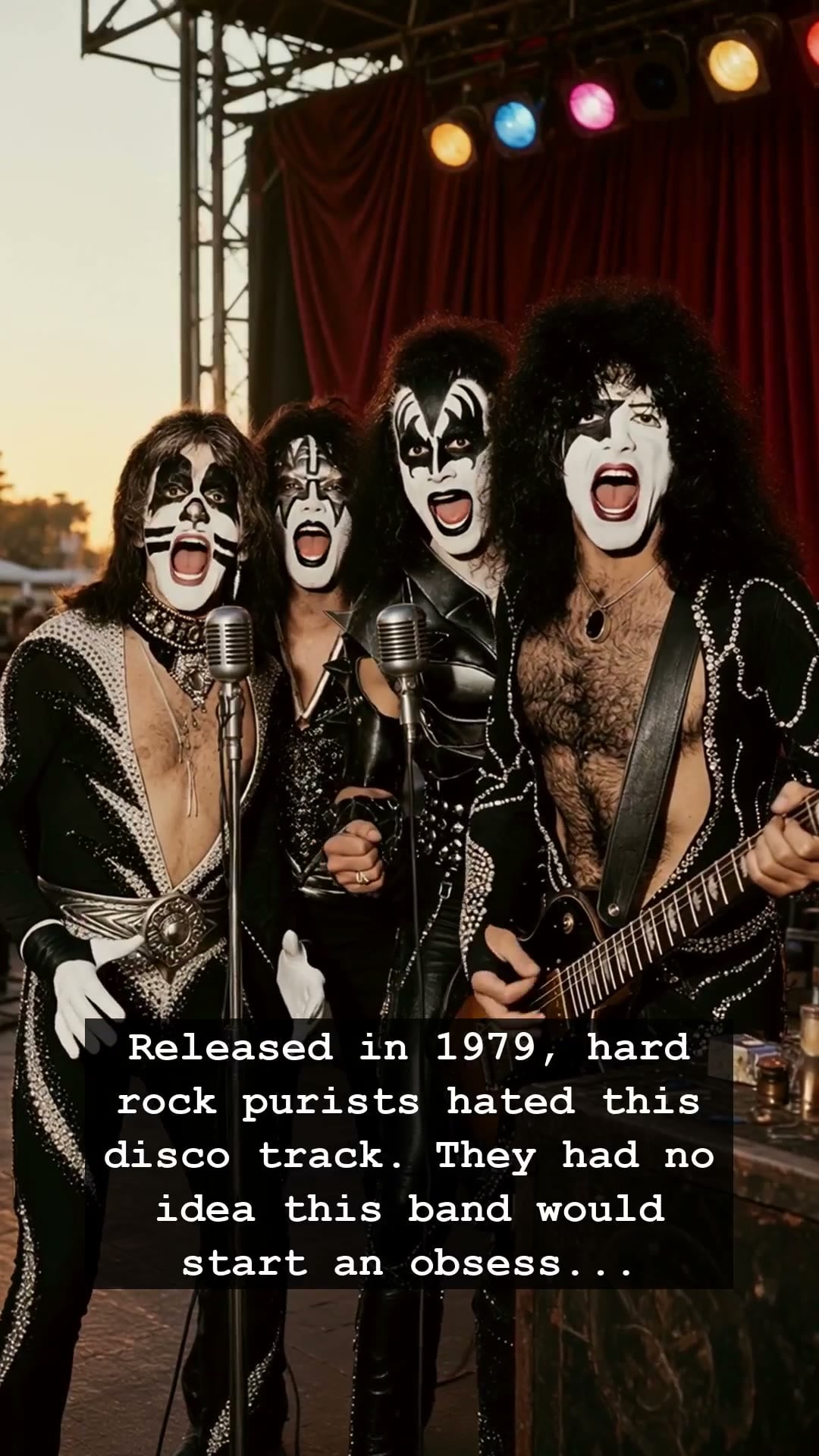
It was 1979, the year the world seemed to be caught in a tug-of-war between the fading grit of hard rock and the shimmering, neon-soaked rise of disco. KISS, the legendary titans of face paint and pyrotechnics, were feeling the pressure. Their fans, the dedicated Kiss Army, expected blood, fire, and thunderous power chords. Instead, the band delivered something that felt like a betrayal. When they dropped I Was Made for Lovin’ You, the hard rock purists didn’t just frown; they revolted. To the die-hard fans who lived for the raw energy of rock, this danceable, synthesizer-laced track felt like a surrender to the velvet-rope culture of Studio 54.
The drama backstage was just as intense as the reaction in the stadiums. Paul Stanley, the mastermind behind the song, famously pushed the track because he wanted to prove that the mechanics of a hit song were universal, regardless of the genre. He felt the band was becoming a caricature of itself and needed to evolve or risk fading into obscurity. The internal friction was palpable; the members were struggling with ego, substance abuse, and the exhausting demands of maintaining their larger-than-life personas. Yet, while American metal purists were busy snapping their vinyl records in protest, a bizarre and unexpected phenomenon was unfolding halfway across the globe.
In markets like Australia and across Europe, the song didn’t just succeed; it sparked an absolute mania. It became a gold-certified sensation, climbing the charts with a ferocity that caught everyone, including the band, by surprise. It turned out that the world outside the borders of the United States didn’t care about the strict gatekeeping of musical genres. They heard a catchy hook, a driving beat, and an anthemic chorus that felt made for the stadiums of the world. KISS had accidentally tapped into a global obsession, proving that their appeal was far broader than their image suggested.
Looking back, the controversy surrounding I Was Made for Lovin’ You is a quintessential chapter in the history of rock music. It reflects an era where artistic integrity was constantly under siege by the changing tastes of a fickle public. MTV was still on the horizon, the Walkman was just beginning to change how we consumed music, and the lines between genres were blurring in real-time. For KISS, this track became a double-edged sword—a massive commercial triumph that forever alienated their most stubborn critics while simultaneously guaranteeing their survival in a shifting industry.
Today, the track stands as a testament to the band’s audacity. It remains a staple of their live performances, a moment where the masks come off—metaphorically speaking—and the band embraces the very pop sensibilities that once caused such a firestorm. It reminds us that behind the makeup and the stage theatrics, these were musicians constantly wrestling with their legacy and the soul of rock and roll itself. Whether you view it as a sell-out moment or a stroke of genius, it is impossible to deny that this disco-infused anthem remains an indelible piece of music history. Next time you hear those iconic opening synth notes, remember the chaos, the grit, and the ambition that brought it to life.