
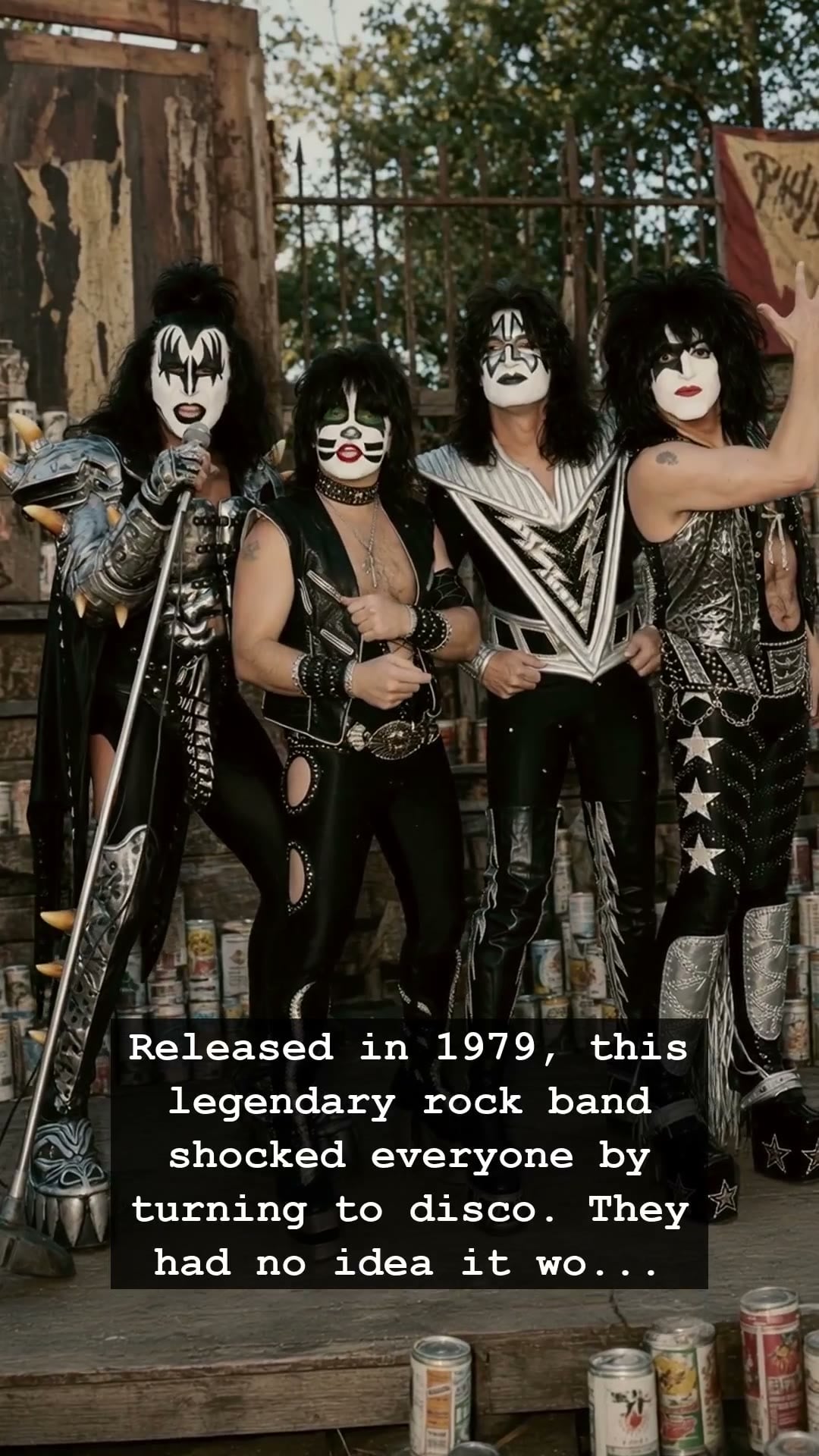
It was 1979, the golden age of the glitter-drenched dance floor, and the world was spinning under the mirrored ball of Studio 54. Hard rock fans across America were still tethered to their denim and leather, worshipping at the altar of heavy riffs. But then, an anomaly occurred. The god-like figures of hard rock, Kiss, did the unthinkable. They stepped out of their dark, pyrotechnic-filled caverns and into the pulsing, rhythmic heartbeat of the disco era. When the opening beat of I Was Made for Lovin’ You dropped, it wasn’t just a song—it was a seismic shift that left purists gasping and the mainstream world reeling in synchronized motion.
The tension within the band was palpable, reaching a boiling point that nearly snapped the legendary quartet in two. For the members of Kiss, this wasn’t just an artistic experiment; it was a desperate gamble against the shifting tides of the music industry. Behind the iconic face paint and the larger-than-life personas, the band was a pressure cooker of creative ego and conflicting visions. Paul Stanley had his heart set on bridging the gap between the grit of the Sunset Strip and the relentless, polished pulse of the nightclub circuit. Gene Simmons, the band’s notorious bassist, was famously vocal about his initial disdain for the disco direction, creating a rift that echoed through the halls of their recording studio.
Yet, the result was an undeniable, unstoppable global powerhouse. By blending the primal, distorted aggression of Arena Rock with the sleek, high-hat-driven urgency of a dance anthem, Kiss created something that shouldn’t have worked, but absolutely dominated. It was a bizarre marriage of musical worlds, underscored by the relentless innovation of the late seventies. The song became a staple in a time when the portable revolution was just beginning; soon, you could hear it pumping through the tinny speakers of a Walkman on a city street or roaring from the jukebox of a local dive bar. It was a cultural contradiction that somehow managed to unify the dance floor and the concert stadium under one neon umbrella.
Looking back, this moment stands as a defining turning point in the band’s mythic history. It serves as a reminder that even the most stoic legends of rock were not immune to the gravitational pull of changing trends. It was a moment of vulnerability masked by heavy layers of theatrical makeup and pulsating basslines. While fans at the time felt betrayed by the shift, the track’s enduring legacy proves that the pursuit of a hit can sometimes lead to a masterpiece of accidental genius. It reminds us that even when our heroes try to mask their identity, their influence remains permanent.
Decades later, the song still vibrates with that same electric charge. It stands as a testament to a time when genres blurred and the world was ready to move, regardless of who was holding the guitar. Whether you were a disco devotee or a die-hard rocker, this track forced you to make a choice: turn it off in protest or surrender to the rhythm. Today, it remains an essential piece of the American musical tapestry, echoing the drama, the ambition, and the sheer audacity of an era that refused to stand still. So, the next time you hear those shimmering synths, remember the chaos and the passion that fueled the most unexpected hit in the history of rock and roll.