
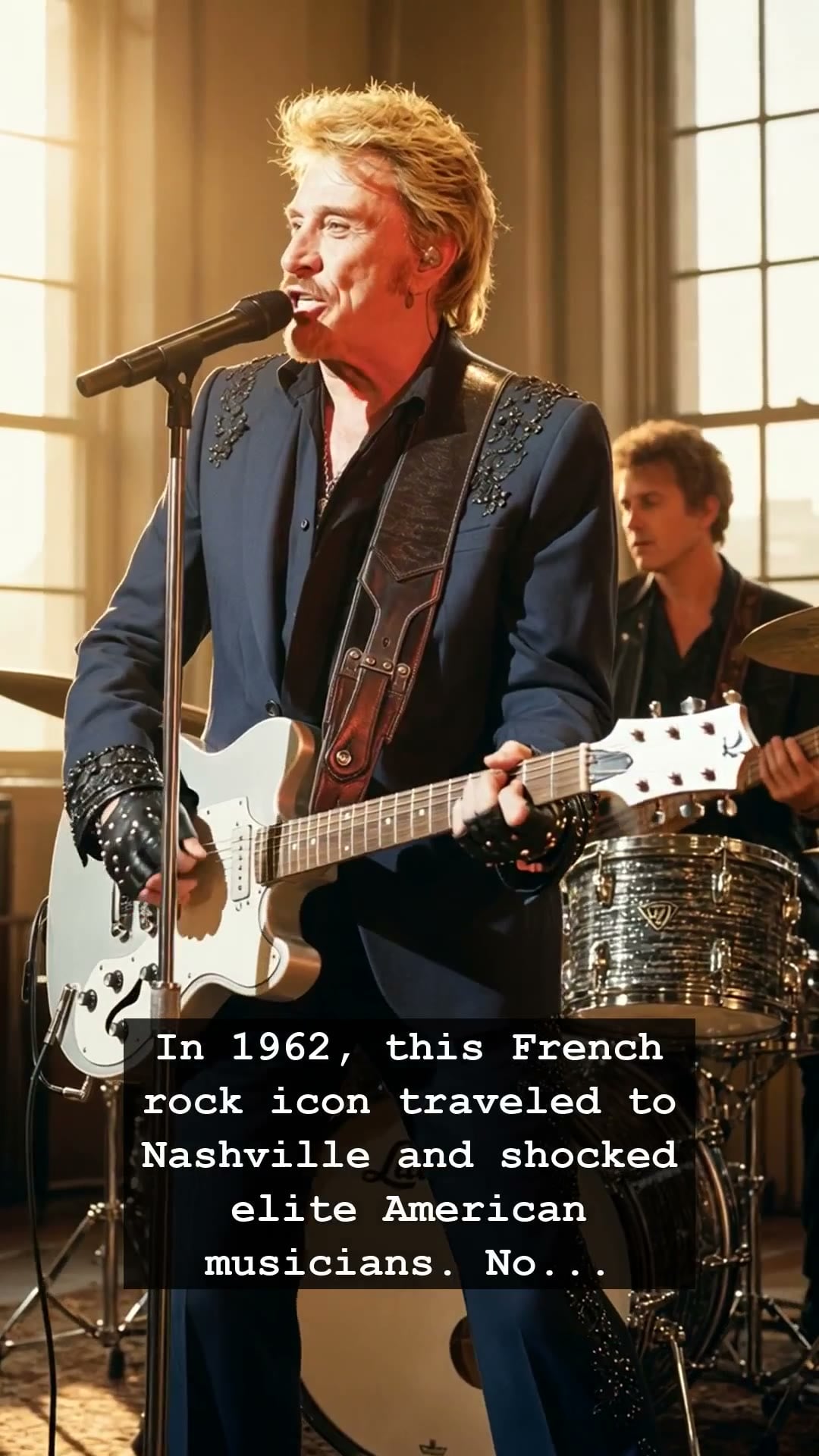
The year was 1962, a time when the Jukebox reigned supreme and the transatlantic divide in rock music felt like an ocean of silence. Johnny Hallyday, already a burgeoning rebel in his native France, stepped off a plane in Nashville, Tennessee, carrying a dream that seemed impossible to the local elite. He was a young man with a leather jacket, a pompadour, and a hunger to capture the authentic, grit-filled soul of American music. At the time, Nashville was the sanctuary of polished country sounds and session veterans who had seen every gimmick under the sun. They watched this Frenchman with skepticism, expecting nothing more than a shallow imitation of their homegrown craft.
Yet, when Johnny Hallyday entered the studio, the atmosphere shifted instantly. He did not come to play it safe; he came to breathe fire into the classics. The session musicians, seasoned veterans of the craft, were stunned to find a raw, unrefined intensity in his delivery that felt more American than the Americans themselves. As the rhythm section locked into a groove, Johnny Hallyday channeled the spirit of a New Orleans classic, twisting the chords into something that felt both dangerous and exhilarating. It was an explosive cross-cultural collision that turned the studio into a pressure cooker of musical experimentation.
This trip was more than just a recording session; it was the spark that ignited a European youth revolution. The songs they captured became the blueprint for the yé-yé movement, proving that rock and roll was a universal language that could transcend borders. Johnny Hallyday brought the spirit of Nashville back to Paris, fueling the desire for rebellion among teenagers who were tired of the status quo. He wasn’t just performing; he was importing a culture, transforming the lonely echo of an American guitar into the heartbeat of a new generation across the Atlantic.
Behind the glamour of his rise, however, lay the immense pressure of fame that defined that golden era. Johnny Hallyday lived at a breakneck speed, navigating the dark side of stardom that claimed so many legends in the 1960s. He became a vessel for the angst and ambition of millions, constantly fighting to maintain his identity while being shaped by the industry’s crushing expectations. It was a life of high-stakes performances and volatile personal demons, yet he always remained the ultimate showman, unafraid to expose his scars under the harsh glare of the spotlight.
Decades later, the legacy of that 1962 Nashville session remains a cornerstone of rock history. It serves as a testament to a time when music felt like a revolution, long before the digital age fragmented the experience. Johnny Hallyday showed the world that a true artist never settles for boundaries, and his ability to bridge the gap between two continents remains a legendary feat. As we look back at the era of vinyl records and transistor radios, we are reminded that one man with a defiant spirit can change the course of history forever. Take a moment to listen to those early tracks, and you might still feel the electric charge of a French icon shaking the foundations of Nashville.