
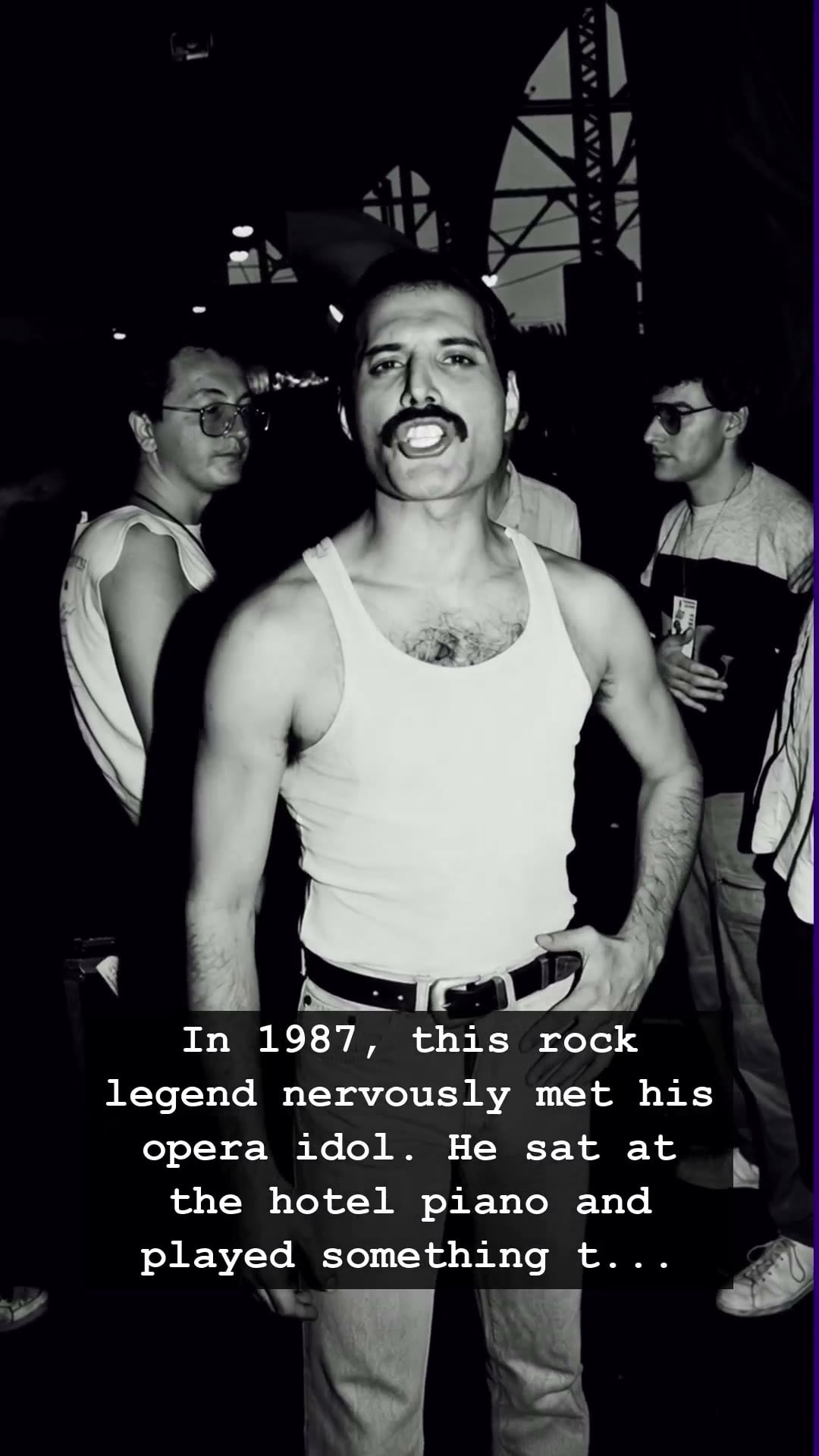
It was 1987, a time when the world was gripped by the synthetic glitz of MTV and the fading echoes of arena rock. Freddie Mercury, the flamboyant frontman of Queen, stood at the pinnacle of his fame, yet he harbored a secret ambition that few rock stars would dare to entertain: a devotion to the soaring, dramatic heights of grand opera. Nervous and stripped of his signature stage armor, he walked into a hotel room in Barcelona to meet the legendary soprano Montserrat Caballe. He wasn’t there as a rock god, but as an admirer standing before his ultimate musical idol. Without uttering a word of formal introduction, he sat down at the hotel piano. The air in the room grew heavy with anticipation as his fingers found the keys. As he began to play the haunting, unreleased melody that would eventually become the anthem Barcelona, the silence that followed was not one of confusion, but of pure, stunned revelation. Montserrat Caballe was left speechless, silenced by the sheer emotional depth pouring from the man known for leather jackets and stadium chants.
The collaboration that followed was one of the most unlikely and profound unions in music history. It broke the rigid boundaries of the era, bridging the gap between the high-brow halls of opera and the raw, electric energy of the rock scene. For Freddie Mercury, this was more than just a creative experiment; it was the realization of a lifelong dream. He wanted to fuse his rock sensibilities with the grandiosity of Montserrat Caballe’s operatic range, creating something that felt timeless yet dangerously bold. This was an era where genres were strictly siloed, yet here were two legends defying every expectation, proving that artistic passion knows no hierarchy.
Behind the scenes, the process was fueled by late nights and the intense pressure of constant media scrutiny. Freddie Mercury was fighting personal battles that the public would only fully understand much later, and this project served as his sanctuary. Working alongside Montserrat Caballe required a level of vulnerability he rarely showed on stage. There were no pyrotechnics, no massive audiences to feed off, just the two of them and the music. The result was a soaring masterpiece that captured the grandeur of the 1980s while transcending its artificial trends. It remains a testament to the fact that when two geniuses collide, they create a gravity all their own, regardless of their backgrounds.
Decades later, the story of their meeting still resonates because it reminds us that even icons have heroes. It captures a fragile, human moment in a life often defined by larger-than-life narratives. Whether you remember the song from the 1992 Olympics or discovered it in the digital age, the connection between Freddie Mercury and Montserrat Caballe serves as a beautiful reminder of the power of artistic fearlessness. It was a bridge between two worlds, built on mutual respect and the pursuit of pure, unfiltered beauty. Next time you hear the opening notes of that legendary collaboration, listen closely; you can still hear the echo of that quiet hotel room where the rock icon first dared to share his heart with his idol.