
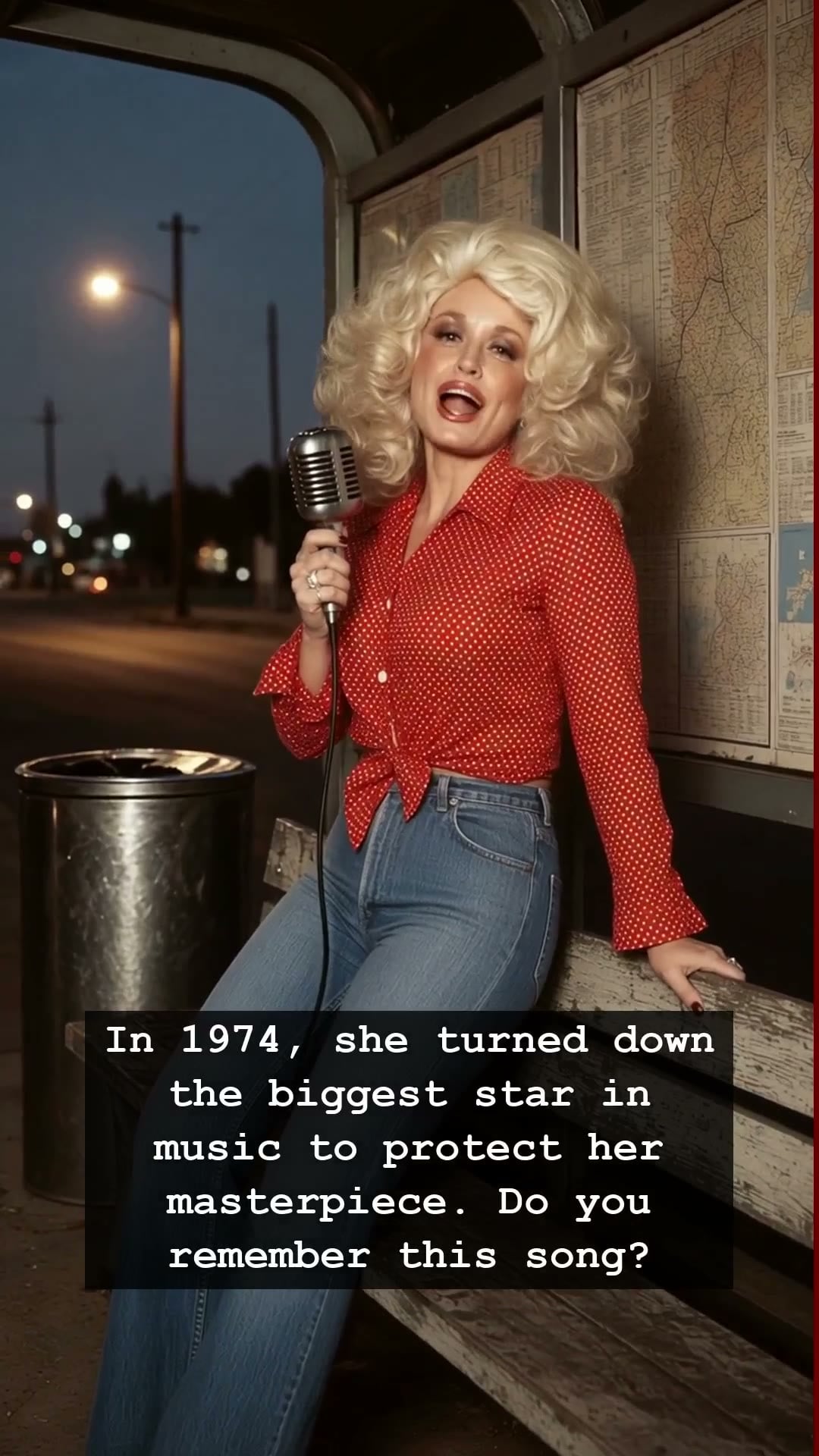
The year was 1974, and the airwaves were dominated by the glow of the television and the crackle of vinyl records spinning on heavy turntables. Dolly Parton, the golden-haired songbird of country music, stood at a crossroads that would define the rest of her legendary career. She had just penned a hauntingly beautiful ballad, a song that stripped away the rhinestones and the stage lights to reveal a raw, aching vulnerability. It was meant to be a farewell, a tender goodbye to her mentor and longtime partner, Porter Wagoner. But before the ink had even dried on the manuscript, the most powerful force in the music industry came knocking, demanding a heavy price for a piece of the magic.
Colonel Tom Parker, the formidable manager of Elvis Presley, reached out to Dolly Parton with an offer that most songwriters would have killed for. Elvis wanted to record his own version of her new masterpiece. There was only one condition, and it was a jagged pill to swallow: the Colonel demanded half of the publishing rights to the song. In the cutthroat industry of the 1970s, where creative control was often traded for a shot at fame, this was standard procedure. It was the way the game was played in the shadows of the studio system. But Dolly Parton, possessing a steely resolve that belied her sweet, Southern charm, refused to back down.
She famously told the Colonel that the song was her heart, her legacy, and her future. By walking away from the deal, she risked alienating the biggest star on the planet. Many in the Nashville scene whispered that she had made a fatal error, choosing her pride over a massive payday. Yet, Dolly Parton understood something that many of her contemporaries did not. She knew that a song written with such honesty was a permanent part of one’s soul. She chose to keep the rights to the song that would eventually become one of the most recognizable anthems in the history of global music.
Years later, when the song saw a massive resurgence during the era of the booming film soundtrack and the widespread dominance of the radio, the wisdom of her decision became blindingly clear. The ballad became more than just a melody; it became a testament to artistic integrity in an industry often fueled by greed and fleeting trends. The story of that 1974 standoff serves as a reminder that behind the glitter of the Jukebox and the rise of the mega-star, the true power always lies with the songwriter who refuses to let their creation be sold for parts.
Today, I Will Always Love You remains a touchstone of American music, a song that bridges the gap between generations. When you listen to those opening notes, you aren’t just hearing a track from the seventies; you are hearing the sound of a woman standing her ground against the giants of the industry. It is a piece of history that continues to move us, proving that the most enduring legacies are built on the moments we choose to say no. As the music fades into the distance, it leaves us wondering: what other pieces of our own stories have we chosen to protect with our very lives?