
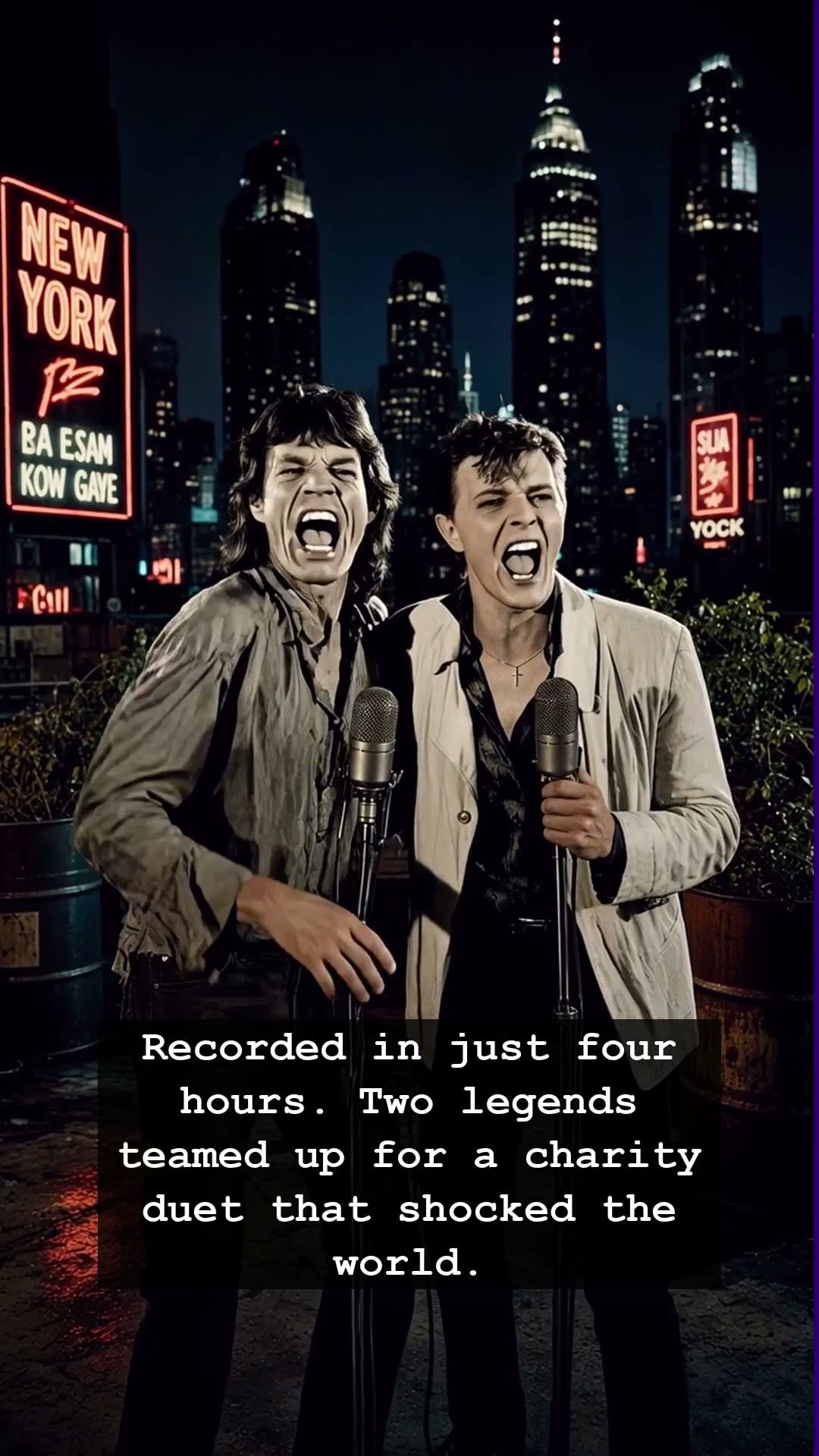
The year was 1985. The world was gripped by the spectacle of Live Aid, and the airwaves were dominated by the neon pulse of MTV. Amidst this cultural whirlwind, two of the most iconic figures in rock history decided to lock themselves away in a London studio for a project that felt both impossible and inevitable. David Bowie and Mick Jagger, the thin white duke of glam rock and the swaggering tongue of the Rolling Stones, were about to bridge the gap between their distinct musical legacies. It was a high-stakes gamble that culminated in a cover of Martha and the Vandellas’ Dancing in the Street, recorded in a blistering four-hour session that remains a testament to the chaotic brilliance of 80s rock royalty.
To understand the magnitude of this collision, one must recall the atmosphere of that mid-eighties era. Walkman players were the constant companions of the youth, and the industry was obsessed with the theatrics of the music video. When David Bowie and Mick Jagger stepped into the booth, they weren’t just recording a song; they were crafting a pop culture monument. The urgency was palpable. Both men were at the height of their artistic powers, yet they were known for their fierce individuality. Watching them together was like witnessing a solar eclipse; two massive, burning entities momentarily aligned in the sky, casting a shadow that stretched across the globe.
Behind the scenes, the process was nothing short of manic. Reports from the time suggest that the session was fueled by a desire to contribute something meaningful to the Live Aid effort, yet there was an undeniable playful tension between the two. Mick Jagger, ever the energetic showman, pushed the tempo, while David Bowie brought his signature avant-garde sensibilities to the production. The track was completed with a speed that modern producers would find terrifying, a raw, kinetic energy that defined the spirit of the project. It was a spontaneous explosion of rhythm and blues filtered through the sharp lens of 1985 synthesizers.
Critics were polarized, and fans were stunned, but the video cemented its place in history. It featured the duo prancing through the streets of London, unscripted and unapologetically flamboyant. It was a stark contrast to the gritty, heavy metal aesthetics that were beginning to climb the charts. By choosing such a soulful, joyful classic, David Bowie and Mick Jagger reminded the world that beneath the costumes and the global superstardom, they were still just fans of the music that started it all. The song didn’t need to be perfect; it needed to be bold, and in that regard, it was a triumph.
Decades later, the collaboration serves as a time capsule for a golden age of excess and raw, unadulterated talent. It captures a moment when the boundaries of ego dissolved in favor of a shared cause. Whether you view it as a campy relic or a stroke of genius, the synergy between David Bowie and Mick Jagger remains an undeniable highlight of 80s music history. Every time that iconic brass hook kicks in, we are transported back to that London studio, where for four fleeting hours, the world’s biggest stars were just two friends making music for the sheer joy of it. Do you remember where you were the first time you saw them dance?