
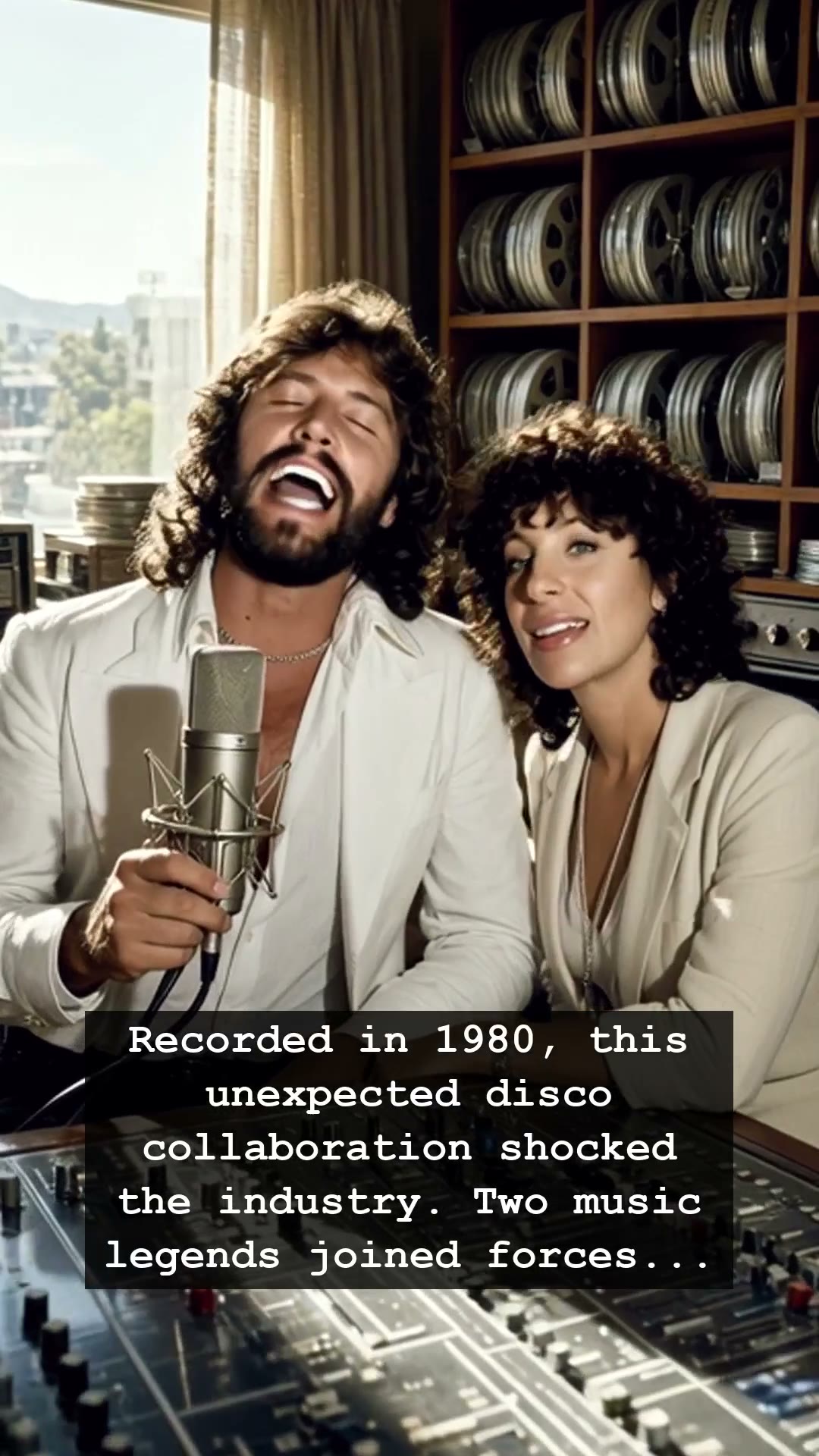
It was 1980, a time when the glitter of Studio 54 was beginning to tarnish and the music industry was desperately clinging to the dying embers of the disco era. When word leaked that the queen of Broadway and traditional pop, Barbra Streisand, was entering the studio with the falsetto king of the Bee Gees, Barry Gibb, the industry executives were not just skeptical; they were terrified. How could the woman who defined classic vocal elegance possibly survive the pulsating, electronic heartbeat of a Bee Gees-produced record? It felt like an artistic mismatch destined for catastrophic failure.
Yet, the result was the monumental album Guilty, a masterclass in collaboration that defied every cynical prediction. Barry Gibb, already reeling from the massive success of the Saturday Night Fever soundtrack, brought his signature rhythmic sensibilities and songwriting genius to the table. Barbra Streisand, ever the perfectionist, brought a raw, vulnerable emotional depth that transformed the disco-infused tracks into timeless pop anthems. The title track, Guilty, became a global smash, proving that even as the cultural landscape of the MTV generation began to shift, there was still a hunger for high-caliber vocal chemistry.
Behind the scenes, the studio was a pressure cooker of conflicting musical worlds. Barry Gibb was known for his rapid-fire, intuitive approach to songwriting, while Barbra Streisand was notoriously meticulous, obsessing over every syllable and inflection. Their sessions were rife with tension, yet that friction created the very sparks required to ignite the record. It was the sound of a fading decade clinging to its last moment of unadulterated glamour. They weren’t just making a record; they were creating a sonic bridge between the disco dance floors and the intimate, candlelit living rooms of a changing America.
The impact was immediate. For fans who had grown up with the Jukebox classics of the fifties and the sprawling ballads of the seventies, this pairing felt like a radical evolution. It proved that legendary artists could step outside their comfort zones without losing their essence. Even today, listening to the smooth, sweeping production of their duets brings back the distinct atmosphere of 1980, where the Walkman was becoming a staple and the air was thick with the transition toward the synth-heavy sounds of the mid-eighties.
Decades later, the legacy of Barbra Streisand and Barry Gibb’s partnership remains a fascinating study in unlikely success. They didn’t just survive the skepticism of their peers; they defined an era and set a gold standard for artist collaboration. As we look back through the lens of nostalgia, the magic of their union reminds us that the best music is often born from the most unexpected collisions. Do you remember where you were when the world first fell for this shimmering, defiant masterpiece?