
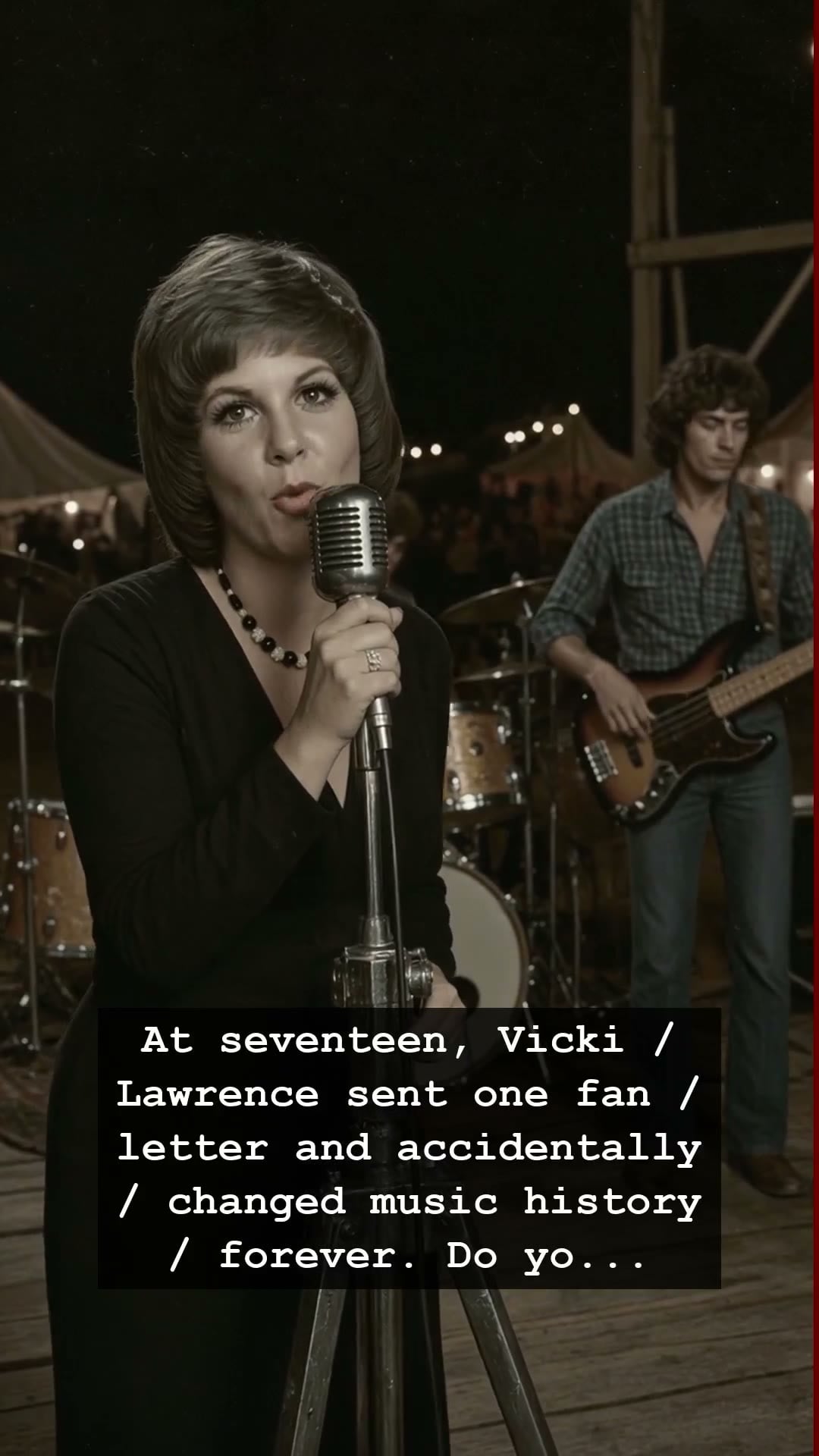
In the golden era of 1960s television and radio, fame usually required years of grinding in smoky jazz clubs or performing on tiny, local stages. Yet, for a seventeen-year-old girl named Vicki Lawrence, the trajectory of her life was altered not by a grueling audition, but by the sheer audacity of a fan letter. While most teenagers were busy taping posters of idols to their bedroom walls, Vicki Lawrence was busy writing to Carol Burnett, a rising star who would eventually become a television titan. This simple act of youthful admiration did more than just connect two strangers; it accidentally pulled a quiet girl from Inglewood, California, into the blinding, often unforgiving spotlight of American pop culture.
At the time, the airwaves were buzzing with the sounds of Motown and the British Invasion, but Vicki Lawrence possessed a unique, comedic timing and a soulful presence that went beyond mere imitation. She was often mistaken for a younger sister or a mere look-alike to established stars, a narrative that shadowed her early career. However, those who dismissed her as a fluke were silenced when she stepped into the recording studio. The transition from a television personality to a gold-certified recording artist was not a planned marketing scheme; it was a testament to a raw, undeniable talent that refused to be pigeonholed. She proved that being a triple threat—actor, comedian, and singer—was the true hallmark of a legend.
One cannot discuss the journey of Vicki Lawrence without mentioning the atmosphere of the era. Imagine the crackle of a Jukebox in a neighborhood diner, the warm glow of a bulky television set in the living room, and the collective cultural memory of families gathered around to watch the latest special. She navigated this landscape with a grace that felt both accessible and extraordinary. When her hit song climbed the charts, it wasn’t just a number on a Billboard list; it was an anthem that resonated in the hearts of those who felt like outsiders, the dreamers, and the ones who dared to send letters to their heroes.
Her story remains a powerful reminder of the pre-internet age, where a single piece of paper sent through the mail could serve as a bridge between obscurity and immortality. Behind the glitz and glamour, Vicki Lawrence dealt with the immense pressure of maintaining a public persona while keeping her authentic self intact. The music industry in the 1970s was a whirlwind of glitter, vinyl, and high-stakes production, yet she maintained a steady hand. She managed to carve out a space that was entirely her own, eventually securing her place in the pantheon of American entertainers.
Today, as we look back at the soulful melodies and the dramatic twists of her career, we are reminded that true legends are built on more than just talent; they are built on moments of serendipity. The legacy of Vicki Lawrence continues to echo through the halls of music history, proving that even a seventeen-year-old with a dream can change the world. Whenever you hear her voice, take a moment to drift back to that simpler time, when a fan letter was enough to start a revolution.