
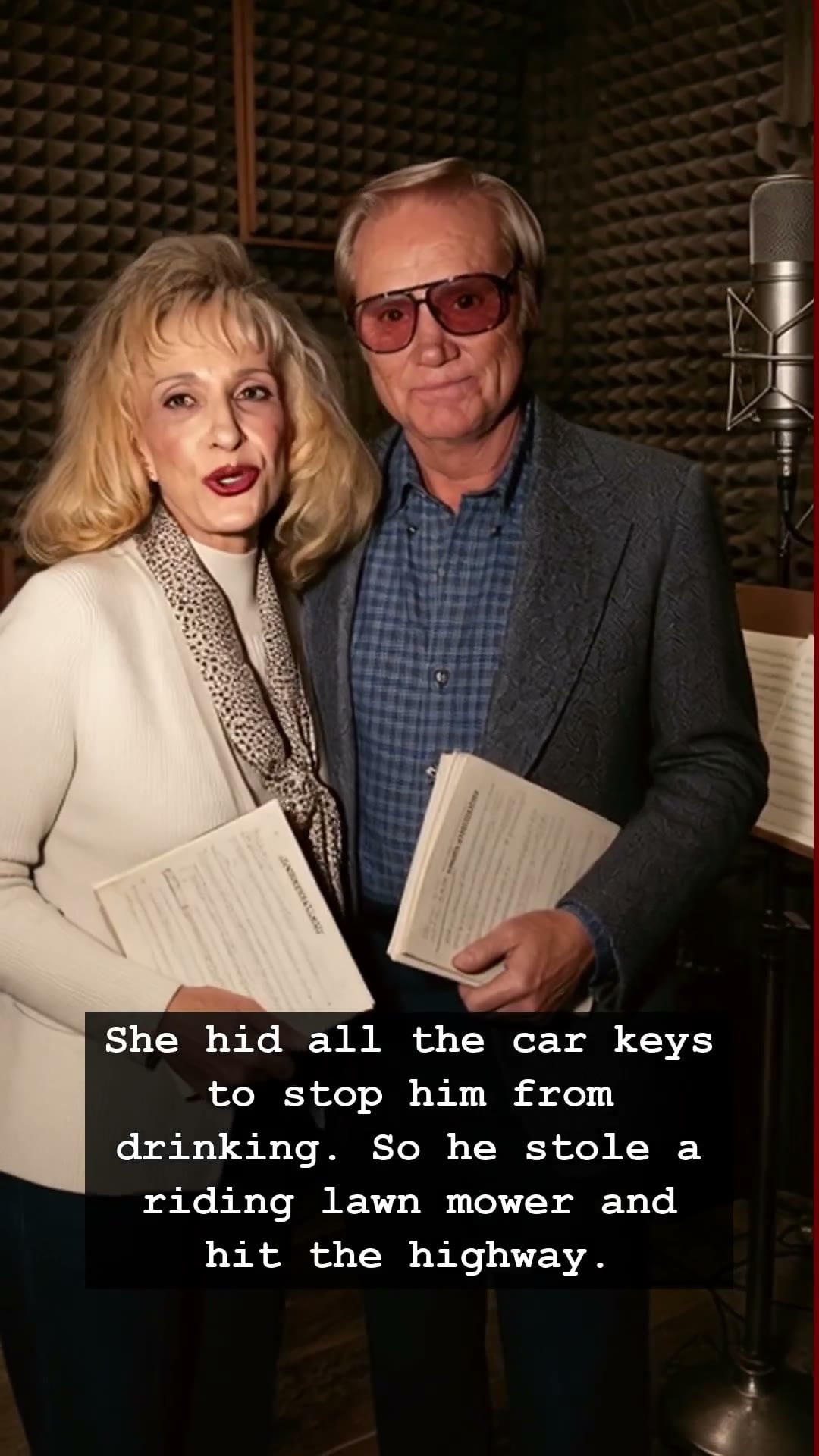
The year was 1970, and in the heart of the American South, country music was defined by the legendary chemistry of George Jones and Tammy Wynette. They were the king and queen of the genre, a power couple whose lives were as dramatic as the lyrics they belted out on stage. But behind the glitz of the Grand Ole Opry and the polished records, their marriage was a turbulent storm of addiction and heartbreak. One humid evening in Tennessee, that friction reached a boiling point that would eventually cement itself as the most bizarre, tragic, and iconic anecdote in country music history.
Tammy Wynette, desperate to save her husband from the destructive grip of his alcoholism, took the drastic measure of hiding every single set of car keys in their house. She thought she had successfully grounded him, keeping the man she loved safe from the dangerous temptation of the open road. George Jones, however, possessed a level of determination that was both his greatest asset and his deepest flaw. With his mind set on finding the nearest liquor store, he realized his wife had overlooked one crucial mode of transportation parked in the shed: his motorized riding lawn mower.
In a moment that feels more like a scene from a dark comedy than reality, the Possum climbed onto the mower and cranked it to life. He drove that machine down the highway at a top speed of five miles per hour, an absurd, slow-motion odyssey of desperation. Motorists passing by couldn’t believe their eyes as one of the most famous singers in the world rumbled along the shoulder of the road. It was a haunting, stark reflection of the isolation that fame and addiction often bring, a quiet tragedy played out on the loudest, most public stage possible.
This incident with the lawn mower became a permanent fixture in the folklore surrounding George Jones and Tammy Wynette. It serves as a stark reminder of the era when country music stars were treated as deities, even as they wrestled with demons that humanized them in the most painful ways. While the world eventually moved toward the glitz of disco and the polish of MTV, this story remained anchored in the gritty, authentic soil of the American experience. It captures the raw spirit of a time when artists lived their songs as much as they wrote them.
Decades later, the memory of George Jones and his slow crawl to the store still resonates with fans who remember the jukeboxes of the seventies. It is a cautionary tale of love and loss, a testament to the fact that even the brightest stars are tethered to the ground by their own complexities. We remember them not just for the haunting harmony of their duets, but for the messy, human truth they never hid from the world. If you find yourself listening to their classic hits today, remember the man on the mower and the love that tried, in its own flawed way, to keep him home.