
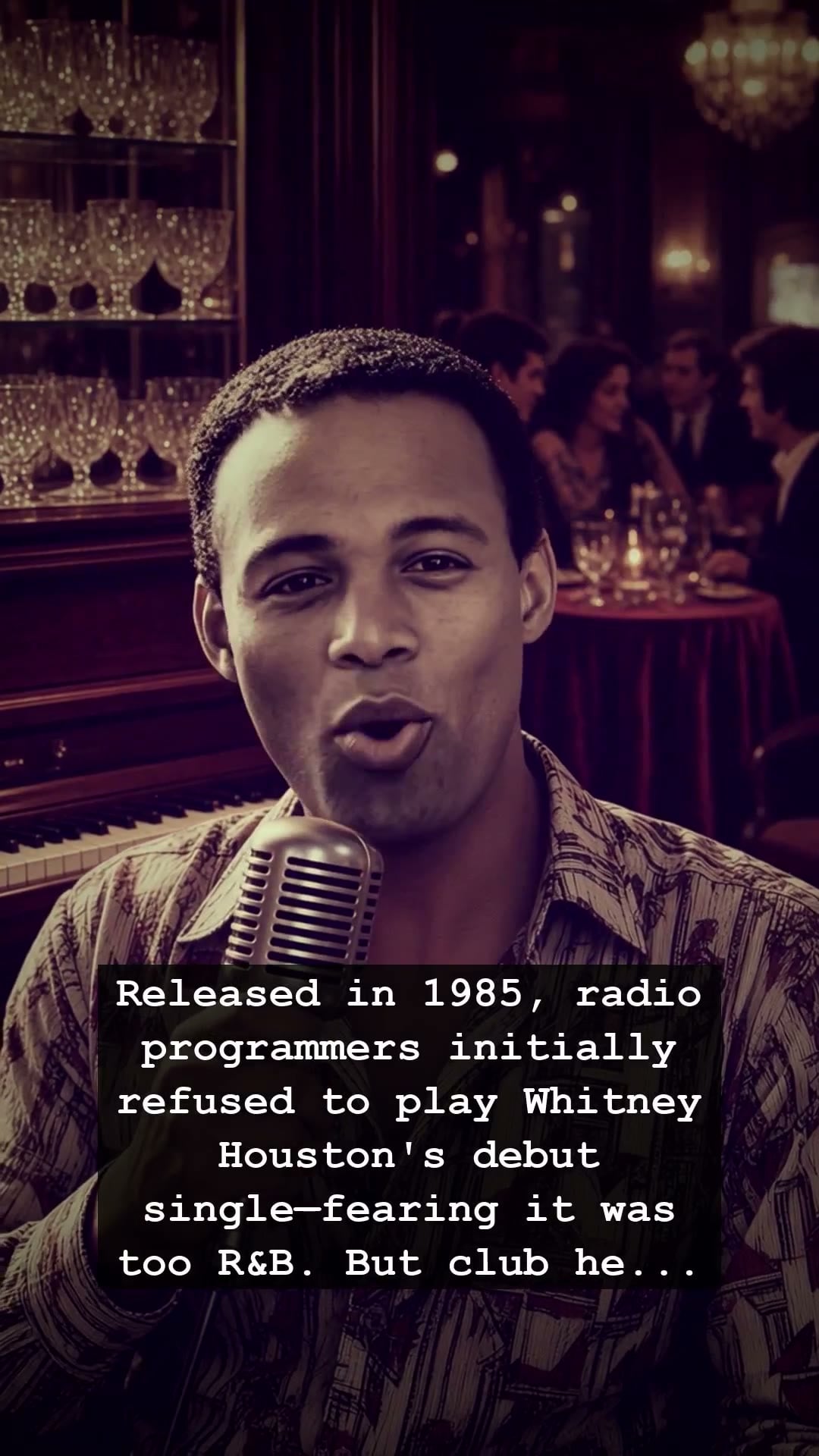
In 1985, the music industry was a tightly guarded fortress, governed by rigid gatekeepers who believed they alone knew what the American public wanted to hear. When a young, stunningly talented singer named Whitney Houston arrived on the scene with her debut single, she faced a wall of skepticism that would have crushed a lesser performer. Mainstream radio programmers famously blocked her debut track from the airwaves, dismissing it as being too deeply rooted in the R&B sound that dominated the urban charts of the time. They were terrified that their conservative listeners were not ready for her vocal power, fearing the song was simply too soulful for their pristine pop playlists.
But they had not accounted for the underground pulse of the decade. While the radio dial remained stubbornly silent, the dance floors of New York and beyond were already vibrating with the energy of her voice. In the smoke-filled, neon-lit clubs of the mid-eighties, a cultural phenomenon was brewing. DJs were spinning the track, watching as the crowd erupted in a frenzy every time Whitney Houston began to sing. The clubs became the true tastemakers, bypassing the executive suits and forcing the hands of the very programmers who had labeled her too risky just weeks before. It was a classic clash between corporate caution and the raw, undeniable magnetism of real talent.
This pivotal moment in 1985 serves as a testament to the sheer force of Whitney Houston as an artist. At a time when the MTV generation was just beginning to define the visual landscape of pop culture, she arrived not just as a singer, but as a lightning rod for change. Her voice, refined in church pews and sharpened by the demands of the studio, possessed a precision and range that felt almost supernatural. The struggle she faced at the start of her career was not about her talent, but about the industry’s struggle to categorize a woman who possessed a voice far too expansive for their narrow boxes.
Thinking back to the era of the Walkman and the iconic Jukebox, it is easy to forget how fragile a star’s rise could be. Whitney Houston had to fight for every inch of her early success, navigating the corporate machinery with a grace that masked the immense pressure she was under. The transition from club rotation to mainstream radio dominance was not just a victory for her debut song; it was the moment the world collectively realized that a new queen had claimed the throne of pop music. Her refusal to be sidelined by the biases of radio executives changed the trajectory of the industry forever.
Today, decades later, the story of those early days still resonates because it captures the essence of what made Whitney Houston truly special. She did not need the permission of the gatekeepers to prove her worth; she let the people decide. Her voice transcended genres and social divides, eventually turning her into the global icon we celebrate today. As we look back on the shimmering history of the eighties, her journey remains a poignant reminder that while industry tides may shift, an undeniable, soul-stirring talent will always find its way to the top of the charts. Whenever you hear those iconic opening notes today, remember that they once sparked a revolution on the dance floor.