
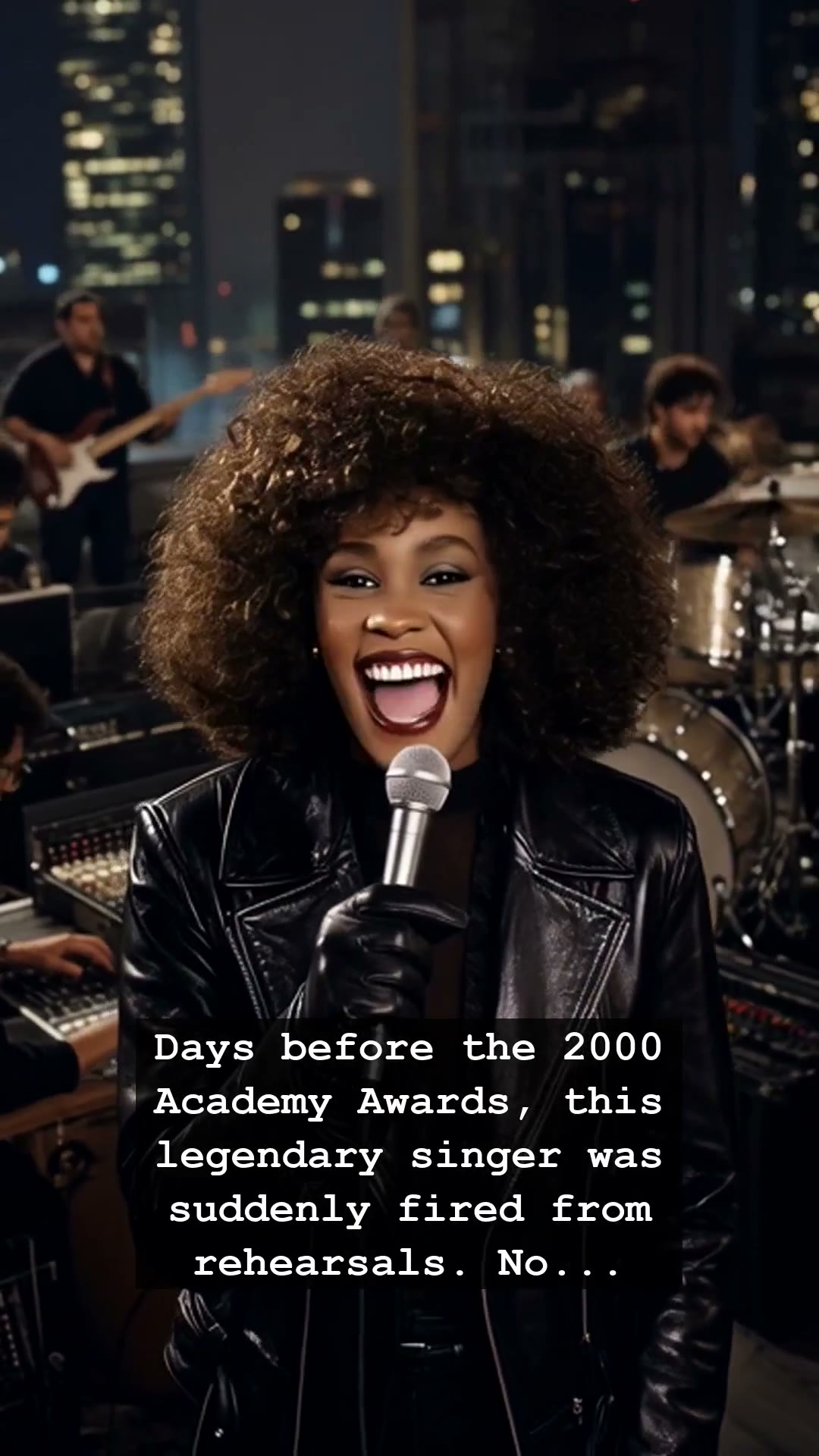
It was meant to be a crowning moment for the voice of a generation, a performance that would remind the world why she reigned supreme in the late nineties. The year was 2000, and the stage was set for the Academy Awards. Whitney Houston, the icon who had redefined pop and soul, was scheduled to grace the stage. But just days before the curtains were set to rise, a silent storm erupted behind the closed doors of the rehearsals. In an unexpected turn that stunned the music industry, the legendary singer was quietly fired. For the millions of fans who had followed her rise from church choirs to the global spotlight, it was a moment of profound confusion and heartbreak that signaled the beginning of a darker chapter in her storied life.
To understand the gravity of that moment, one must look back at the landscape of the late twentieth century. This was an era dominated by the rise of MTV and the glossy perfection of pop superstardom, where artists were expected to maintain a flawless image even as the pressures of fame began to erode their personal stability. Whitney Houston had been the golden girl of the eighties and nineties, a powerhouse whose vocal range was matched only by her cultural reach. Yet, beneath the glamour of the red carpets and the chart-topping ballads, the toll of relentless touring, public scrutiny, and private demons was beginning to manifest. The Oscars rehearsal floor became the stage for a tragic realization that not even the greatest voice in the world could always outrun the consequences of a fading grip on reality.
Witnesses at the time whispered about erratic behavior and a star who seemed increasingly detached from the meticulous choreography expected of an Academy Award production. The music director, Burt Bacharach, was reportedly caught in the center of the friction, attempting to guide a woman who was no longer the focused, radiant performer the public adored. There were no cameras documenting this specific unraveling, which only added to the mystery and the subsequent tabloid frenzy. It was a stark departure from her usual professionalism, leaving many to wonder what was truly happening behind the scenes of her once-charmed life.
This incident remains a poignant footnote in the history of pop culture, serving as a reminder that the golden age of American music often hid a deeper, more volatile reality. We were a generation obsessed with the magic of the Jukebox and the thrill of the live concert, often ignoring the human cost behind the music. When Whitney Houston was dismissed from that rehearsal, it wasn’t just a professional scheduling conflict; it was the public splintering of an untouchable idol. The news sent a tremor through the industry, stripping away the polish of stardom and revealing the fragile humanity beneath the sequined gowns.
Decades later, the tragedy of that exit still resonates with those who cherish the soulful melodies of the eighties and nineties. We remember the voice, the talent, and the inevitable shadows that follow such immense light. Her story remains a bittersweet reminder of how quickly the world can turn from applause to silence, and why we continue to look back at these legends with a mix of awe and melancholy. As the music continues to play on our old records and digital streams, we are left to wonder about the woman behind the legend and the quiet moments of sorrow that eventually silenced her song.