
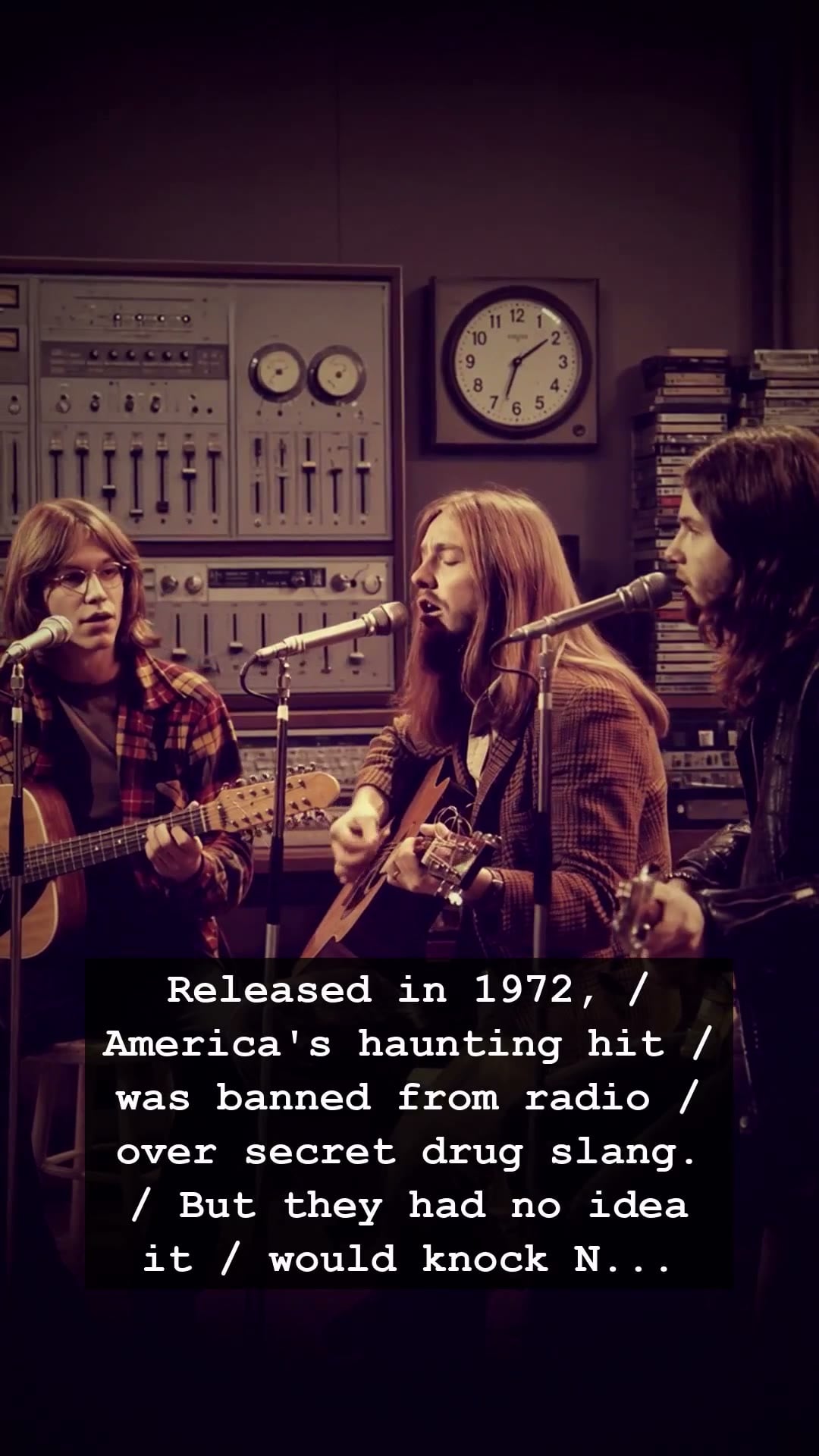
In 1972, the airwaves were dominated by the smell of patchouli and the hazy glow of sunset, but one song caused a firestorm that the band never saw coming. The folk-rock trio America had just released A Horse with No Name, a haunting track that seemed destined for greatness. Yet, almost as soon as it hit the airwaves, the song became a target of a massive controversy. Radio stations across the United States began pulling the record from their playlists, fueled by a persistent, sensational rumor that the lyrics were not about a desert journey at all, but rather a thinly veiled, drug-fueled anthem celebrating heroin use. For a generation still reeling from the cultural shifts of the late sixties, the mere suspicion of such a subtext was enough to trigger a panic.
The members of the band, Gerry Beckley, Dewey Bunnell, and Dan Peek, were completely baffled by the allegations. To them, the song was a poetic reflection of their childhood memories in the American Southwest, inspired by the surrealism of Salvador Dali paintings and the stark beauty of the desert. The phrase a horse with no name was never intended to be an illicit code, yet the establishment was determined to find darkness where there was only melody. This paranoia, common in the post-Woodstock era where authorities were constantly on high alert for counter-culture subversion, ironically turned the song into a forbidden fruit. Listeners began seeking out the track with more fervor than ever before, sensing that the controversy was masking a deeper, more alluring mystery.
The scandal backfired on the censors in spectacular fashion. Instead of burying the song, the radio ban acted as a lightning rod, drawing global attention to the group. As the rumors swirled in record shops and around the jukeboxes of local diners, the track climbed the charts with unstoppable momentum. In a twist of fate that cemented the band’s status in music history, the song eventually reached number one on the Billboard Hot 100, famously knocking Neil Young’s Heart of Gold off the top spot. It was a poetic moment of artistic triumph where the music simply outshined the hysteria.
Looking back at that era, the success of A Horse with No Name serves as a reminder of how the power of a melody can transcend even the most rigid public scrutiny. The song remains a masterclass in atmospheric songwriting, capturing a sense of wandering and solitude that still resonates with listeners today. While the band went on to produce a string of iconic hits throughout the seventies, that specific moment of being public enemy number one remains their most fascinating origin story.
Decades later, we still reach for our vintage vinyl or click on the digital stream to be transported back to that vast, sun-drenched landscape. It is a testament to the fact that great art cannot be stifled by rumor or fear. The next time you find yourself lost in those familiar, rhythmic acoustic chords, remember that what started as a scandalous misunderstanding became one of the greatest rock legends of the twentieth century. So, sit back, turn up the volume, and let the desert wind carry you away.