
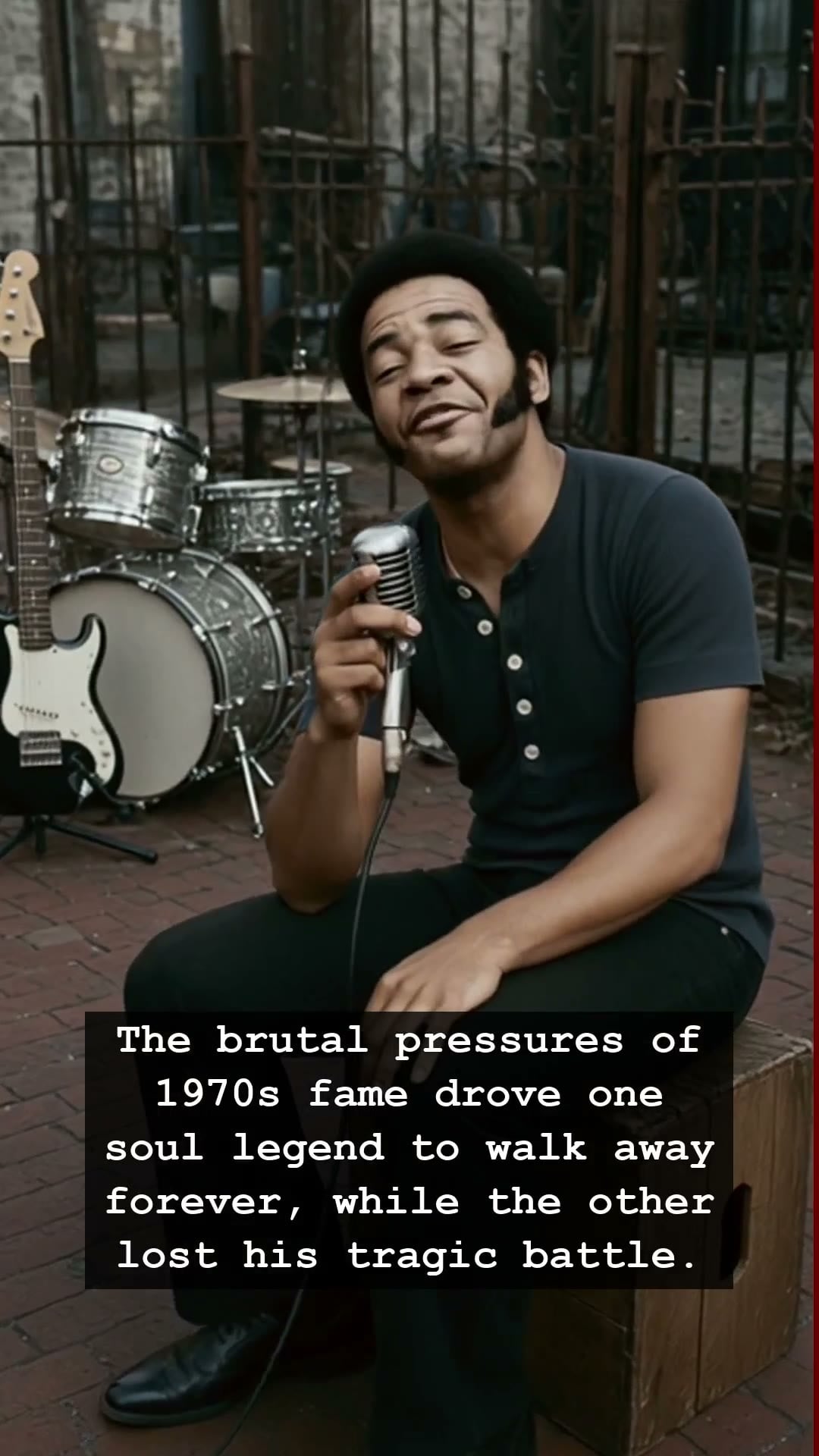
In the golden era of 1970s soul, two voices stood as titans of emotional depth: Bill Withers and Donny Hathaway. While the airwaves were dominated by the flash and glitter of Studio 54 and the rising pulse of disco, these two men were busy crafting the heartbeat of a generation. Yet, behind the velvet production and the timeless melodies, the crushing weight of fame would send their lives spiraling toward vastly different, heart-wrenching fates. One chose to vanish into the silence of obscurity, while the other was tragically consumed by the shadows of his own brilliant, troubled mind.
Bill Withers, the man who gave the world the anthemic Lean on Me and the haunting Ain’t No Sunshine, was an anomaly. He did not come from the gospel circuits or the Motown polish; he was a factory worker who started writing songs at thirty. When success hit, it was a tsunami he never asked for. By 1985, exhausted by the relentless demands of a music industry that viewed him as a commodity, Withers simply stopped. He turned his back on the stage, the flashing cameras, and the royalty checks to live a life of quiet anonymity. He walked away from the limelight entirely, proving that for some, the price of legendary status is simply too high to pay.
Contrasting this quiet withdrawal was the turbulent, transcendent genius of Donny Hathaway. If Withers was the stoic poet of the working man, Hathaway was the symphonic force of soul, known for his spine-tingling duets with Roberta Flack and his singular, emotive power. But the same sensitivity that allowed him to touch the heavens with his voice left him vulnerable to the crushing darkness of severe mental health struggles. In the late 70s, as the world moved toward the glossy sheen of synthesized pop, Hathaway’s battle with depression became a silent, brutal war. In 1979, the music world was stunned by his tragic, premature passing, leaving behind a void that still resonates in the halls of soul music today.
These two legends represent the duality of the 1970s experience. It was a decade where the Jukebox was the heartbeat of every neighborhood, yet it was also a time of profound isolation for those who reached the summit of stardom. Both men existed within the machinery of an industry that prized the output but rarely cared for the soul that fueled it. Whether it was the pressure to perform at sold-out arenas or the loneliness felt amidst the constant tour circuit, the toll on their mental well-being was an unspoken casualty of their art.
Even now, decades after they hit their peak, the music of Bill Withers and Donny Hathaway remains a sanctuary for listeners. We return to their records to find pieces of ourselves, tucked away in the honest lyrics and raw, unvarnished arrangements. While their paths diverged—one into the peace of retirement and the other into the tragic history books—their legacies remain intertwined as the most authentic voices of a transformative era. When you listen to their work today, you aren’t just hearing a song; you are hearing the echo of two men who lived, loved, and suffered under the weight of a fame that tried to define them. Their music persists, a beautiful, haunting reminder of what it truly means to leave a mark on the world.