
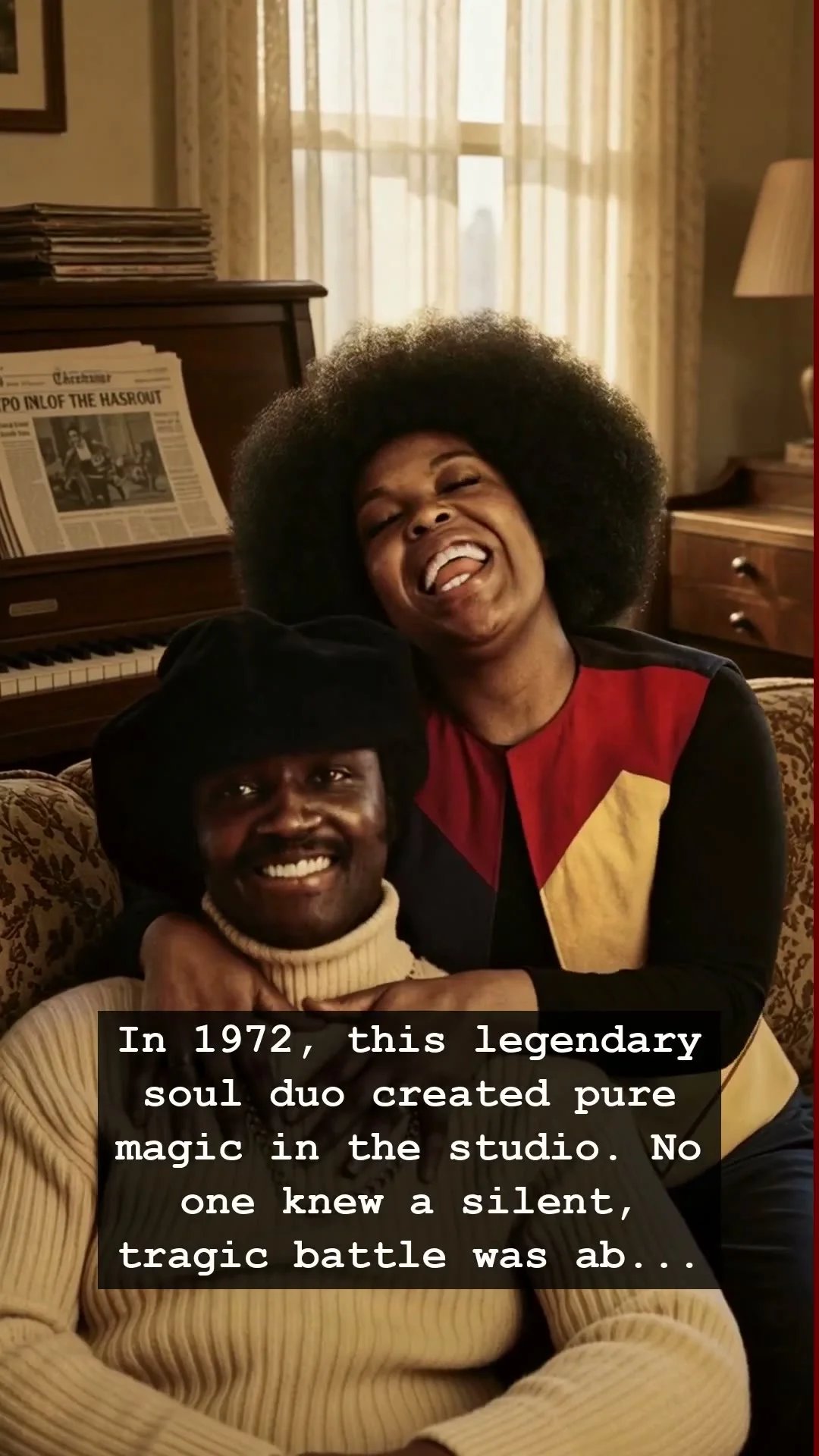
In 1972, the airwaves were dominated by the smooth, melancholic velvet of a masterpiece. When Roberta Flack and Donny Hathaway released their version of Where Is the Love, it felt like the world stopped spinning just to listen. They were the golden duo of soul, two voices that blended with such impossible intimacy that listeners assumed they were soulmates bound by fate. Their harmonies were the sound of midnight radio, of quiet walks home, and of the raw, unfiltered honesty that defined the golden age of American soul music. Yet, beneath the perfection of their studio sessions, a devastating silent battle was brewing that would eventually consume one of music’s brightest stars.
To understand the magnitude of their connection, one must look back at the era of the high-fidelity turntable and the smoky warmth of intimate recording studios. Roberta Flack was a classically trained pianist with an elegance that commanded every room, while Donny Hathaway brought a gritty, gospel-infused urgency to the table. Together, they turned simple ballads into spiritual experiences. Fans who spent their nights clutching their vinyl records or swaying to the duo’s hits at dimly lit clubs had no idea that while their music was providing healing to millions, Donny Hathaway was fighting an invisible, agonizing war within his own mind. The brilliance of his voice masked the encroaching darkness of his deteriorating mental health.
As the seventies rolled on, the industry demanded more. The pressure to replicate their hit-making magic became a weight that felt heavier with every passing season. While audiences were captivated by the romance of their duets, the reality for Donny Hathaway was a lonely descent into clinical depression and paranoia. Roberta Flack often spoke of his genius with a profound sense of awe, but she also carried the heavy burden of witnessing his decline. Their collaboration was not just a commercial success; it was a fragile bridge between two souls, one trying to lift the other out of the shadows. The studio became a sanctuary, but it could not insulate him from the internal chaos that finally silenced his voice in 1979.
Looking back, it is impossible to listen to the crystalline purity of Roberta Flack and Donny Hathaway without feeling a sharp ache of nostalgia. They represented a time when music didn’t need autotune or digital artifice; it only needed the honest vibration of two human spirits locked in harmony. Their story serves as a haunting reminder of the high cost of fame in an era that championed the artist but often neglected the person. We celebrate their legacy not just for the chart-topping success, but for the profound humanity they dared to share with us.
Today, when those timeless melodies drift out of a dusty speaker, they carry the weight of a generation. We remember the magic of 1972, but we also honor the struggle that made their music so uniquely piercing. Roberta Flack continued to carry their torch, ensuring that the world never forgot the man behind the music. As the record crackles and the needle finds its groove, we are reminded that some voices are so beautiful they never truly fade; they just linger in the air, waiting for us to listen once again.