
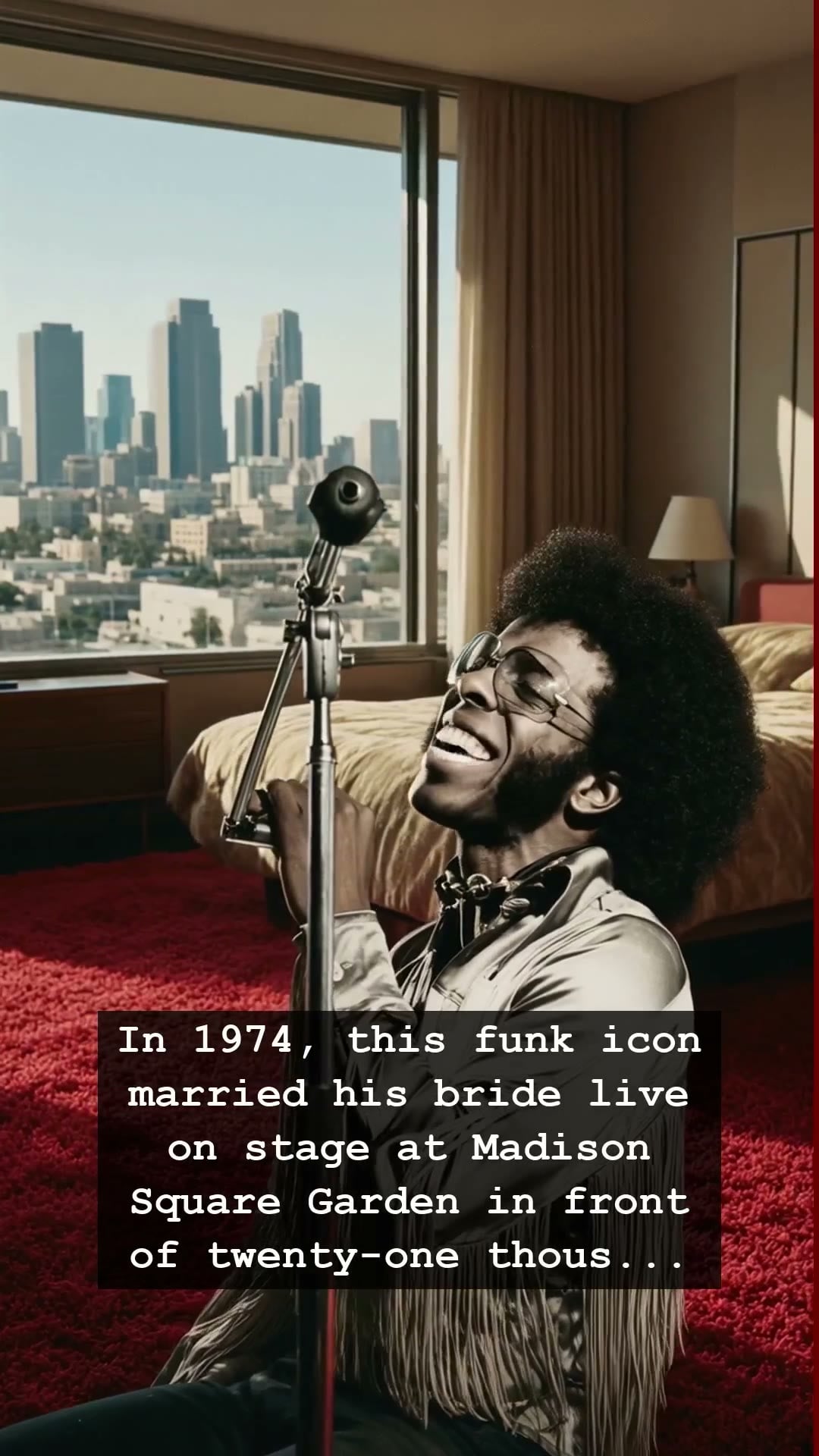
The year was 1974. The air inside Madison Square Garden was thick with the scent of cheap cigarettes, expensive perfume, and the electric anticipation of twenty-one thousand fans who had gathered to witness more than just a concert. They were there for a spectacle that would define the era of excess: the live, onstage wedding of funk pioneer Sly Stone. As the leader of Sly and the Family Stone, he was already an icon who had brought a revolutionary fusion of soul, rock, and psychedelic funk to the mainstream. But on this night, the stage wasn’t just a platform for music; it was a theater for his personal life, blurring the lines between the artist and the man in a way that felt both grandiose and deeply unsettling.
Sly Stone was at the absolute peak of his cultural influence, having already conquered the fields of Woodstock with his fiery performances. He walked onto that hallowed stage in a flurry of glitter, velvet, and the sheer audacity that defined the mid-seventies. When he wed Kathy Silva in front of that massive, cheering crowd, the world watched through the lens of a media obsessed with the boundary-pushing lifestyle of rock stars. It felt like a fairy tale captured in the neon glow of a decade that prioritized spectacle above all else. However, the reality simmering beneath the surface was far darker than the blinding stage lights suggested.
The marriage, which was supposed to be the crowning moment of his public persona, was a house of cards. Behind the velvet curtain, the pressure of maintaining his status as a funk innovator, combined with the crushing weight of fame and substance use, was taking its toll. The music industry was changing, and the golden age of the late sixties was giving way to a more cynical, corporate landscape. For Sly Stone, the marriage lasted a mere five months. It ended in a private tragedy that stood in stark contrast to the massive, public display of affection that had captivated thousands just weeks prior.
Looking back, this moment serves as a haunting reminder of the cost of fame during the era of Studio 54 and the death of the flower power dream. The collapse of the relationship wasn’t just a personal failure; it was a symbol of the fragile ego of the rock star archetype. Sly Stone embodied the chaos of his times, oscillating between brilliant musical innovation and self-destructive tendencies that eventually led to his withdrawal from the spotlight. The public spectacle at Madison Square Garden remains a fascinating, bittersweet artifact of an era that allowed its heroes to live out their most intimate moments in front of a paying audience.
Today, the story of Sly Stone resonates because it captures the raw, unfiltered humanity behind the funk legend. We still play those records, feeling the heartbeat of a genius who once thought he could outrun his own demons by putting them on display. It was a time when the myth was often more important than the reality, yet it is the tragedy of that reality that makes the music linger in our souls so many decades later. It reminds us that even when the lights go down, the music never truly stops telling the truth.