
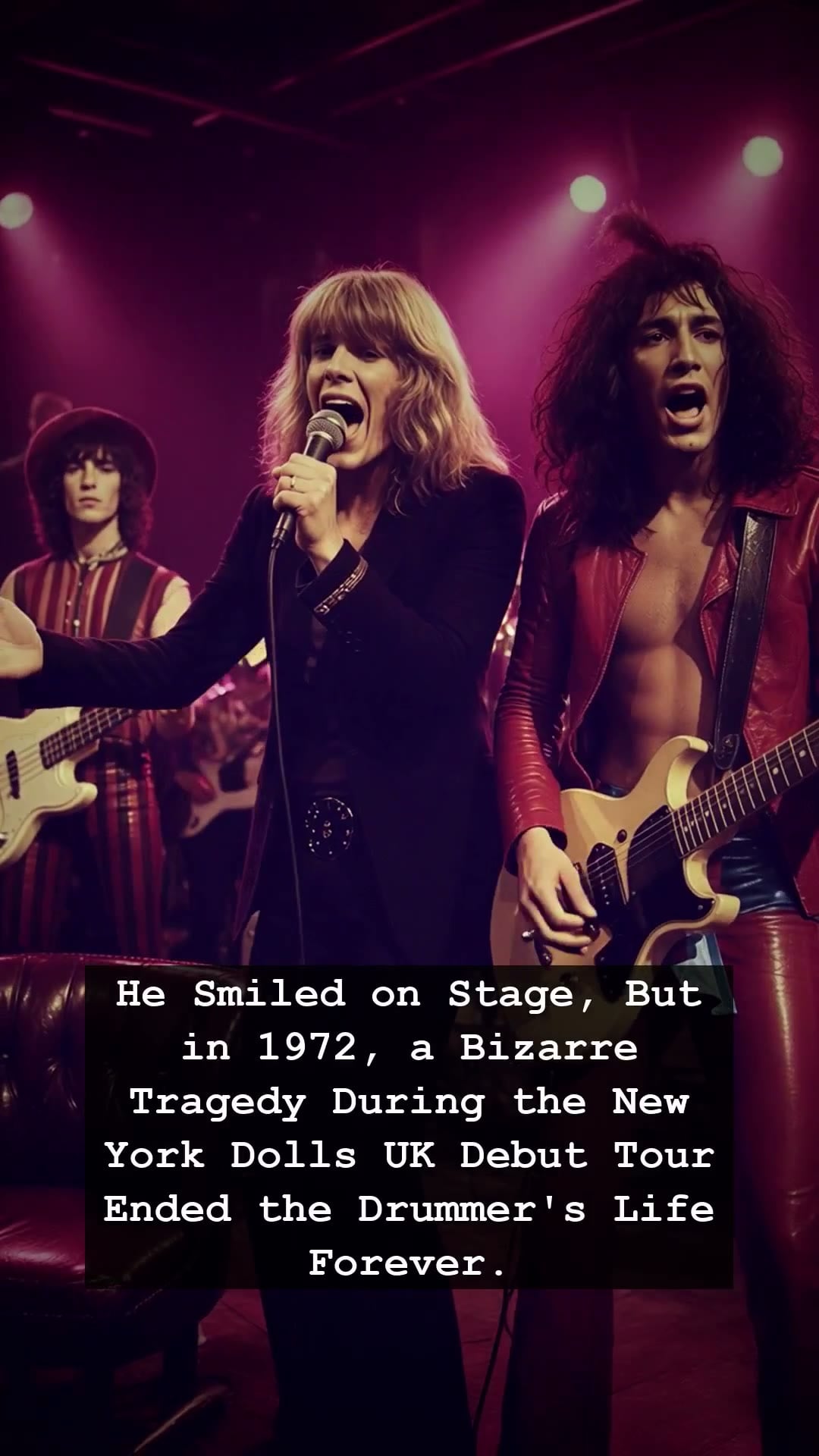
The year was 1972, and the air in London was thick with the scent of hairspray, cheap cigarettes, and the raw, unrefined promise of a revolution. The New York Dolls, those glitter-drenched pioneers of proto-punk, had just arrived from the concrete jungle of Manhattan to conquer the British music scene. They were the ultimate spectacle, blending high-heeled decadence with the gritty soul of the streets. Among them was the heart of the rhythm section, drummer Billy Murcia. He was young, ambitious, and standing on the precipice of international stardom, believing that this debut tour would be the catalyst that changed the world of rock and roll forever. He was a boy living his dream, completely unaware that his life was about to be cut short in a way that remains one of the most chilling footnotes in rock history.
The New York Dolls brought a dangerous energy to the UK that the stuffy music halls of London weren’t prepared for. They were the bridge between the glam excess of the early seventies and the explosive anarchy of the punk explosion yet to come. On that fateful night, the band attended a party that was supposed to be a celebration of their arrival. But within the walls of a posh London apartment, the high-octane lifestyle of a rising rock band collided with a devastating, bizarre reality. Billy Murcia was found unresponsive in a bathtub, the victim of a tragic accidental overdose. It was not a grand rock and roll exit on stage; it was a quiet, suffocating end that stole a bright light from the music world just as it was beginning to truly ignite.
His passing sent shockwaves through the industry. The New York Dolls were devastated, left to navigate the murky waters of fame and grief in a foreign land. For those who were there, the memory of that night remains a haunting reminder of the fragility of the icons we idolize. It is often asked how the trajectory of the band—and indeed, the history of music itself—might have shifted had Billy Murcia remained behind the drum kit. Would their sound have matured differently? Would their influence have reached even greater heights? The tragedy cast a long shadow, turning the band into a cautionary tale of the dark side of ambition and the excesses of the era.
Even decades later, the story of the New York Dolls is inseparable from the ghost of Billy Murcia. When we look back at the footage of the seventies, past the faded polaroids and the scratched vinyl records, we feel the weight of what was lost. The New York Dolls were more than just a group; they were a movement, and Murcia was an essential piece of that puzzle. Today, his story serves as a poignant reminder that behind the glitter and the electric guitars, there were human beings with hopes and fears, often lost in the whirlwind of the very industry they helped define.
As we revisit the era of the Jukebox and the rise of underground glam, we cannot help but mourn the potential that vanished in that London bathroom. The legacy of the New York Dolls persists, a testament to their indelible impact on music, but for many, it is forever stained by the tragedy of their lost drummer. His life serves as a somber echo, a story that reminds us to appreciate the music we cherish, and the fragile, human heartbeat that drives every great rhythm.