
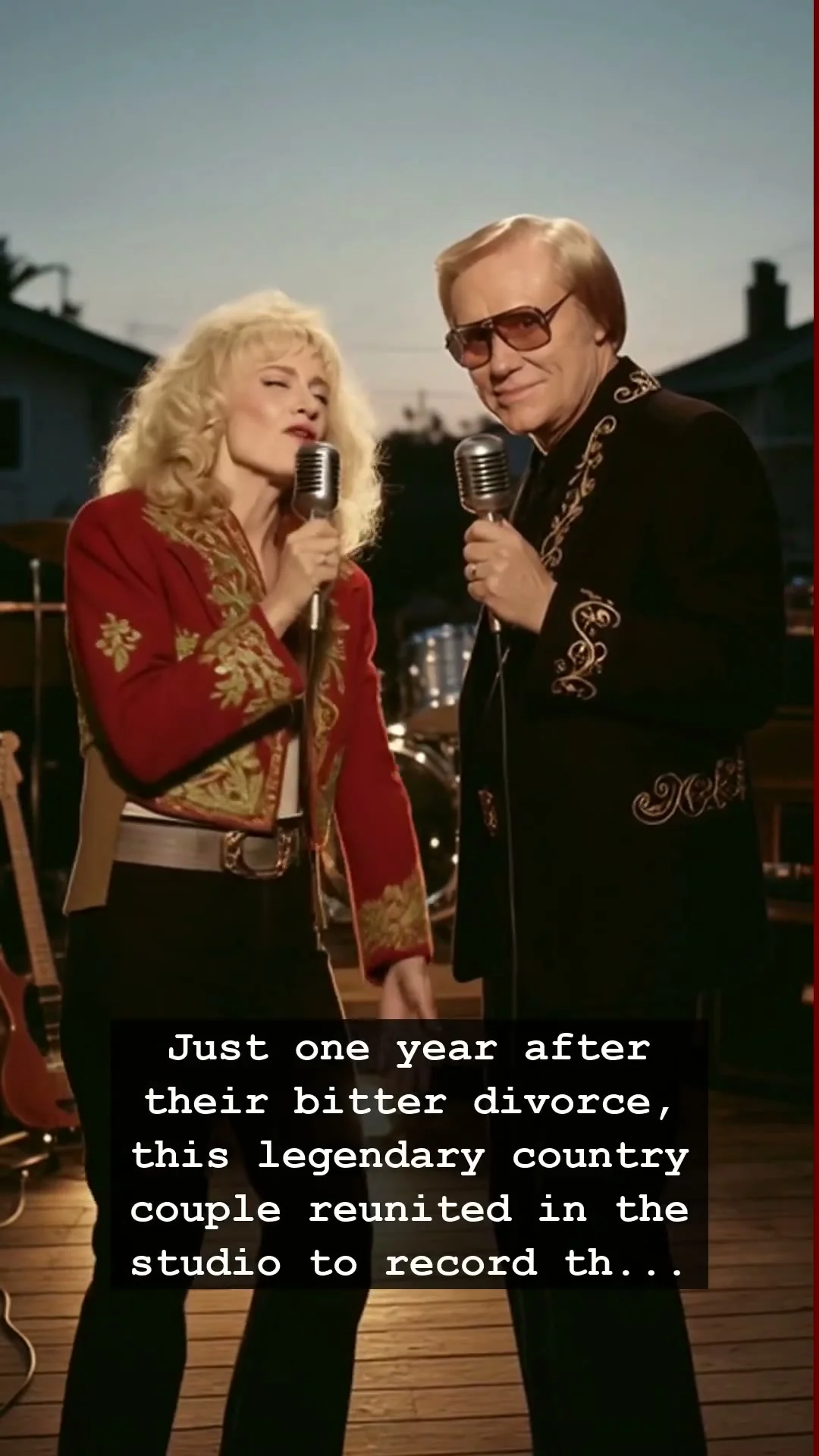
It was 1976, and the air inside the Nashville recording studio felt thin enough to choke on. Just twelve months after the final papers were signed on a volatile, alcohol-fueled marriage, two titans of country music stood inches apart. George Jones and Tammy Wynette were no longer husband and wife, but they remained tethered by the one thing that had defined their lives: a bleeding, messy, public love affair. As they stepped up to the microphones to record Golden Ring, the silence between them was louder than any orchestral backing track could ever hope to be.
To understand the gravity of that moment, one must remember the landscape of country music in the mid-seventies. This was a time when the Jukebox was the heartbeat of every dive bar across the American South, and the public treated celebrity marriages like a communal soap opera. George Jones and Tammy Wynette were the genre’s golden couple, yet behind the glamour of the stage lay a dark, turbulent reality. George’s legendary struggle with addiction and Tammy’s attempts to keep their world from collapsing created a tension that was perfect for radio, but impossible for two human souls to endure.
When the producer asked them to track Golden Ring, it was a cruel irony of the music business. The lyrics detailed the life cycle of a wedding band, from the joy of the pawnshop purchase to the finality of a discarded life. George Jones, with his voice famously described as the sound of a tear falling into a glass of whiskey, didn’t just sing the words; he relived the death of his own romance. Tammy Wynette, ever the professional, matched his fragility with a haunting, crystalline resolve. They were effectively singing a eulogy for a relationship that the world had watched disintegrate in real-time.
There is a visceral, haunting authenticity to that record that simply cannot be replicated by modern digital production. When you listen to the subtle cracking in their voices, you are hearing the genuine ghosts of a broken home. It is a masterclass in emotional endurance. The studio lights, the stale cigarette smoke, and the heavy weight of regret in the air—all of it seeped into the magnetic tape. That session wasn’t just work; it was a public therapy session masked as a chart-topping hit, a testament to how country music turns private agony into a universal experience for the brokenhearted.
Today, the legacy of George Jones and Tammy Wynette remains a cornerstone of American cultural history. We still listen to their duets not just for the melody, but for the raw humanity they dared to expose. They gave us the permission to wear our scars openly. Whenever we hear that iconic opening chord, we aren’t just hearing a song; we are stepping back into a room in 1976, witnessing two legends attempt to heal the only way they knew how. Next time you drop the needle on that record, close your eyes and listen closely; the pain is still as sharp as the day it was recorded.